 blog
5 Winter Window Cleaning Practices for Commercial Properties
Table of Contents
- Why Winter Window Cleaning Requires a Different Approach
- How to Clean Windows in Winter: 5 Essential Practices
- High-Rise Window Cleaning in Winter: Safety and Access
- Frequently Asked Questions
Last Updated: October 10, 2026
Winter window cleaning for commercial properties demands a completely different approach than summer maintenance. Cold temperatures, ice buildup, and reduced daylight create hazards that most standard cleaning routines don't address. This guide from Clarity Window Cleaning breaks down five essential practices that keep commercial glass clean, safe, and streak-free when temperatures drop.
Why Winter Window Cleaning Requires a Different Approach
Cold weather freezes water faster on glass, making standard warm-water techniques ineffective and creating safety hazards. Professional winter window cleaning requires specific adjustments to method and timing.
How to Clean Windows in Winter: 5 Essential Practices
1. Use heated water and appropriate cleaning solutions
Professional cleaners use heated water with appropriate cleaning solutions.
2. Clean during the warmest part of the day
Schedule cleaning between 11 AM and 3 PM on clear days to maximize warmth and drying time.
3. Prioritize safety equipment and fall protection
Ice creates slip hazards requiring rope access systems, harnesses, and non-slip footwear for high-rise work, and proper ladder anchoring and stabilizers for ground-level work.
4. Manage ice, frost, and condensation buildup
Remove ice on exterior glass with plastic tools before cleaning, and schedule work during warmer afternoon hours to help interior frost and condensation dry faster.
5. Establish a winter-specific cleaning schedule
Commercial properties benefit from a winter-specific cleaning schedule to manage salt spray, dust, and frozen water spots.
| Winter Cleaning Practice | Best Timing | Frequency |
|---|---|---|
| Heated water + alcohol solution | Afternoons, clear days | Weekly to bi-weekly |
| Safety equipment check | Before every job | Every visit |
| Ice and frost removal | Before main cleaning | As needed |
| Interior condensation management | During cleaning | Every service |
High-Rise Window Cleaning in Winter: Safety and Access
High-rise winter cleaning requires specialized equipment, with safety plans accounting for reduced daylight.
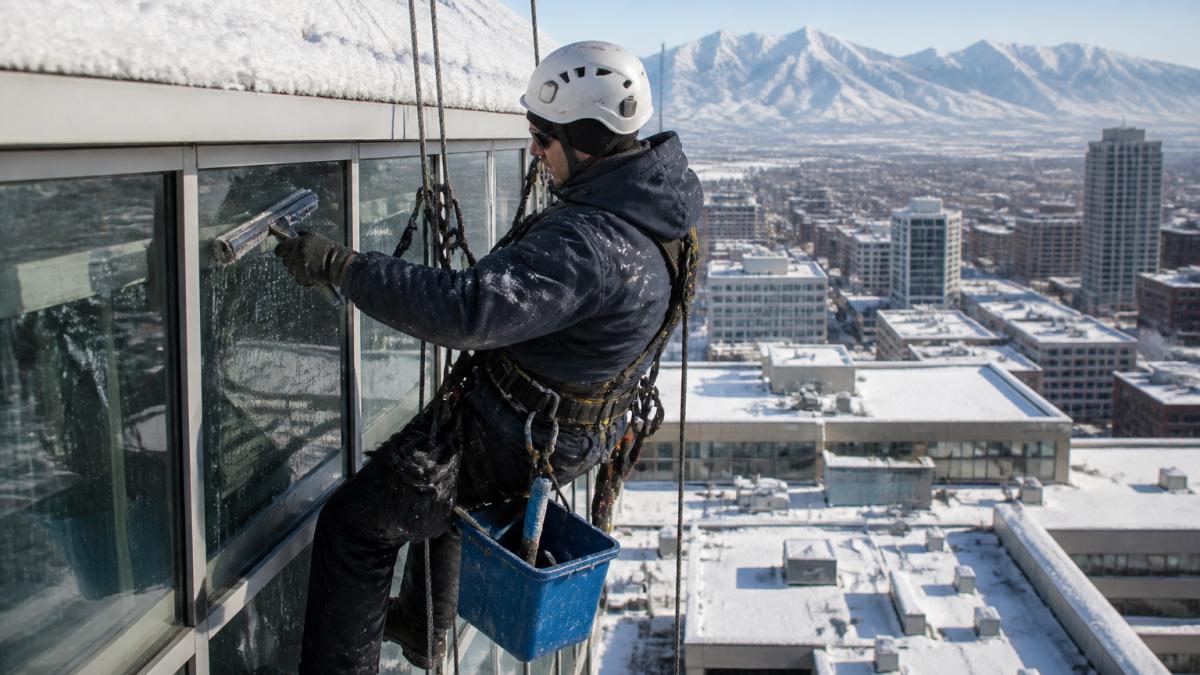
Work with experienced professionals who understand winter-specific hazards. Clarity provides free estimates for all window cleaning needs and works directly with facilities managers and property managers to develop customized schedules.
Winter window cleaning protects your commercial property's appearance. Clarity provides free estimates to assess your building's needs and create a customized winter cleaning plan.
Frequently Asked Questions
How do you prevent streaks when cleaning windows in cold weather?
Use warm water mixed with quality cleaning solution and ethanol or isopropyl alcohol to prevent freezing and streaking. Squeegee immediately after washing, working from top to bottom. Dry with microfiber cloths before the solution freezes on the glass. Avoid cleaning when temperatures drop below freezing, and work during overcast conditions or early morning to slow evaporation and prevent rapid drying that causes streaks.
How often should commercial windows be cleaned during winter?
Winter weather accelerates dirt and grime buildup from road salt, de-icing chemicals, and moisture. Most commercial properties benefit from bi-weekly or monthly cleaning during winter months, depending on traffic, weather patterns, and property appearance standards. Facilities managers should adjust frequency based on tenant complaints, visibility impact, and brand image concerns. Clarity provides free estimates to help you determine the right schedule for your building.
What should I do if ice and frost cover my commercial windows before cleaning?
Never force ice off glass, this risks damage and safety hazards. Allow ice to melt naturally or use gentle warm water to soften buildup before scrubbing. Manage condensation by improving ventilation or allowing windows to warm. Address salt and road grime residue separately from ice removal. If your building is high-rise or has complex access challenges, professional cleaners handle these conditions safely and efficiently without disrupting operations.