 blog
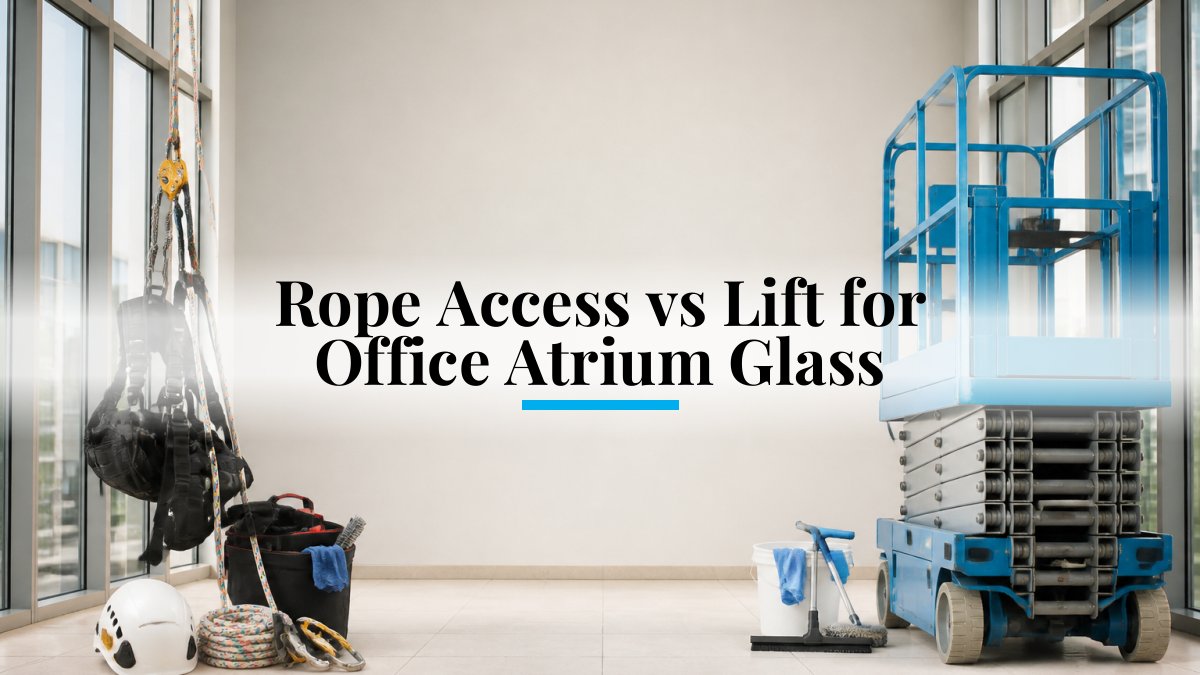
Rope Access vs Lift for Office Atrium Glass
Table of Contents
- Rope Access Window Cleaning for Atrium Glass
- Lift Access Window Cleaning: When It Works Best
- Atrium Glass Cleaning Safety Planning and Your Commercial Window Cleaning Schedule
- Frequently Asked Questions
Last Updated: October 14, 2026
Rope Access Window Cleaning for Atrium Glass
When comparing rope access vs lift for cleaning interior glass in multi-story office atriums, rope access stands out as one of the most effective methods. Certified technicians suspended on rigging systems reach panels that would otherwise require expensive equipment or extended downtime.
Rope systems anchor to structural points above the atrium, letting technicians descend and maneuver across glass with precision. Its real value is flexibility: technicians reach tight corners, work around architectural features, and navigate complex layouts where lifts cannot fit or operate safely.
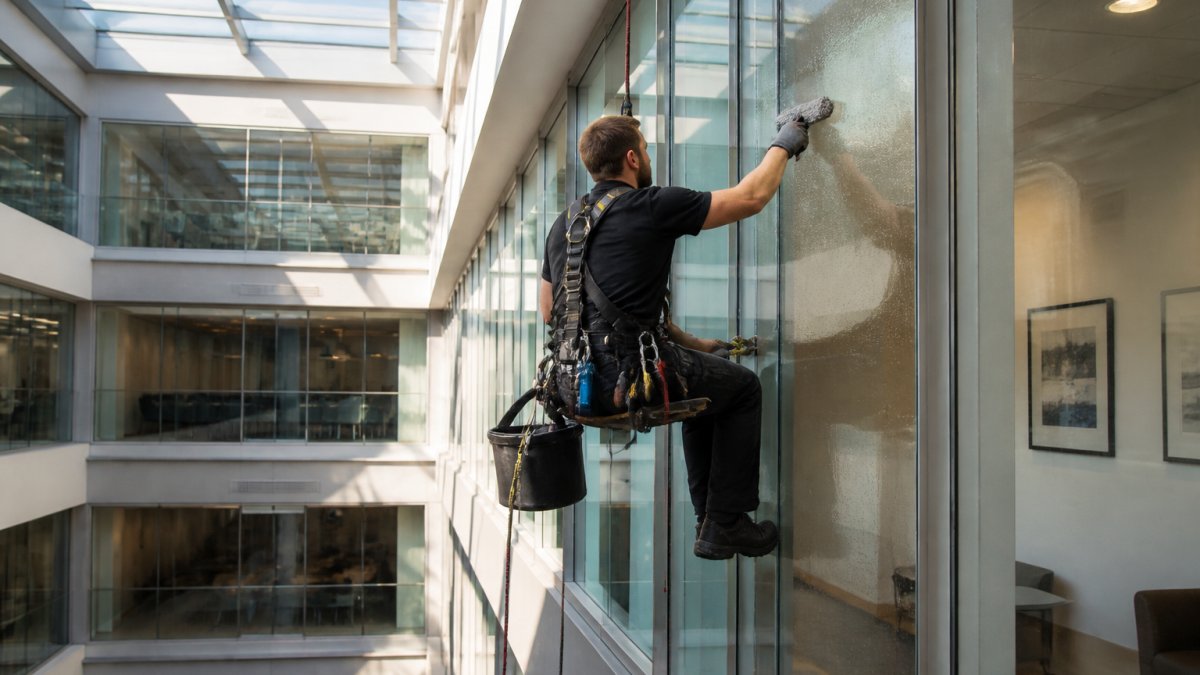
Rope access window cleaning requires site-specific planning: assessing anchor points, identifying exclusion zones, and developing rescue plans before work begins. Setup takes longer upfront, but it prevents disruptions to tenant operations and protects occupants.
Facilities managers appreciate rope access because it eliminates shutting down common areas or blocking sightlines during business hours. Work happens above occupied spaces, and trained technicians manage risk through fall protection systems and detailed safety documentation.
Lift Access Window Cleaning: When It Works Best
Aerial and scissor lifts work best when your atrium has open floor space, high ceilings without obstructions, and room to position equipment safely.
Lifts provide a stable platform some facilities managers prefer for crew comfort and efficiency. Workers stand rather than hang suspended, which can feel more secure on longer jobs. Setup is straightforward: position, extend, and clean.
The challenge with lifts comes down to geometry. Many modern atriums have balconies, architectural features, or limited floor space that restricts where a lift can operate. Boom lifts offer more reach than scissor lifts but still need clear space and careful positioning. With multiple setups or complex angles, time and labor can exceed rope access alternatives.
Weather matters too. Lifts are wind-sensitive and cannot operate safely in certain conditions, while rope access works in a wider range since technicians are anchored and secured rather than standing on an open platform.
Atrium Glass Cleaning Safety Planning and Your Commercial Window Cleaning Schedule
Both methods require thorough safety planning. Rope access demands detailed risk assessments, rescue planning, and certified technicians trained in working at height. Lift operations require equipment certification, operator training, and clear exclusion zones.
When evaluating rope access vs lift for your facility, the decision comes down to layout, operational needs, and risk tolerance. Rope access needs less floor space, causes minimal disruption, and handles complex geometries well. Lifts suit straightforward atriums with open floor plans and stable weather.
Scheduling matters too. Rope access often finishes faster because setup is more flexible, while lifts may need multiple repositioning moves. In high-occupancy buildings, rope access is usually less disruptive to tenant operations.
Clarity provides free estimates for all window cleaning needs. Our team works directly with facilities managers and property managers to assess your atrium layout, identify the most efficient access method, and build a cleaning schedule that fits your operational calendar. We handle safety planning, documentation, and execution so you can focus on your facility.
Frequently Asked Questions
When is rope access a better choice than a lift for atrium glass?
Rope access works best in tight atriums where floor space is limited or where building layout won't accommodate a lift platform. It's also ideal when you need to avoid disrupting tenant operations on lower floors. Lifts require clear ground access and a larger footprint, making rope access the practical choice for narrow or congested interiors. Clarity provides free estimates to help you determine which method suits your building's specific geometry and occupancy needs.
What site conditions affect whether a lift can be used indoors?
Lifts need stable, level flooring with enough clearance for the platform height and outriggers. Low ceilings, narrow hallways, balconies, and obstructions can make lifts impractical. Rope access, by contrast, requires only secure anchor points on the roof or upper structure. Building age, interior layout, and tenant density all influence which method works. A site assessment before scheduling helps identify the right approach and ensures minimal business disruption.
How should facilities managers compare rope access and lift access?
Evaluate your atrium's footprint, ceiling height, and occupancy during cleaning hours. Rope access minimizes floor disruption but requires certified technicians and rigging setup. Lifts are faster for large open areas but need floor space and can block sightlines. Consider your tenant schedules, weather exposure, and how often you need cleaning. Clarity offers free estimates and site-specific assessments to help you weigh safety, cost, timeline, and operational impact for your building.
Choosing between rope access and lift methods requires understanding your building's unique geometry, occupancy patterns, and operational constraints. The right choice minimizes disruption, controls costs, and ensures thorough, safe cleaning. Professional assessment of your atrium, including anchor points, floor layout, and traffic patterns, determines which method delivers the best results for your commercial property.