 How-to
High-Altitude Window Cleaning: Best Practices for Facilities Managers
Last Updated: November 14, 2026
Quick Summary
High-altitude window cleaning means washing glass at elevation while accounting for thinner air, stronger sun, faster drying, and quicker weather shifts. Plan around drying speed, sun load, and weather windows, and rotate crews with shade breaks. Confirm wind, sun, and temperature for the full work window before rigging.
- Work in shade or under overcast skies where possible to slow drying.
- Clear sill tracks, check weep holes, and wipe frames before touching glass.
- Wind speed decides whether crews go up at all, and gusts at height run stronger.
- Sun and glass temperature create a narrow working window on south and west faces.
- Suggested frequency is 3-4 times a year for mid-rise offices and high-rise towers.
Table of Contents
- High-Rise Window Cleaning in High-Altitude Climates: What Changes at Elevation
- Window Cleaning Equipment for High Windows: Selecting Tools for Altitude
- Window Cleaning at Height: Step-by-Step Procedure for High-Altitude Buildings
- What You'll Need
- Step 1: Check Conditions Before Rigging [Time: 15 minutes]
- Step 2: Set Up Fall Protection [Time: 30-45 minutes]
- Step 3: Prep Frames, Sills, and Tracks [Time: 20-30 minutes per face]
- Step 4: Wet and Wash the Glass [Time: 2-4 hours per face]
- Step 5: Inspect and Report [Time: 20 minutes per face]
- Cleaning Solutions and Water Quality at Elevation
- High-Rise Window Cleaning in High-Altitude Climates: What Changes at Elevation
- How Often Should Commercial Windows Be Cleaned at Altitude?
- Protecting Glass, Coatings, and Frames at Elevation
- Weather Thresholds and Go/No-Go Decisions
- Altitude-Specific Worker Safety
- Frequently Asked Questions
High-Rise Window Cleaning in High-Altitude Climates: What Changes at Elevation
High-altitude window cleaning means washing glass at elevation while accounting for thinner air, stronger sun, faster drying, and quicker weather shifts. At 4,000 to 5,000 feet, low humidity pulls moisture off the pane before a squeegee finishes its pass, plan around drying speed, sun load, and weather windows, and rotate crews with shade breaks.
International Window Cleaning Association safety resources offers background on professional standards for elevated work.
Window Cleaning Equipment for High Windows: Selecting Tools for Altitude
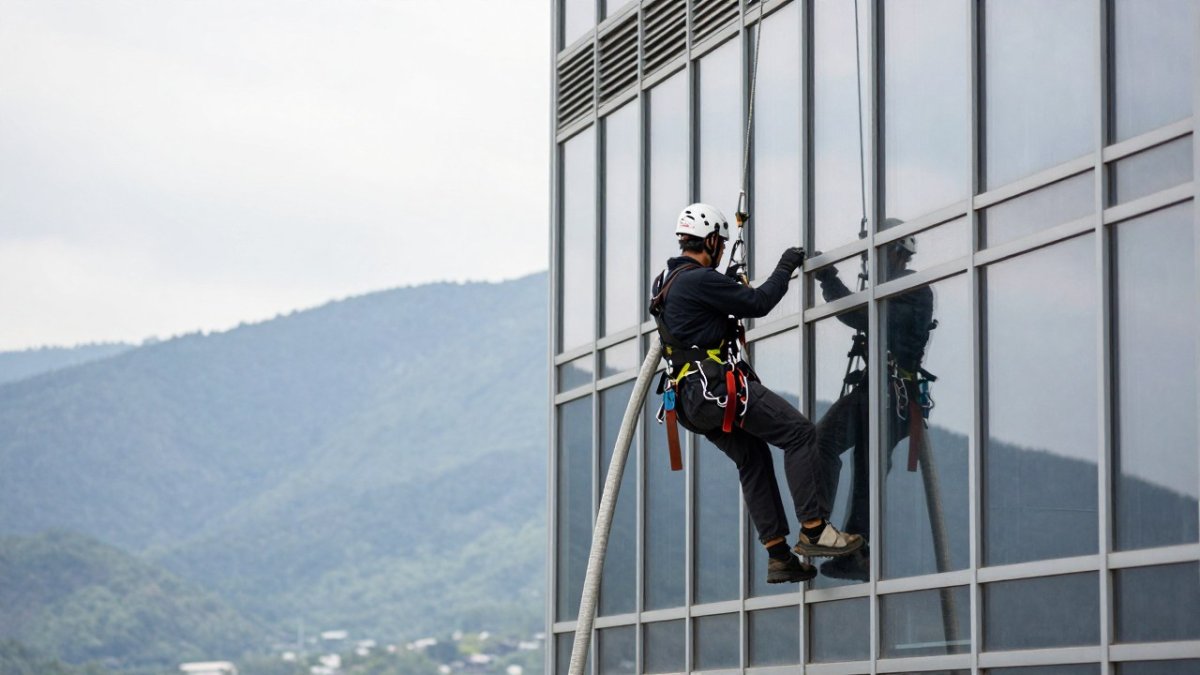
Window cleaning equipment for high windows falls into three families: rope access, aerial work platforms, and water-fed poles. Rope access suits tall towers with clean anchor points, and platforms fit mid-rise buildings and open lots. For a deeper look, see high-rise window washing equipment and the swing stage and water-fed pole comparison. Match tools to the portfolio, not the outlier.
Window Cleaning at Height: Step-by-Step Procedure for High-Altitude Buildings
High-altitude window cleaning follows a set sequence: plan, protect, prep, wash, inspect, with altitude checks mostly around timing and drying.
What You'll Need
- Site-specific safety plan and anchor documentation
- Fall protection gear inspected before use
- Purified or deionized water supply
- Squeegees, scrubbers, and microfiber cloths
- Diluted cleaning solution mixed for the day's conditions
Step 1: Check Conditions Before Rigging [Time: 15 minutes]
Confirm wind, sun, and temperature for the full work window, and call off the day if conditions are trending worse, altitude weather turns faster than forecasts suggest.
Step 2: Set Up Fall Protection [Time: 30-45 minutes]
Verify anchor points, inspect the harness, and confirm the rescue plan before work starts.
Expected Result: A rigged, inspected, and signed-off work zone. Safety planning details sit in the high-rise window cleaning safety guide.
Step 3: Prep Frames, Sills, and Tracks [Time: 20-30 minutes per face]
Clear sill tracks, check weep holes, and wipe frames before touching glass, grit on frames runs down onto clean panes and undoes the work.
Step 4: Wet and Wash the Glass [Time: 2-4 hours per face]
Work in shade or under overcast skies where possible.
Step 5: Inspect and Report [Time: 20 minutes per face]
Turning that sequence into a recurring plan is easier with a high-rise window cleaning schedule template. Skipping frame prep is the most common cause of streaks that show up a day later.
Cleaning Solutions and Water Quality at Elevation
Cleaning solution behaves differently in dry, high-altitude air, since water, glass temperature, and humidity all pull on drying time. Mineral deposits need a dedicated approach rather than more scrubbing. Marvin's window washing guidance makes the case for avoiding abrasive materials and cleaning frames along with glass.
High-Rise Window Cleaning in High-Altitude Climates: What Changes at Elevation
The biggest altitude-specific risks are environmental, not structural: low humidity, UV exposure, and rapid evaporation cause most quality problems. Drying time is the headline, the fix is timing, shade, and lighter dilution, not more product. Wind speed decides whether crews go up at all, and gusts at height run stronger than at ground level. Sun and glass temperature create a narrow working window on south and west faces. For commercial buildings, the commercial window cleaning service overview shows how these conditions get built into a schedule. Clarity provides free estimates for all window cleaning needs.
How Often Should Commercial Windows Be Cleaned at Altitude?
Dust and grit abrade glass and coatings, UV breaks down sealants faster, and mineral deposits left too long bond to the surface.
| Building Type | Suggested Frequency | Main Driver |
|---|---|---|
| Low-rise retail | 2-3 times a year | Dust and foot traffic |
| Mid-rise office | 3-4 times a year | Sun exposure and wind |
| High-rise tower | 3-4 times a year | Coatings and seal wear |
Protecting Glass, Coatings, and Frames at Elevation
Glass and frames take more punishment at altitude, and the right habits extend their life. Post-construction cleaning is a service we offer for newly built or renovated properties.
Weather Thresholds and Go/No-Go Decisions
Weather decides the schedule, not the other way around. Build a simple threshold sheet with the crew lead and follow it without debate.
Altitude-Specific Worker Safety
Clarity Window Cleaning works directly with facilities managers and property managers, and provides free estimates for all window cleaning needs.
High-altitude window cleaning rewards planning over speed. Facilities managers who set clear weather rules, insist on purified water, and schedule around sun and wind get cleaner glass and fewer callbacks. Clarity Window Cleaning brings certified technicians, high-rise capability up to 40 stories, OSHA-compliant practices, and detailed post-service reporting to every property. Get started with Clarity Window Cleaning and put a dependable, safety-first schedule in place for your building.
Frequently Asked Questions
What temperature is too cold for window cleaning in high-altitude climates?
Cleaning solution can freeze on glass when temperatures drop near or below freezing, leaving streaks and posing slip hazards. In high-altitude climates, schedule work during the warmer part of the day and monitor overnight lows. If frost is expected, postpone until conditions improve. Facilities managers should confirm the provider's weather policy before booking, and ask how they handle sudden temperature drops at elevation.
How do wind and rapid weather changes affect high-rise window cleaning?
At elevation, wind speeds can shift quickly and affect both safety and results. Gusts can blow cleaning solution off the glass before it is worked in, and sudden storms can strand crews on ropes or platforms. Reputable providers set go/no-go thresholds and monitor forecasts hourly. Ask your contractor how they decide when to stop work, and build flexibility into the schedule so a weather delay does not push back the next service.
How can facilities managers reduce streaking when windows dry quickly?
Rapid evaporation at altitude causes streaks and water spots. Use purified or deionized water, work in shade or during cooler hours, and avoid cleaning in direct sun. A wetting agent can slow drying and help solution stay workable. Ask your provider whether they adjust dilution for elevation, and inspect a sample pane before the full job begins. These small adjustments make a visible difference on high-altitude glass.