 comparison
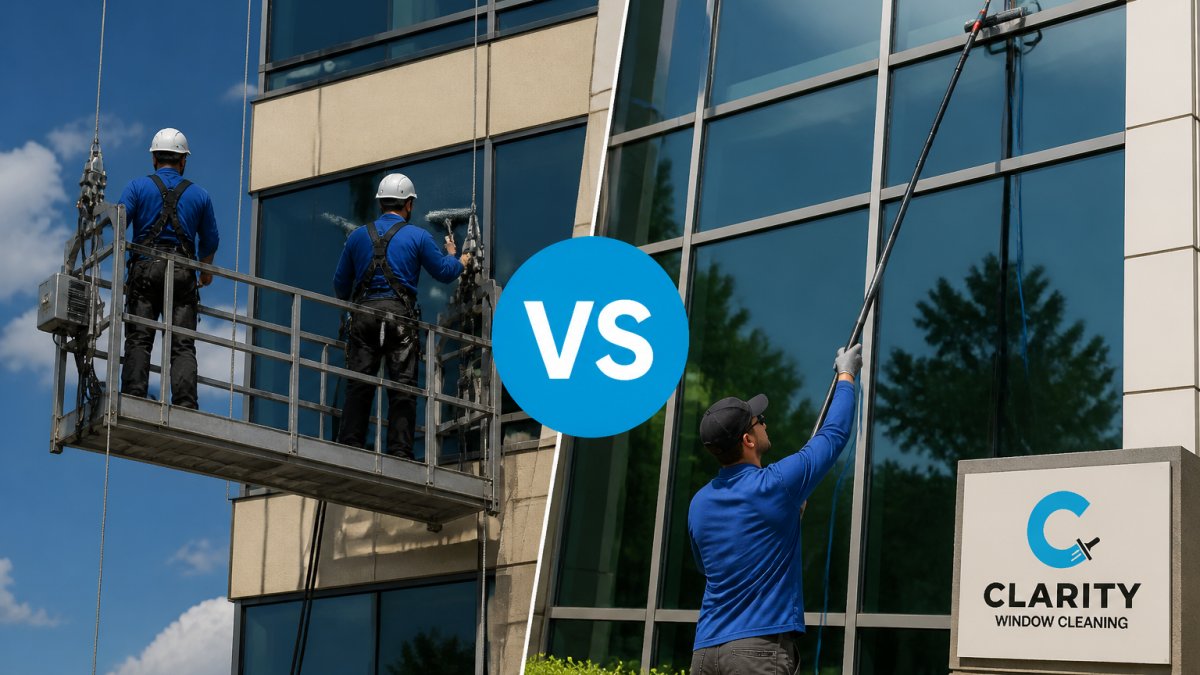
Swing Stage vs Water Fed Pole Systems Compared
Table of Contents
- Swing Stage vs Water Fed Pole Systems: Key Differences
- Commercial Window Cleaning Safety Standards and Swing Stage Setup Requirements
- Water Fed Pole Height Limitations and When to Choose a Swing Stage
- Frequently Asked Questions
Last Updated: October 1, 2026
Swing Stage vs Water Fed Pole Systems: Key Differences
Choosing between a swing stage and a water fed pole system comes down to reach and access. A swing stage is a suspended platform that lowers workers down a facade; a water fed pole feeds purified water to a brush at the glass. For most commercial window cleaning on low- and mid-rise buildings, the pole wins on speed; for anything it cannot reach cleanly, the stage takes over.
Clarity Window Cleaning works directly with facilities managers and property managers across the Wasatch Front, and the swing stage vs water fed pole question comes up on nearly every high-rise bid. Neither replaces the other, they solve different problems.
| Factor | Swing Stage | Water Fed Pole |
|---|---|---|
| Setup time | Hours, plus rigging and inspections | Minutes |
| Ground disruption | Sidewalk closures, permits | Minimal |
| Best height range | Any height | Lower and mid-rise reach |
Commercial Window Cleaning Safety Standards and Swing Stage Setup Requirements
Swing stage setup requirements start with fall protection, load ratings, and a site-specific plan before anyone leaves the roof. Commercial window cleaning safety standards are built around proper rigging, inspected equipment, and trained operators, so every anchor point, hoist, and cable gets checked before the first descent. Water fed poles carry far less risk because the operator stays on the ground.
A common mistake is treating a swing stage like a one-person job, rigging, spotting, and communication all need bodies. Facilities managers should also expect documentation: inspection records, insurance certificates, and a written plan for the building. Clarity Window Cleaning builds site-specific safety plans for every property and provides free estimates for all window cleaning needs.
For deeper background on fall protection expectations, the Occupational Safety and Health Administration guidance on walking-working surfaces outlines how employers must protect workers at height.
Water Fed Pole Height Limitations and When to Choose a Swing Stage
Water fed pole height limitations are real, and they are the main reason swing stages still exist. A pole can only reach so far before flex, weight, and water pressure make the brush hard to control, and keeping TDS low enough to dry spot-free gets harder the higher the glass sits.
When a swing stage makes more sense:
- The glass sits above what a pole can reach with control
- Frames, seals, or coatings need hands-on attention
- Debris or construction residue requires direct scrubbing
For a full picture of high-reach options, the American National Standards Institute overview of suspended platform standards is a useful reference on platform safety.
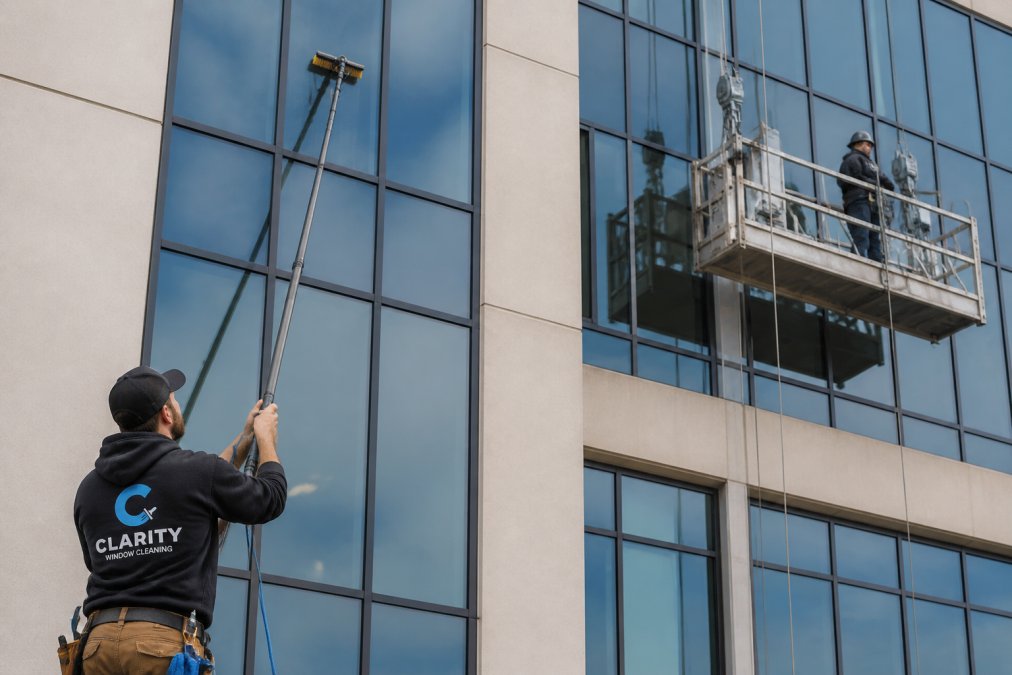
The smartest operations use both systems on the same building: poles handle accessible elevations quickly, and stages cover the sections that need close work.
Frequently Asked Questions
What are the primary differences between swing stage and water fed pole systems?
Swing stages are suspended platforms that lower technicians directly in front of the glass, allowing close-up work on any floor. Water fed poles are lightweight carbon fiber poles used from the ground, pumping purified water through a brush to reach upper stories. Swing stages suit complex facades and very tall towers, while water fed poles excel on buildings within their reach height and offer faster setup.
What are the height limitations for water fed pole systems?
Most professional water fed poles reach up to about 60 feet (roughly 5-6 stories) with good control, though some carbon fiber models extend to 80 feet. Beyond that, pole flex and water pressure drop make cleaning less effective. For buildings taller than 6-7 stories, a swing stage or other suspended access is often required. Clarity provides free estimates to assess your building's specific needs.
When is a swing stage required for commercial window cleaning?
A swing stage is typically required when a building exceeds the safe reach of water fed poles, usually above 6-7 stories, or when the facade has complex angles, deep recesses, or heavy contamination that needs direct scrubbing. It's also necessary for projects requiring detailed inspections or repairs alongside cleaning. Facilities managers should consult a professional to determine the best method for their property.
Matching the right access method to each building is where experience pays off. Clarity Window Cleaning pairs certified commercial technicians with OSHA-compliant practices, high-rise capability up to 40 stories, and detailed post-service reporting so facilities managers can document every maintenance cycle. Clarity provides free estimates for all window cleaning needs, whether the job calls for a pole, a stage, or both. Get Clarity and keep every facade spot-free without disrupting operations.