 Ultimate guide
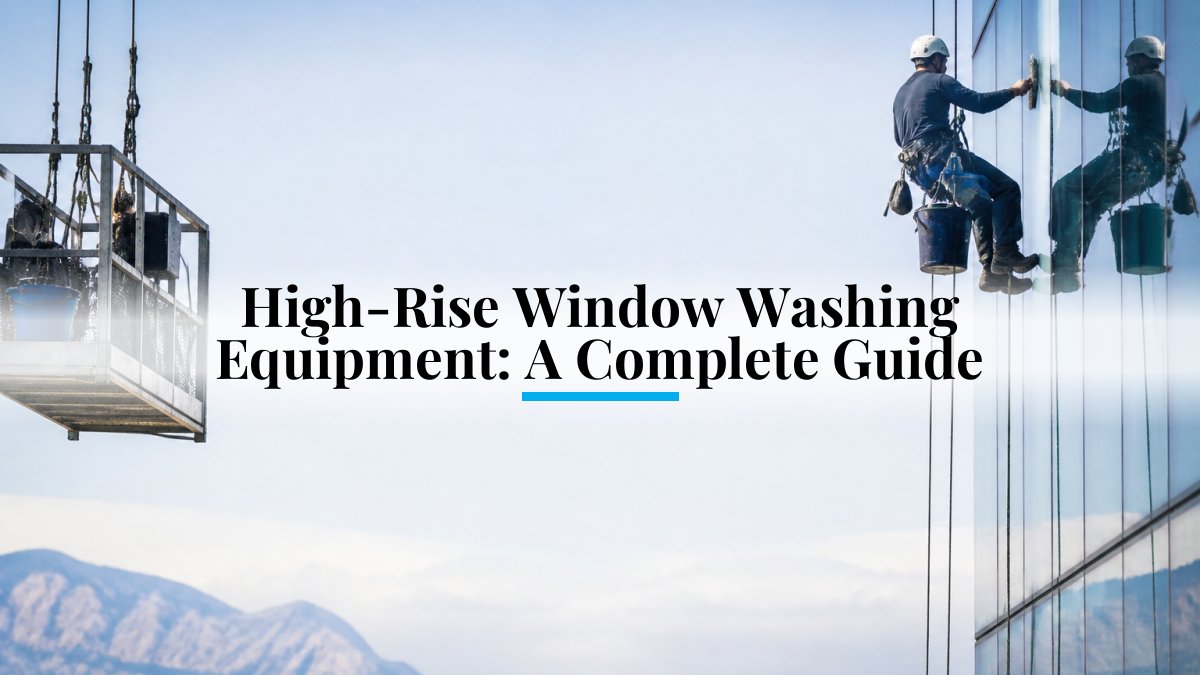
High-Rise Window Washing Equipment: A Complete Guide
Last Updated: October 25, 2026
Quick Summary
Window washing equipment for high-rise buildings falls into two families: suspended rope access systems and mechanical platforms or lifts. Choosing the right high-rise window washing equipment starts with the access method, then the tools that hang from it, and must line up with OSHA safety requirements.
- Rope access suits buildings where a lift cannot reach, roof space is limited, or glass sits in setbacks.
- A main working line plus a separate, independently anchored backup line is essential rope access gear.
- Aerial lifts reach low and mid-rise glass from the ground but need open ground space.
- Inspect every rope, harness, carabiner, descender, and anchor before use and on a set schedule.
- A rescue plan must exist before anyone goes over the edge, naming who responds and what gear is on site.
Table of Contents
- High-Rise Window Washing Equipment: The Core Systems
- Rope Access Window Cleaning Equipment Explained
- Window Cleaning Lifts for High-Rise Buildings
- High-Rise Window Cleaning Systems: Matching Equipment to the Building
- Rope Access Window Cleaning Equipment: Selection and Safety Planning
- High-Rise Window Cleaning Planning Checklist: Choosing a Contractor
- Frequently Asked Questions
High-Rise Window Washing Equipment: The Core Systems
Window washing equipment for high rise buildings falls into two families: suspended rope access systems and mechanical platforms or lifts. At Clarity Window Cleaning, crews plan every job around the access method first, then the tools that hang from it.
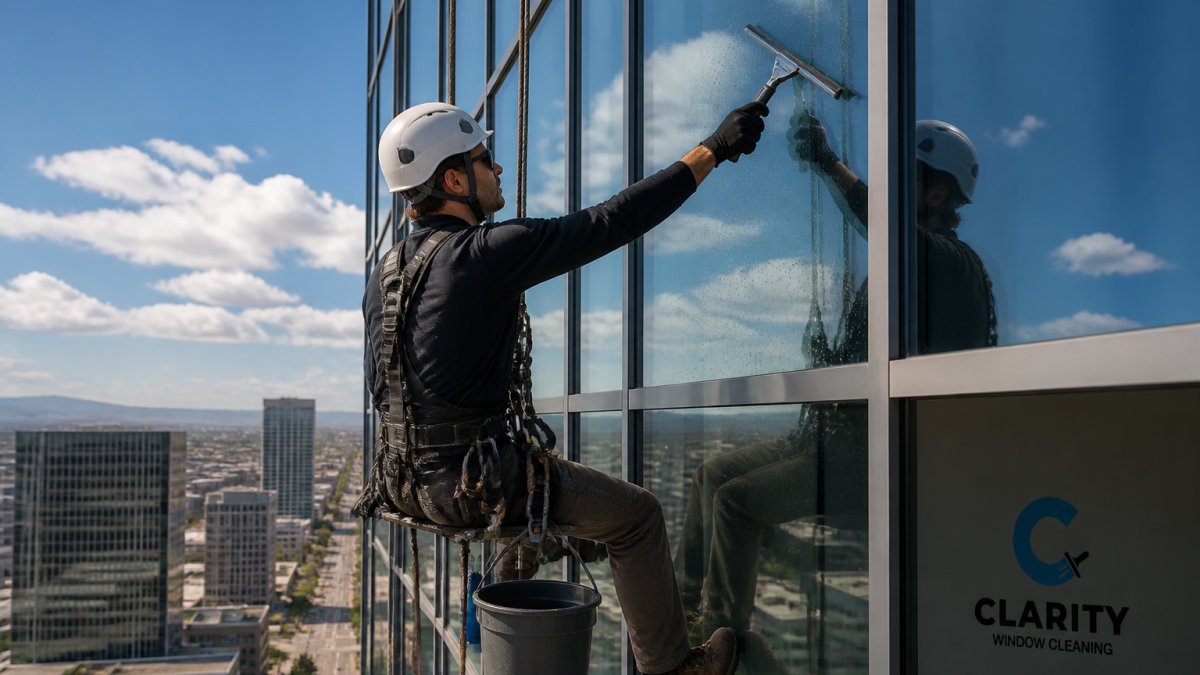
Rope access covers ropes, lifelines, harnesses, descenders, anchors, and the suspended work seat; mechanical access covers lifts and swing stages. Both share squeegees, washer sleeves, T-bars, sponges, and suction cups at the glass. Equipment choices also have to line up with OSHA safety requirements for high-rise window washing.
A facilities or property manager ready to move from planning to scheduling can request a free estimate for commercial service.
Rope Access Window Cleaning Equipment Explained
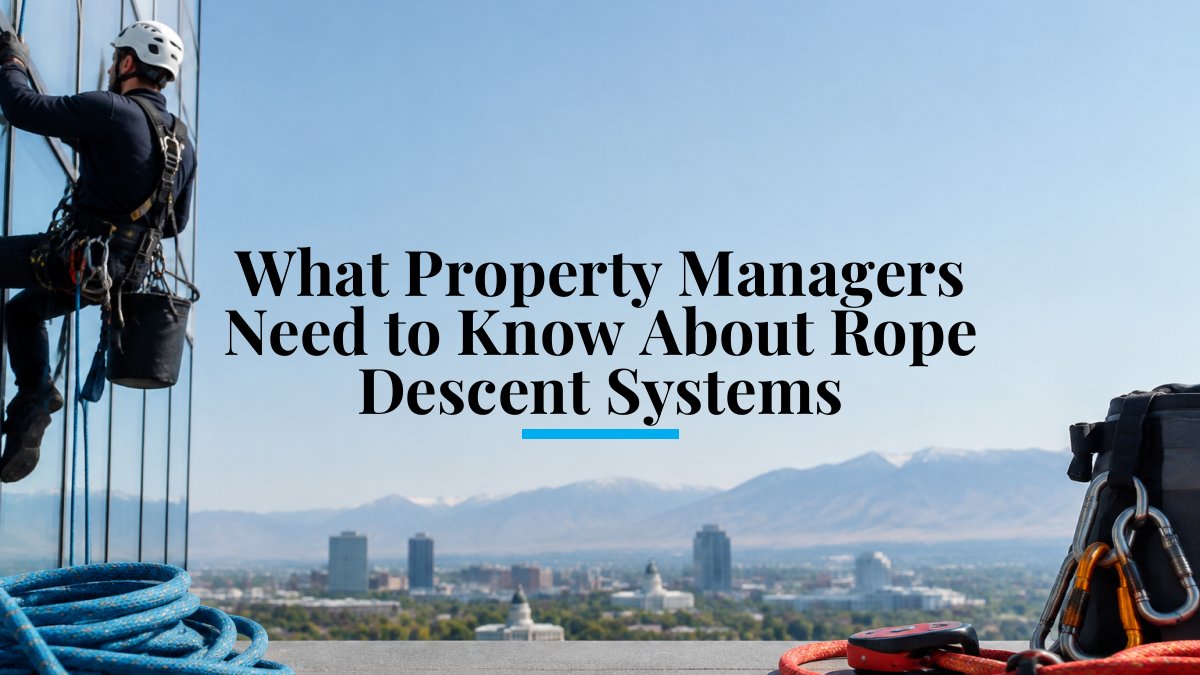
Rope access window cleaning equipment is the system of ropes, anchors, harnesses, and descent controls that lets a trained technician work suspended from a roof rig. It suits buildings where a lift cannot reach, roof space is limited, or glass sits in setbacks and atriums.
Components include a main working line plus a separate backup line, each independently anchored, along with a full-body harness, descenders, rope grabs, roof rigs, rated carabiners, and a bosun's chair. Skipping the backup line turns a routine job into an emergency.
Window Cleaning Lifts for High-Rise Buildings
Window cleaning lifts for high-rise buildings are mechanical access machines, and the right choice depends on building height, façade geometry, and disruption tolerance. Aerial lifts reach low and mid-rise glass from the ground, suspended platforms hang from roof rigging for taller faces, and water fed pole systems work from the roof or ground for certain glass types.
| Access Method | Best For | Main Constraint |
|---|---|---|
| Aerial lift | Low to mid-rise, open ground | Ground space and blocking |
| Suspended platform | Tall flat façades | Roof rigging and drop path |
| Rope access | Setbacks, atriums, tight roofs | Trained technicians required |
High-Rise Window Cleaning Systems: Matching Equipment to the Building
High-rise window cleaning systems work best when equipment is chosen for the specific building rather than pulled from a standard kit. Confirm height and reachable façades, inspect roof rigging and anchors, identify glass type and coatings, map tenant hours, verify crew training, and agree on emergency planning before the first drop.
Ropes, harnesses, connectors, and descenders need regular inspection, logged maintenance, and clear retirement criteria.
Rope Access Window Cleaning Equipment: Selection and Safety Planning
Rope access window cleaning equipment selection comes down to matching rated capacity to the actual load, keeping the system compatible end to end, and documenting every inspection.
Inspection and retirement. Every rope, harness, carabiner, descender, and anchor gets inspected before use and on a set schedule; items with cuts, fraying, corrosion, or shock-load history are retired, and a written log makes this verifiable.
Standards and documentation. Crews should be able to show training records, equipment logs, and a site-specific safety plan. General guidance is available from OSHA's guidance on supported scaffolds and fall protection, and the ANSI/ASSP Z359 fall protection standards cover harnesses, connectors, and anchorage.
Emergency and rescue planning. A rescue plan has to exist before anyone goes over the edge, naming who responds, what gear is on site, and how a suspended technician is recovered.
Weather and façade conditions set the limits: wind, rain, ice, and heat all affect when a crew can safely work.
High-Rise Window Cleaning Planning Checklist: Choosing a Contractor
Choosing a contractor is a planning decision as much as an equipment one. Ask which access methods they use on buildings like yours and why, whether they can show inspection logs and training records, what their site-specific safety plan includes, how they schedule around tenant hours, and how they handle post-construction residue and hard water stains.
At Clarity Window Cleaning, crews work directly with facilities managers and property managers on commercial and high-rise window cleaning, with site-specific safety plans, detailed post-service reporting, and customized schedules that avoid operational disruption. The team is fully insured and bonded, and Clarity provides free estimates for all window cleaning needs.
NIOSH research on falls in the workplace reinforces why the equipment and the planning have to work together, not separately.
Frequently Asked Questions
What do window cleaners use on high-rise buildings?
Professional high-rise window cleaners use a combination of rope access equipment (ropes, harnesses, descenders, anchors) and suspended work seats like bosun's chairs, or they may use window cleaning lifts for high-rise buildings such as aerial platforms. The choice depends on building height, facade design, and roof access. Cleaning tools include squeegees, washer sleeves, T-bars, and sponges. All equipment must be inspected and maintained for safety.
When should a high-rise building use rope access instead of a lift?
Rope access is often preferred when the building has limited roof space for a lift, complex facade geometries, or when a lift cannot reach certain areas. It can also be more cost-effective for one-off cleanings. However, lifts are better for very tall buildings with uniform facades and where faster coverage is needed. A professional window cleaning company can assess your building's specific needs and recommend the best approach.
How should facilities managers plan high-rise window cleaning?
Facilities managers should start with a high-rise window cleaning planning checklist that covers building height, facade type, access points, weather conditions, and safety requirements. It's important to verify that the cleaning company uses proper equipment, has safety documentation, and provides detailed reporting. Scheduling should avoid peak business hours to minimize disruption. Clarity Window Cleaning offers free estimates and works directly with facilities managers to create a customized plan.
High-rise glass does not clean itself, and the equipment behind a safe, streak-free result is a system, not a single tool. Clarity Window Cleaning helps facilities and property managers match the right access method to each building, with site-specific safety plans, detailed reporting, and scheduling that keeps tenants undisturbed. Get started with Clarity Window Cleaning and put a planned, documented approach behind every façade.