 Ultimate guide
What Property Managers Need to Know About Rope Descent Systems
Quick Summary
Rope descent systems are one of the most common ways crews reach the exterior of a tall commercial building, and property managers share responsibility for how that work is set up. Before any crew goes over the edge, ask for written records of the anchors, rigging plan, and crew training. Anchor inspection history and crew training are where most problems start.
- Ask for written records of anchors, the rigging plan, and crew training before any work begins.
- Confirm who on the crew is trained and how that training is documented.
- Check the current anchor inspection history and when the last inspection was completed.
- Require a plan for missing, damaged, or undocumented roof anchors.
- Choose between rope descent and lift systems based on building height, facade shape, and anchor condition.
Table of Contents
- Rope Descent System Safety Requirements for Building Owners
- Rope Descent System Training and Roof Anchors: What to Verify
- Rope Descent System vs. Lift: Choosing the Right Access Method for Your Building
- Frequently Asked Questions
What Property Managers Need to Know About Rope Descent Systems
Last Updated: November 11, 2026
Rope Descent System Safety Requirements for Building Owners
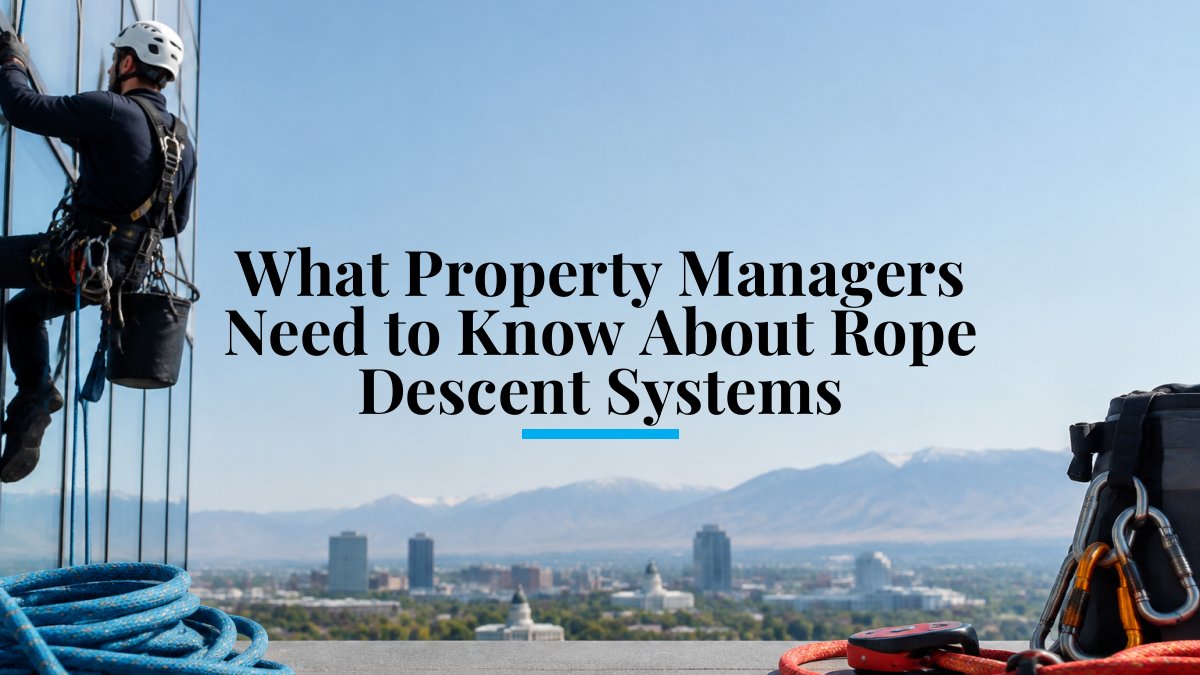
Rope descent systems are one of the most common ways crews reach the exterior of a tall commercial building, and the property manager shares responsibility for how that work is set up. At Clarity Window Cleaning, we work directly with facilities managers and property managers.
Start with documentation. Before any crew goes over the edge, ask for written records showing the anchors, the rigging plan, and the training of the people doing the work. If you want to understand the specific advantages of rope access on tall buildings before deciding, that page covers them. A contractor who can't produce these quickly is a signal worth heeding.

Clarity provides free estimates for all window cleaning needs, and we are happy to talk through your building's needs before any work is scheduled.
Rope Descent System Training and Roof Anchors: What to Verify
Training and anchors are where most problems start. Ask who on the crew is trained, how that training is documented, and who inspects the roof anchors and when those inspections were last completed.
Look for a current anchor inspection history, clear identification of each anchor point, and a plan for missing, damaged, or undocumented anchors. For a step-by-step method to confirm a contractor's insurance coverage before work begins, see this guide.
The article points to a few specific things to check on training and roof anchors.
| What to verify | What to look for | Why it matters |
|---|---|---|
| Crew training | Who on the crew is trained | Training is where most problems start |
| Training records | How that training is documented | Shows the crew's qualifications are real |
| Anchor inspections | Who inspects the roof anchors | Anchors carry the load of the whole setup |
| Inspection date | When the last inspection was completed | Confirms the anchors are current |
| Anchor history | A current anchor inspection history | Proves ongoing anchor maintenance |
| Anchor identification | Clear marking of each anchor point | Prevents use of the wrong or unknown anchor |
| Missing or damaged anchors | A plan for them | Keeps unsafe anchors out of use |
Rope Descent System vs. Lift: Choosing the Right Access Method for Your Building
Rope descent systems and suspended platforms are both common; the right choice depends on the building. For a direct side-by-side look at rope access and lift methods for different building types, this comparison walks through the trade-offs.
- Rope descent systems
- Pros: flexible setup, good for irregular facades, efficient on tall towers
- Cons: depend heavily on roof anchors and trained crews
- Lift or platform systems
- Pros: stable working surface, easier for longer continuous passes
- Cons: require fixed equipment, less flexible on complex facades
Neither method is automatically better. The answer comes from the building's height, facade shape, and anchor condition. To see how rope descent stacks up against cradle systems on cost, speed, and suitability, this guide covers each.
Frequently Asked Questions
What is a rope descent system?
A rope descent system, often called an RDS, is a method where a worker is suspended from a building's roof or a fixed anchor and lowered down the facade on ropes. It is commonly used to clean and maintain high-rise windows and exterior surfaces. Property managers should confirm that the contractor's crew is trained, that the anchors are identified and documented, and that the work plan accounts for tenants and building access. Clarity provides free estimates for all window cleaning needs, including high-rise and commercial projects.
What should property managers check before rope descent work begins?
Start by confirming the roof anchors are identified, tested, and inspected on a regular schedule, with records you can produce on request. Ask the contractor for written documentation of worker training and their safe rigging plan. Confirm how tenants and roof access will be coordinated, and make sure the contractor has notified you in writing before work starts. Clarity provides free estimates for commercial and high-rise window cleaning, and our team works directly with facilities managers and property managers.
When might a lift be a better choice than a rope descent system?
A lift can be a better fit when a building has sufficient ground or roof access, when the facade is wide and unobstructed, or when a building's anchors are missing, damaged, or undocumented. Property managers should compare access options based on building layout, anchor condition, and the schedule of work. Clarity provides free estimates for all window cleaning needs and can help you weigh which access method suits your property.