 Ultimate guide
OSHA Safety Requirements for High-Rise Window Washing
Table of Contents
- OSHA Safety Requirements for High-Rise Window Washing
- Building Your High-Rise Window Cleaning Safety Plan
- High-Rise Window Washing Equipment Standards
- Frequently Asked Questions
Last Updated: October 10, 2026
OSHA Safety Requirements for High-Rise Window Washing
Compliance with OSHA safety requirements for high rise window washing protects workers and your business. Clarity Window Cleaning works directly with property managers and facilities managers to ensure every high-rise project meets safety standards while maintaining operational continuity.
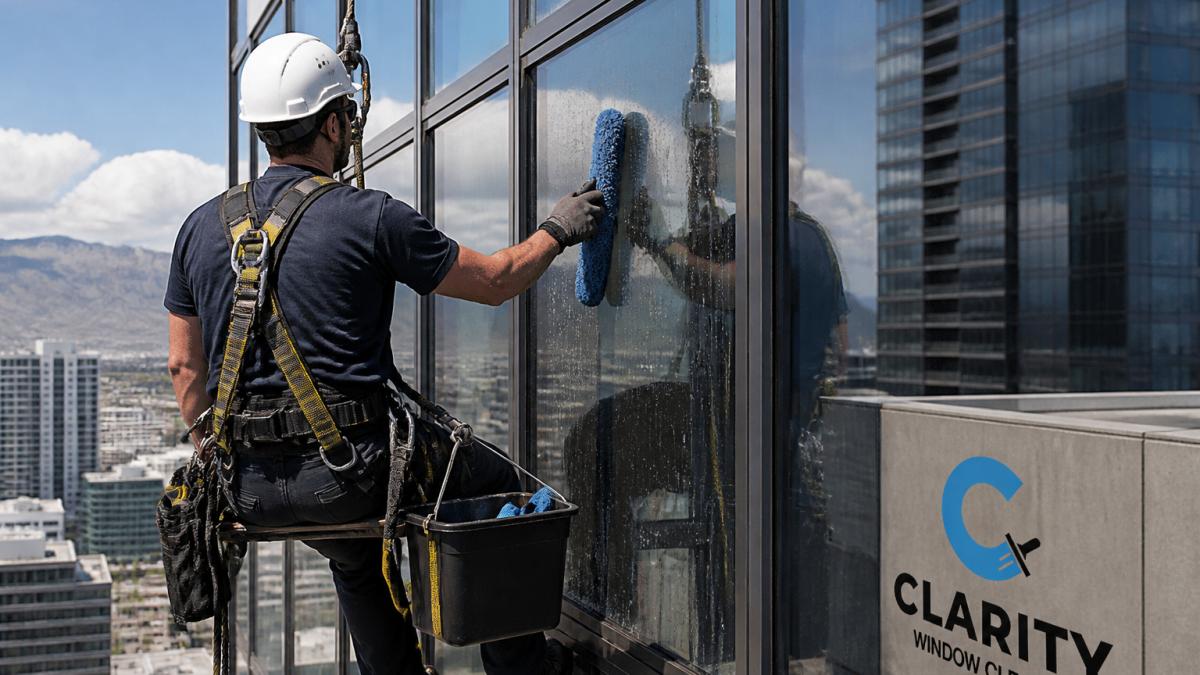
High-rise window cleaning involves significant fall hazards. Safety standards govern fall protection, equipment inspection, worker training, and emergency response. Understanding these requirements prevents injuries and demonstrates due diligence to insurers and building owners.
Standards depend on the work method and building type. Rope descent systems, suspended scaffolds, and building anchors each carry specific compliance obligations.
Building Your High-Rise Window Cleaning Safety Plan
A safety plan documents how work will be performed safely, addressing fall hazards, anchor points, equipment requirements, and rescue procedures.
The plan must identify site-specific hazards: high winds, extreme temperatures, weather patterns, and building design all influence risk and require documented assessment.
Teams need documented, job-specific training in fall protection, equipment use, rescue procedures, and hazard recognition, generic safety training doesn't substitute.
Before each cleaning day, crews must conduct documented inspections of anchor points, equipment, weather, and building access to determine if work should proceed.
Documentation is critical for compliance. Records of equipment inspections, worker training, hazard assessments, and incidents prove the operation followed safety protocols. Clarity provides free estimates for all window cleaning needs and includes detailed post-service reporting that documents work performed and safety measures taken.
High-Rise Window Washing Equipment Standards
Equipment must meet specific performance and maintenance standards. Safety harnesses, lanyards, and lifelines must be inspected before each use and replaced if damaged.
Building anchors must be certified to support fall arrest forces. Not every roof edge qualifies as a safe anchor point, proposed locations must be verified to withstand required loads.
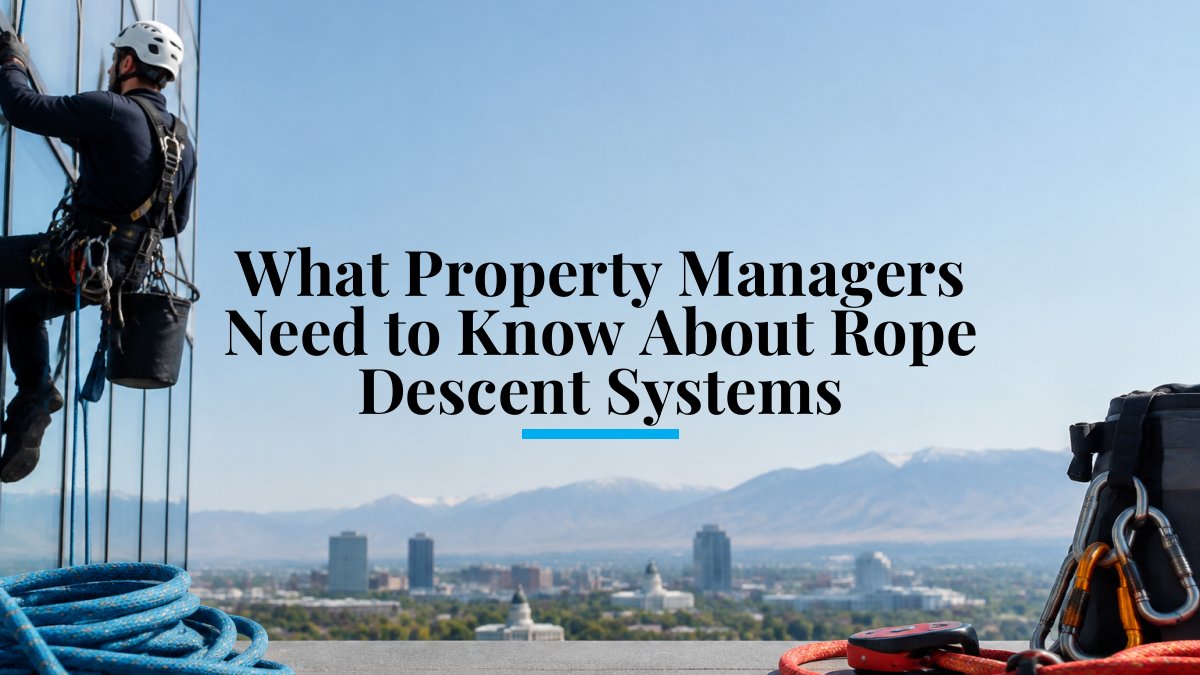
Rope descent systems use ropes, pulleys, and descent devices to lower workers. Ropes must meet industry standards and suspension equipment must be inspected regularly and maintained per manufacturer specs.
Suspended scaffolds require engineering certification and regular inspection. Rigging, cables, and platform structure must meet load capacity requirements.
All equipment must be inspected before use and documented. Damaged equipment must be removed from service immediately and repaired or replaced.
Weather monitoring and communication systems let crews respond to changing conditions. High winds, thunderstorms, and extreme temperatures require immediate work stoppage.
High-rise window washing demands rigorous attention to safety standards and documented compliance. Facilities managers who invest in proper safety planning, equipment maintenance, and worker training protect their teams and their buildings. Clarity Window Cleaning brings OSHA-compliant practices to every commercial project, combining certified technicians with site-specific safety plans and detailed documentation. Get Clarity for window maintenance that prioritizes safety and delivers results your facilities deserve.
Frequently Asked Questions
What are the main OSHA safety requirements for high-rise window washing?
Regulations require fall protection systems, personal protective equipment including safety harnesses and lanyards, certified anchorage points, and trained workers for any work at heights. High-rise window washing must include a written safety plan, pre-shift hazard assessment, equipment inspection, and rescue procedures. Employers must ensure all equipment meets industry standards and workers receive proper certification and training before beginning work.
What should a high-rise window cleaning safety plan include?
A comprehensive safety plan must cover fall protection methods, anchorage point locations and testing results, worker training and certification records, equipment inspection schedules, weather monitoring protocols, emergency rescue procedures, and suspension trauma prevention measures. The plan should identify all hazards specific to your building, assign responsibilities between the building owner and cleaning contractor, and include contingency steps if conditions change during the job. Documentation must be available on-site for inspection.
What documents should property managers request before high-rise window cleaning?
Request the contractor's safety plan, proof of worker certifications and training records, insurance and bonding documentation, equipment inspection reports, and rescue plan details. Ask for their approach to anchor verification and building-owner coordination. Verify that all personnel hold valid credentials and that equipment meets current industry standards. Request post-service reporting that documents what was completed and any issues encountered. Clarity provides free estimates and detailed documentation for all window cleaning needs.