 blog
blog
5 Eco-Friendly Window Cleaning Practices for Commercial Buildings
Table of Contents
- Why Eco-Friendly Window Cleaning Matters for Commercial Facilities
- 1. Pure Water Technology and Deionized Water Systems
- 2. Biodegradable Cleaning Solutions That Protect Glass Integrity
- 3. Water-Fed Poles and Microfiber Technology for Efficiency
- OSHA Compliant Window Cleaning for Commercial High-Rise Operations
- Professional Window Cleaning Service Estimates and Environmental Cost-Benefit Analysis
- Building Commercial Window Maintenance Schedules Around Sustainability Goals
- Frequently Asked Questions
Last Updated: September 24, 2026
5 Eco-Friendly Window Cleaning Practices for Commercial Buildings
Keeping commercial windows clean shouldn't mean harming the environment. Many facility managers face a real tension: they need spotless glass, but they also want to reduce their environmental footprint. At Clarity Window Cleaning, we work directly with property and facilities managers to deliver pristine results using sustainable methods that protect both your building and the planet.
Why Eco-Friendly Window Cleaning Matters for Commercial Facilities
Switching to sustainable cleaning practices isn't just about environmental responsibility. It directly affects your facility's operations, liability, and long-term costs.
1. Pure Water Technology and Deionized Water Systems
Pure water technology uses deionized water, water stripped of minerals and impurities, to clean glass without chemicals. Deionized water naturally attracts dirt and mineral deposits, leaving no spots or streaks as it dries.
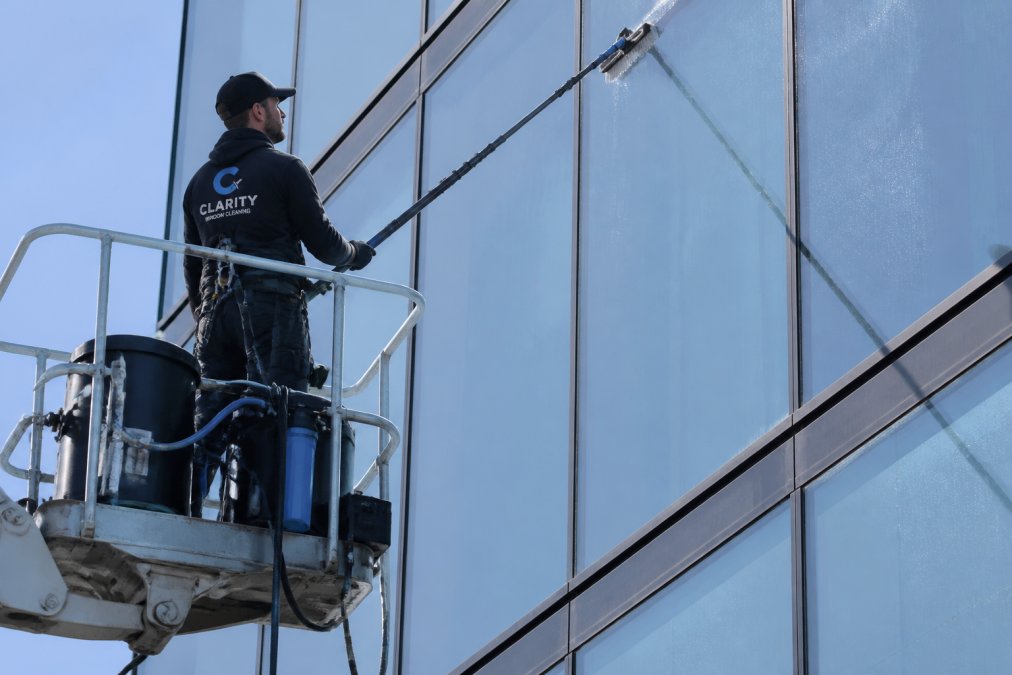
How Pure Water Systems Work
Water-fed extension poles deliver deionized water through specialized brush heads that gently agitate the glass while rinsing away contaminants, no chemicals, no residue.
Pros of pure water technology:
- Eliminates chemical disposal costs
- Produces spotless, streak-free results
- Safe for workers and building occupants
- Reduces glass degradation over time
- Works on all glass types, including low-E coatings
Cons of pure water technology:
- Requires initial equipment investment
- Needs access to deionized water or on-site purification systems
- Less effective on heavily soiled glass (requires pre-treatment in some cases)
Implementation Steps
- Assess your water source: Purchase deionized water or install a purification system
- Invest in poles and equipment: Water-fed poles typically reach 40-60 feet
- Train your team: Proper technique ensures effectiveness
- Schedule maintenance: Periodic filter changes and equipment checks
- Monitor results: Track glass clarity and ROI
2. Biodegradable Cleaning Solutions That Protect Glass Integrity
Biodegradable cleaning solutions provide a sustainable alternative for heavily soiled glass. Biodegradable surfactants break down naturally without toxic residue and won't corrode glass seals or damage low-E coatings, unlike ammonia or acid-based cleaners.
Why Glass Integrity Matters
Commercial glass, especially low-E or insulated units, is engineered for performance. Harsh chemicals etch surfaces, degrade seals, reduce thermal efficiency, and void warranties.
Biodegradable solutions clean effectively without these risks.
Pros of biodegradable solutions:
- Protect glass coatings and seals
- Safe for workers and building occupants
- Break down naturally in stormwater systems
- Often cost-competitive with traditional cleaners
- Suitable for all glass types
Cons of biodegradable solutions:
- May require slightly longer dwell time on heavily soiled glass
- Limited availability from some suppliers
- Slightly higher cost per unit than some traditional chemicals
How to Choose and Use Biodegradable Cleaners
- Verify certifications: Look for third-party environmental certifications
- Test on a small area: Ensure compatibility with your glass type
- Mix per guidelines: Follow manufacturer concentration recommendations
- Apply and dwell: Let solution sit briefly before rinsing
- Rinse thoroughly: Remove all residue to prevent streaking
3. Water-Fed Poles and Microfiber Technology for Efficiency
Microfiber technology uses ultra-fine synthetic fibers to capture dirt at the molecular level, lifting contaminants without scratching glass. Combined with water-fed poles, microfiber delivers professional results with minimal water waste.
How Microfiber Improves Cleaning
Microfiber bristles grab dirt on first contact, eliminating the lint and streaks of traditional squeegees and cotton cloths. The technology works on all glass types, including textured and specialty surfaces.
Pros of microfiber technology:
- Reduces water consumption by 30-40% compared to traditional methods
- Minimizes streaking and spotting
- Lasts longer than traditional brush materials
- Works with pure water or biodegradable solutions
- Reduces labor time per cleaning cycle
Cons of microfiber technology:
- Requires proper washing and maintenance of brush heads
- Initial equipment cost higher than traditional tools
- Needs training for optimal technique
Setting Up Water-Fed Poles with Microfiber
- Select pole length: Most commercial applications use 35-60 foot poles
- Choose brush head sizes: Different widths for different window types
- Install water delivery: Pure or filtered water connection to the pole
- Train operators: Proper angle and pressure prevent streaking
- Establish maintenance: Clean and dry microfiber heads after each use
OSHA Compliant Window Cleaning for Commercial High-Rise Operations
Safety compliance is mandatory for high-rise window cleaning. OSHA requires fall protection systems for any worker exposed to a fall of 6 feet or more, including harnesses, anchor points, and rescue procedures.
Key OSHA Requirements for Commercial Window Cleaning
- Personal fall arrest systems: Harnesses rated for the work environment
- Anchor points: Engineered attachment points rated for the load
- Training documentation: Competency training and certification for all workers
- Site-specific safety plans: Custom plans for each building's unique hazards
- Rescue procedures: Clear protocols for worker falls or suspension
Professional window cleaning companies maintain OSHA compliance through certified technicians, documented safety plans, and regular equipment inspections.
Why Compliance Matters Beyond Regulations
OSHA compliance protects your facility from liability and ensures insurance coverage. Documentation proves due diligence if an incident occurs.
Facilities managers should verify that any commercial window cleaning service provides:
- Current OSHA certifications for all technicians
- Written site-specific safety plans before work begins
- Proof of insurance coverage for high-rise work
- Equipment inspection records
Professional Window Cleaning Service Estimates and Environmental Cost-Benefit Analysis
Many facilities assume eco-friendly methods cost more. The financial case is actually stronger than most facility managers realize.
The Hidden Costs of Traditional Chemical Cleaning
Traditional chemical-based window cleaning appears cheaper upfront, but the full cost structure includes multiple line items that compound over time:
- Chemical purchase and storage: Ongoing inventory and secure storage costs
- Hazardous waste disposal: EPA-regulated disposal; municipalities charge per gallon for stormwater treatment
- Worker safety compliance: OSHA training, PPE, and medical monitoring
- Glass degradation: Harsh chemicals shorten glass lifespan from 20+ years to 12-15 years
- Warranty voiding: Non-approved chemicals void manufacturer warranties
- Liability and insurance: Increased premiums for chemical-related worker health issues
- Stormwater compliance: Clean Water Act tracking and reporting; non-compliance fines up to $25,000 per violation
Eco-Friendly Methods: Upfront Investment, Long-Term Savings
Eco-friendly approaches shift the cost structure dramatically:
Pure water systems eliminate ongoing chemical costs within 4-6 years through reduced chemical purchases and labor time. Biodegradable solutions cost 10-20% more per unit but reduce waste disposal fees by 60-80% and preserve glass integrity. Microfiber technology reduces water consumption by 30-40% per cycle, saving 50,000-100,000 gallons annually for high-rise buildings cleaned quarterly.
Glass Longevity: The ROI Multiplier
Eco-friendly methods preserve glass integrity, potentially extending useful life. This can defer replacement cycles, leading to capital cost savings.
Regulatory Compliance and Risk Mitigation
Facilities in municipalities with strict stormwater regulations face pressure to reduce chemical discharge. Eco-friendly methods can eliminate compliance costs and allow documentation of zero hazardous discharge, strengthening insurance coverage.
Building the Financial Case for Your Facility
When presenting an eco-friendly proposal, include current chemical costs, projected glass replacement timelines, stormwater compliance costs, water savings, insurance reduction, and 5-10 year net cost comparisons.
Building Commercial Window Maintenance Schedules Around Sustainability Goals
Scheduling matters more than most facilities realize. The right frequency prevents heavy soiling, reduces chemical use, extends glass life, and creates a documented trail of environmental stewardship, increasingly important for LEED certification, ISO 14001 compliance, and tenant sustainability commitments.
How Eco-Friendly Methods Enable Smarter Scheduling
Eco-friendly methods break the traditional dilemma of infrequent heavy cleaning versus frequent chemical exposure. Pure water systems allow cleaning every 4-6 weeks without residue or glass degradation. Biodegradable solutions enable quarterly schedules. Microfiber technology reduces labor time by 15-20%, making frequent cleaning economical. Facilities can shift from heavy cleaning every 6 months to light cleaning every 4-6 weeks, reducing chemical use, water consumption, and environmental impact while maintaining year-round appearance.
Recommended Cleaning Frequencies by Building Type and Environment
Urban commercial office buildings (high pollution, foot traffic):
- Main entrances and ground-floor glass: Monthly or every 4 weeks
- Mid-level floors: Quarterly (every 12 weeks)
- Upper floors: Semi-annually (every 26 weeks)
- Interior glass: Quarterly or as needed
Retail and hospitality properties (high visibility, customer-facing):
- Storefront and entrance glass: Every 2-3 weeks
- Upper-floor exterior: Quarterly
- Interior: Monthly or bi-monthly
Industrial or warehouse facilities (dust, particulate exposure):
- High-exposure areas: Monthly
- Standard exterior: Quarterly
- Interior: Semi-annually or as needed
Suburban or low-pollution areas (minimal air pollution, dust):
- Standard exterior: Semi-annually or annually
- High-traffic areas: Quarterly
- Interior: Semi-annually
Waste Management and Environmental Documentation
Most facilities overlook proper runoff management. Traditional chemicals create contaminated rinse water requiring disposal and triggering Clean Water Act compliance obligations. Eco-friendly methods create documented environmental advantages: Pure water systems produce clean runoff with no treatment requirements; Biodegradable solutions break down naturally and satisfy municipal permits and LEED credits; Microfiber technology reduces total water consumption and runoff volume.
Creating a Sustainable Maintenance Schedule
Step 1: Assess your building's environment: Proximity to pollution sources, air quality, rainfall patterns, building orientation, and tenant visibility requirements.
Integrating Scheduling with Sustainability Goals
Clarity Window Cleaning provides free estimates for all window cleaning needs and works directly with facilities managers to design customized maintenance schedules aligned with your building's sustainability commitments. A comprehensive plan should include frequency recommendations, method specification, compliance documentation, and annual optimization reviews. Proper scheduling transforms window cleaning into a strategic asset supporting environmental goals, reducing costs, and demonstrating stewardship to tenants and regulators.
Frequently Asked Questions
What are the benefits of using eco-friendly window cleaning solutions for commercial buildings?
Eco-friendly window cleaning solutions reduce environmental impact by eliminating toxic chemical runoff that contaminates soil and water systems. These biodegradable surfactants break down naturally without harming aquatic ecosystems. For facility managers, they improve workplace safety by reducing chemical exposure to staff and tenants, lower waste management costs, and extend glass longevity by avoiding corrosive residue buildup. Many commercial properties find that sustainable practices also enhance their environmental certifications and appeal to environmentally conscious tenants.
How does OSHA compliant window cleaning protect your commercial facility and team?
OSHA compliance ensures that window cleaning operations meet federal safety standards for fall protection, equipment inspection, and worker training. For high-rise commercial buildings, this means proper safety harnesses, anchor points, and documented site-specific safety plans. Professional window cleaning companies with OSHA compliance carry full insurance and bonded technicians, protecting your facility from liability if accidents occur. Clarity provides free estimates and can walk you through our safety protocols and documentation to ensure your building meets all regulatory requirements.
Are eco-friendly window cleaning products as effective as traditional chemicals?
Yes. Pure water technology and biodegradable surfactants deliver streak-free, spotless results comparable to traditional chemicals. Deionized water removes mineral deposits that cause streaking, while microfiber technology enhances cleaning efficiency without requiring harsh solvents. The main difference is that eco-friendly solutions work without leaving toxic residue on glass or in the environment. Professional window cleaning services using these methods typically achieve superior results because they combine advanced equipment with chemical-free approaches.
How can property managers reduce environmental footprint through professional window cleaning?
Property managers can adopt water-saving techniques like closed-loop pure water systems that recycle water rather than letting runoff drain untreated. Scheduling regular preventative maintenance with professional services reduces the need for deep cleaning with harsher chemicals. Choosing biodegradable solutions and proper waste management of cleaning byproducts minimizes environmental impact. Establishing commercial window maintenance schedules aligned with sustainability goals ensures consistent facility aesthetics while reducing overall water and chemical consumption over time.