
 blog
blog
Affordable Window Cleaning for Small Retail Businesses
Table of Contents
- Why Window Maintenance Matters for Retail Storefronts
- Commercial Window Cleaning Cost Guide for Small Businesses
- Frequency of Commercial Window Cleaning: Getting the Schedule Right
- DIY Window Cleaning vs. Professional Services
- How to Hire a Commercial Window Cleaner
- OSHA Window Cleaning Safety Requirements
- Eco-Friendly and Non-Toxic Cleaning Solutions
- Troubleshooting Common Glass Issues
- Frequently Asked Questions
Last Updated: September 23, 2026
Why Window Maintenance Matters for Retail Storefronts
Your storefront's first impression happens in seconds. Clean windows signal professionalism, attention to detail, and respect for customer experience. Dirty glass, streaks, and mineral deposits do the opposite, they suggest neglect.
For retail businesses competing for foot traffic, window maintenance is not a luxury. It's operational maintenance that directly affects how customers perceive your brand before they even enter. A storefront with crystal-clear glass invites people in. One with cloudy, streaky windows pushes them away.
The challenge most small retail businesses face is balancing cost against quality. Window cleaning small retail requires affordable solutions that don't break the budget, but you also can't afford poor results. Clarity Window Cleaning understands this tension, we work directly with property managers and retail owners to deliver professional-grade results without the enterprise pricing.
Commercial Window Cleaning Cost Guide for Small Businesses
Understanding window cleaning costs helps you budget effectively and compare service options fairly. However, pricing varies significantly based on building profile, service frequency, and glass condition.
Cost Factors That Drive Pricing
Several variables influence what you'll pay for professional window cleaning:
- Building height and window count: Single-story storefronts with 8-12 windows cost far less than three-story buildings with 40+ windows. Each additional story increases labor time and equipment requirements.
- Window condition: Clean windows maintained monthly cost less per visit than heavily soiled glass with mineral deposits or construction debris. Severe buildup requires specialized solutions and extended labor.
- Service frequency: Monthly maintenance visits cost less per cleaning than quarterly deep cleans. Regular service prevents mineral accumulation that becomes exponentially harder to remove.
- Geographic location: Hard water areas require specialized mineral-removal solutions. Coastal regions with salt spray or industrial areas with pollution buildup need more aggressive cleaning protocols.
- Window type: Standard clear glass costs less than tinted, reflective, or specialty coatings, which require different techniques to avoid damage.
Typical Cost Structures for Small Retail
Facilities managers typically encounter two pricing models:
Per-visit pricing charges a flat rate for each cleaning session. Pricing for professional service depends on factors like condition and location. This model works well for businesses that want predictable, one-time costs.
Monthly or quarterly contracts offer per-visit discounts for committed schedules. A business committing to monthly service often receives a per-visit discount compared to one-off cleanings, because the cleaner can maintain consistent window condition and plan route efficiency. Quarterly contracts typically fall between one-time and monthly pricing.
Cost Comparison: DIY vs. Professional
DIY attempts often appear cheaper upfront but rarely deliver professional results:
- Equipment investment: Squeegees, microfiber towels, commercial-grade cleaner concentrate, and a telescopic pole require an initial investment.
- Labor and time: A small storefront takes 2-4 hours for an owner or employee to clean properly. At a typical labor cost, that's a significant expense per session, plus materials.
- Rework rate: Most DIY attempts require a second pass to fix streaks or missed spots, effectively doubling labor time.
- Mineral deposit removal: Hard water stains require specialized solutions and technique. Attempting removal with standard cleaners often spreads the problem and requires professional correction anyway.
Professional service eliminates rework, uses commercial-grade equipment and solutions, and delivers consistent results in a single visit. For most small retail businesses, professional window cleaning every 4-8 weeks can be a more efficient option than the labor and material expense of monthly DIY attempts.
Budget Planning for Facilities Managers
Facilities managers should budget window cleaning as preventive maintenance, not an occasional expense. A small retail location investing in monthly professional service prevents the exponentially higher cost of mineral restoration or glass replacement later. Clarity provides free estimates for all window cleaning needs, so you can see exact pricing for your specific property before committing to a service plan.
Frequency of Commercial Window Cleaning: Getting the Schedule Right
How often you should clean storefront windows depends on your retail type, location, and customer-facing standards. A one-size-fits-all schedule doesn't work; high-traffic food service locations need different maintenance than quiet boutiques.
Cleaning Schedules by Retail Type
High-traffic food and beverage locations (restaurants, cafes, quick-service counters) accumulate visible buildup fastest. Customer expectations are high, and dirty windows signal poor hygiene standards. These locations benefit from weekly or bi-weekly professional cleaning combined with daily in-house spot maintenance. The investment pays dividends in customer perception and repeat traffic.
Retail storefronts with moderate foot traffic (clothing boutiques, bookstores, general merchandise) typically maintain curb appeal with monthly professional cleaning. These businesses see less dust and pollution accumulation than food service, but still need consistent maintenance to avoid the "neglected" appearance that deters browsers.
Low-traffic or office-based retail (professional services, medical offices, quiet specialty shops) can stretch to quarterly professional cleaning. These locations have fewer passersby and lower pollution exposure. However, even quarterly service is preferable to semi-annual or annual cleaning, which allows visible mineral deposits to accumulate.
Outdoor-facing or street-level locations in urban areas or near highways accumulate dust, pollution, and salt spray faster than suburban or protected locations.
Environmental Factors That Increase Cleaning Frequency
- Hard water or mineral-rich water supply: Windows require more frequent cleaning to prevent white, cloudy mineral deposits. Monthly or bi-weekly service prevents buildup better than quarterly schedules.
- Coastal regions: Salt spray accelerates mineral and corrosion buildup. Businesses within 5 miles of saltwater should increase frequency by 25-50%.
- Industrial or high-pollution areas: Factories, highways, or heavy traffic zones deposit particulates on glass faster. Monthly service prevents visible haze.
- Seasonal weather changes: Spring pollen, winter salt spray, and fall debris increase cleaning needs. Some facilities managers add one extra cleaning during high-pollen or winter salt seasons.
Balancing Frequency with Budget
Facilities managers often ask: "What's the minimum frequency to maintain professional appearance?" The answer is: monthly professional cleaning for customer-facing windows, combined with basic weekly in-house maintenance.
Maintenance Documentation and Planning
Clarify works with property managers to establish customized service schedules that fit your budget and operational needs, never disrupting business hours or blocking customer views during peak times. A documented cleaning schedule also provides facilities managers with maintenance records for property audits and lease compliance.
DIY Window Cleaning vs. Professional Services
The decision between DIY and professional cleaning comes down to time, results, and cost-per-visit.
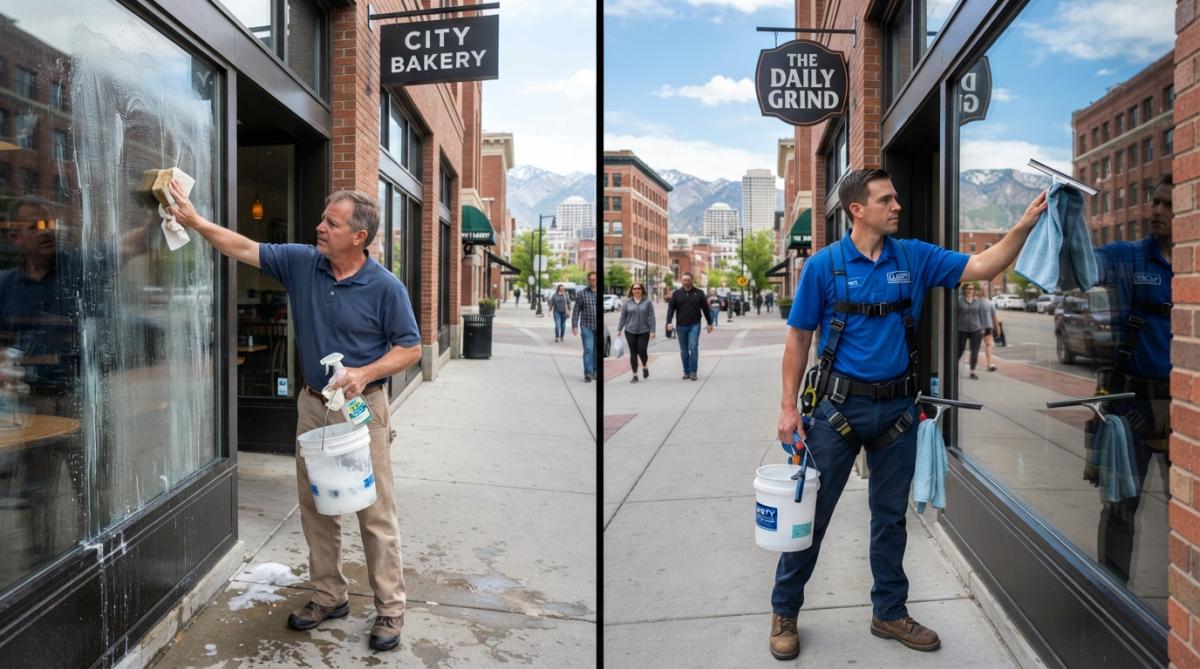
Essential Tools and Budget-Friendly Solutions
If you decide to handle basic maintenance in-house, these tools deliver the best results:
- Squeegee, A quality squeegee with a rubber blade prevents streaking better than paper towels or cloth
- Microfiber detailing towels, These absorb water without leaving lint or residue
- Scrubber or brush, Necessary for removing mineral deposits and stubborn buildup
- Glass cleaner concentrate, Commercial-grade solutions work better than household products on hard water stains
- Telescopic pole, Reaches second-story windows safely without ladders
- Bucket and belt system, Keeps supplies organized and hands free for proper squeegee technique
When to Call a Professional
Professional window cleaning becomes the better choice when:
- Your storefront has three or more stories (safety and equipment requirements)
- Mineral deposits cover more than 20% of your window surface
- You lack time for regular maintenance schedules
- Your windows are tinted (requires special techniques to avoid damage)
- You need detailed post-service reporting for maintenance documentation
Professional cleaners bring commercial-grade equipment, specialized solutions for specific glass issues, and the experience to deliver consistent results. They also carry insurance and follow safety protocols, protecting your business from liability if something goes wrong.
How to Hire a Commercial Window Cleaner
Finding the right service provider requires evaluating experience, safety practices, and communication.
OSHA Window Cleaning Safety Requirements
Safety regulations exist to protect workers and building occupants during window cleaning operations.
OSHA window cleaning safety requirements include:
- Fall protection equipment rated for the work height
- Proper training and certification for workers
- Site-specific safety plans for each location
- Regular equipment inspection and maintenance
- Compliance documentation available for audit
Eco-Friendly and Non-Toxic Cleaning Solutions
Environmental concerns and worker safety both point toward eco-friendly cleaning products.
Troubleshooting Common Glass Issues
Not all window problems require professional cleaning. Some indicate underlying issues worth addressing.
Frequently Asked Questions
How often should small retail businesses schedule professional window cleaning?
Most retail storefronts benefit from professional window cleaning every 4-8 weeks to maintain curb appeal and first impressions. High-traffic areas or locations exposed to harsh weather may need service every 2-4 weeks. The frequency of commercial window cleaning depends on your location, foot traffic, and local weather conditions. Clarity provides free estimates to assess your specific maintenance needs and recommend an optimal cleaning schedule.
What should I look for when hiring a commercial window cleaner?
When you hire a commercial window cleaner, verify they carry liability insurance, follow OSHA safety protocols, and have certified technicians. Ask about their equipment (telescopic poles, squeegees, microfiber detailing towels), cleaning solutions, and whether they provide detailed post-service reporting. Request references from other retail clients and confirm they can work around your business hours without disrupting operations. Clarity offers free estimates and can walk you through our safety certifications and service guarantees.
Is it more cost-effective to clean windows in-house or hire professionals?
DIY cleaning works for small storefronts with few windows, but professional services save time and deliver superior results. In-house teams require training, equipment investment, safety protocols, and insurance coverage. Professional providers bring commercial-grade glass cleaner concentrate, industrial cleaning supplies, and expertise in removing hard water stains and mineral deposits. For most retail operations, outsourcing can be a beneficial choice when you factor in labor, downtime, and liability risk.
What OSHA requirements apply to window cleaning for retail businesses?
OSHA requires fall protection when working at heights, which applies to most storefront cleaning. Safety protocols include proper harness use, anchor points, and non-disruptive scheduling during business hours. Your window cleaning provider must maintain site-specific safety plans and documentation. Hiring OSHA-compliant professionals protects your business from liability and ensures your staff and customers stay safe during maintenance.