 listicle
Top-Rated Window Cleaning for Industrial Properties
Table of Contents
- What Sets Professional Window Cleaning Apart for Industrial Properties
- OSHA-Compliant Window Cleaning Practices for Facility Safety
- Commercial Window Cleaning Maintenance Schedules That Protect Operations
- High-Rise Window Cleaning: Equipment, Access, and Expertise
- Getting Commercial Window Cleaning Service Estimates
- Hard Water and Mineral Deposit Removal for Industrial Glass
- Post-Construction Window Restoration and Debris Removal
- Conclusion
Last Updated: August 18, 2026
What Sets Professional Window Cleaning Apart for Industrial Properties
Industrial facilities face unique challenges that standard cleaning services cannot address. Professional window cleaning for industrial properties requires specialized expertise, safety protocols, and equipment designed for high-rise work, manufacturing environments, and complex operational schedules where safety and minimal disruption are non-negotiable.
At Clarity Window Cleaning, we work directly with facilities managers and property managers across industrial complexes to deliver OSHA-compliant window cleaning that fits your operational schedule. Our approach prioritizes safety, minimal disruption, and transparent reporting so you can document maintenance for your board and insurance carriers.
OSHA-Compliant Window Cleaning Practices for Facility Safety
Safety compliance is mandatory when managing industrial properties. OSHA establishes strict standards for work at height, fall protection, and equipment use. Any window cleaning operation on a commercial or industrial building must adhere to these federal requirements, and facilities managers are responsible for verifying that service providers meet these standards.
OSHA-compliant window cleaning begins with proper fall protection systems. Workers must use harnesses rated for their body weight plus equipment, anchor points that withstand significant load, and regularly inspected safety gear. Legitimate providers maintain site-specific safety plans detailing access methods, equipment use, and worker protection.
When hiring a window cleaning service, request safety documentation upfront. This documentation should be available for your records and insurance company.
Clarity Window Cleaning maintains full insurance coverage and provides detailed safety documentation for every project. Our technicians follow OSHA standards for fall protection, equipment inspection, and work procedures that keep your facility protected.
Commercial Window Cleaning Maintenance Schedules That Protect Operations
The frequency of commercial window cleaning depends on your facility type, environmental conditions, and operational requirements. Industrial properties in areas with hard water, dust, or pollution may need more frequent cleaning than facilities in cleaner environments.
Many facilities managers implement quarterly or semi-annual maintenance schedules. This frequency prevents mineral buildup, maintains visibility, and keeps your building exterior looking professional year-round. The real advantage of structured maintenance is predictability, you know exactly when service will occur, allowing coordination with tenant schedules and building operations.
Customized maintenance contracts allow you to define service frequency, timing, and scope based on your facility's specific needs. Some industrial properties prefer early-morning or evening service to avoid disrupting daytime operations.
High-Rise Window Cleaning: Equipment, Access, and Expertise
High-rise window cleaning for industrial properties requires specialized equipment and trained technicians. Buildings over three stories demand rope access systems, water-fed poles extending 40+ feet, or specialized scaffolding, the choice depends on building height, operational constraints, tenant occupancy, and safety requirements.
Water-Fed Pole Systems: The Standard for Most Industrial Properties
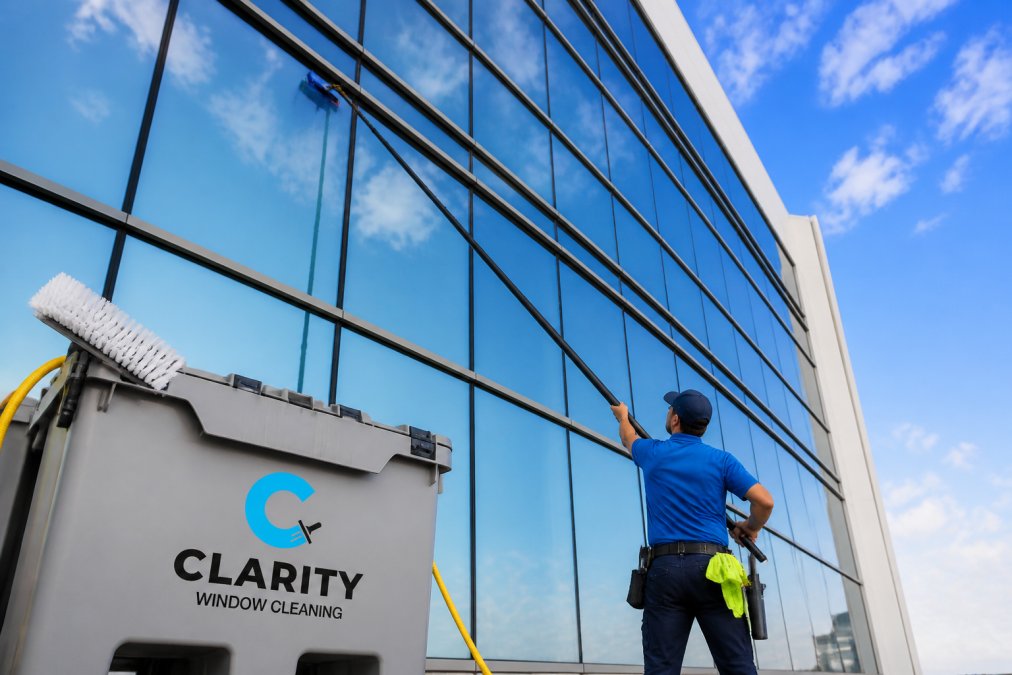
Water-fed pole systems allow technicians to remain on the ground while cleaning glass several stories above. These poles reach 40 feet or higher, use purified or deionized water to prevent mineral spots, and eliminate the need for workers to lean from windows or work from unstable positions. This approach dramatically reduces fall risk while delivering superior results.
For industrial properties, water-fed poles offer significant operational advantages: technicians work from ground level or building interiors, minimizing disruption to tenant operations and eliminating exterior equipment that might interfere with loading docks or manufacturing processes.
Purified water is critical for industrial facilities. Tap water contains minerals that dry on glass and create cloudy spots. Water-fed poles use filtration systems that remove these minerals, preventing new deposits from forming and reducing the frequency of deep cleaning needed.
Rope Access Systems: When Building Design Demands Specialized Techniques
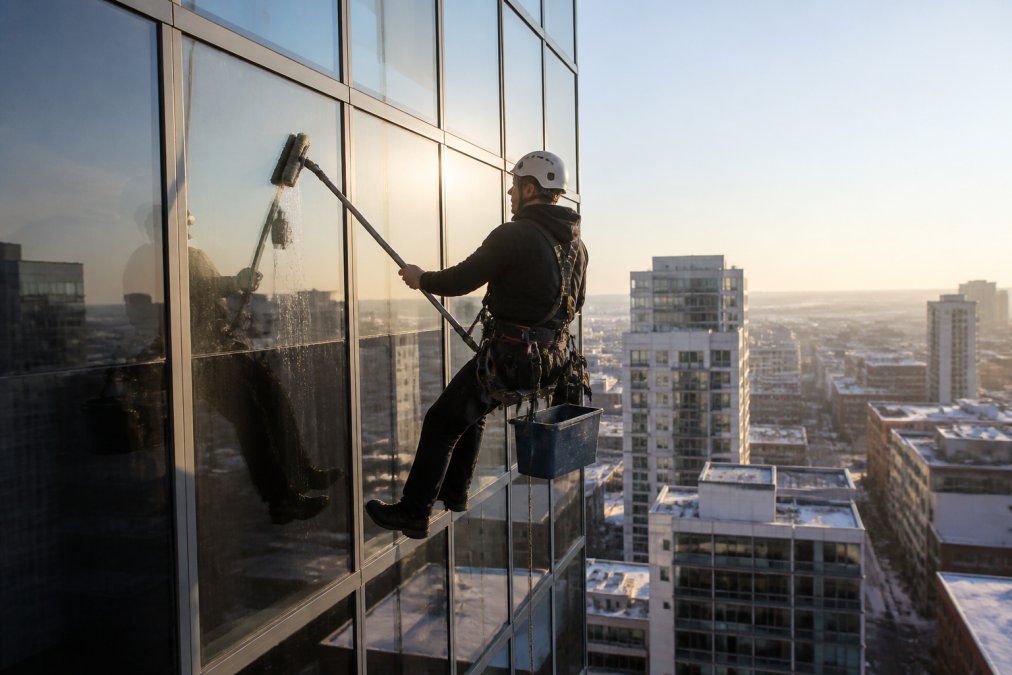
Some industrial properties with unusual architecture, protruding elements, or limited ground-level access require rope access systems where certified technicians rappel down the building exterior. Technicians must hold current certifications from organizations like the Industrial Rope Access Trade Association (IRATA) or the Society of of Professional Rope Access Technicians (SPRAT).
Rope access is most appropriate when:
- The building has architectural features preventing water-fed pole access
- Ground-level access is blocked by operational equipment or manufacturing processes
- The facility operates 24/7 and cannot accommodate ground equipment staging
- Interior access is not possible due to tenant occupancy
Rope access work requires coordination with your facilities team for roof anchor points, ground communication, and clear work zones below the building.
Mobile Elevated Work Platforms: Flexibility for Complex Facilities
Mobile elevated work platforms (MEWPs) position workers safely at the correct height and allow horizontal movement along the building facade. MEWPs work well when ground space is available, the building has a relatively uniform facade, and weather conditions are stable.
The trade-off is that MEWP operation requires ground space, traffic control, and coordination with facility operations. For industrial properties with active loading areas, this may mean scheduling cleaning during off-hours.
Interior Access: The Operational Advantage
Many industrial properties allow technicians to work from interior windows, which simplifies access and eliminates exterior equipment entirely. Interior cleaning is appropriate when windows are accessible from interior corridors, the facility is unoccupied during cleaning hours, or tenants provide temporary access.
For facilities managers, interior access is often preferred because it requires no exterior equipment, no traffic control, and minimal operational coordination.
Safety Certifications Beyond OSHA: What Industrial Facilities Should Verify
Beyond OSHA baseline requirements, industrial-grade window cleaning providers should hold additional certifications:
- ANSI/ASSE A10.48: The American National Standards Institute standard for window cleaning safety with documented procedures for equipment inspection, worker training, and hazard assessment.
- IRATA or SPRAT certification (for rope access work): Essential if your facility requires rope access cleaning.
- MEWP operator certification: Technicians operating mobile elevated work platforms should hold current certifications.
- CPR and First Aid: All technicians should hold current certifications.
When evaluating a window cleaning provider, ask specifically about these certifications. A legitimate provider will have documentation available.
Coordinating Access with Your Operational Calendar
Your facilities team needs to know which access method will be used, how long work will take, what ground space or interior access is required, whether work will affect operations, and what safety precautions will be in place.
Clarity Window Cleaning works directly with facilities managers and property managers to assess your building's specific access requirements and recommend the most efficient, safe, and operationally appropriate method. We maintain certifications in water-fed pole systems, rope access (IRATA-certified technicians available), and MEWP operation. Clarity provides free estimates for all window cleaning needs, including a detailed assessment of access methods and operational coordination required for your property.
Getting Commercial Window Cleaning Service Estimates
A commercial window cleaning service estimate should give you clear visibility into scope, timeline, and finished work expectations. For industrial properties, the estimate conversation evaluates whether a one-time service or recurring maintenance contract makes sense for your facility's operational and financial goals.
When requesting an estimate, provide details about facility size, building height, window condition, environmental factors, and current maintenance frequency. This allows the service provider to recommend whether quarterly, semi-annual, or monthly service would be most cost-effective.
One-Time Service vs. Maintenance Contracts
One-time cleaning works well for post-construction restoration, addressing accumulated hard water stains, or responding to specific events. You pay for that single project with no ongoing obligation.
Maintenance contracts establish recurring service, typically quarterly, semi-annual, or monthly, at a negotiated rate. The advantage for industrial property managers is predictability: you know exactly when service will occur and can coordinate with your operational calendar. Recurring maintenance prevents mineral buildup and debris accumulation that makes cleaning progressively more expensive. A facility investing in quarterly maintenance avoids scenarios where windows become so degraded that restoration costs significantly more than routine cleaning would have over the same period.
Maintenance contracts also simplify budgeting by allocating a fixed annual amount for window maintenance and eliminating operational disruption from unscheduled service.
What to Include in Your Estimate Request
Clarity provides free estimates for all window cleaning needs, allowing you to understand your options without committing before you're ready.
A quality estimate should include:
- Building square footage, number of stories, and total linear feet of window glass
- Current window condition assessment
- Estimated completion time
- Scope of service (exterior only, interior, screens, sills, frames)
- Whether service includes post-cleaning inspection, photographic documentation, and written completion reports
- Insurance and bonding information
- Proposed timeline and scheduling flexibility
- For maintenance contracts: proposed frequency, service windows, and pricing adjustments
Comparing Estimates: Beyond Price
When comparing estimates, look beyond hourly rate or total cost. A lower estimate requiring building access during business hours, providing no documentation, or lacking insurance coverage is actually more expensive when factoring in operational disruption and liability risk.
Evaluate the total value proposition:
- Documentation quality: Does the estimate include detailed site assessment? Will the provider deliver written completion reports with photos?
- Operational coordination: Can the provider accommodate your preferred service windows?
- Safety transparency: Does the estimate reference safety certifications and insurance?
- Contract flexibility: Can you adjust frequency if your facility's needs change?
Maintenance Contract ROI for Industrial Properties
A facility skipping window cleaning for 12 months and then requesting restoration may pay more than the cost of four quarterly cleanings over the same period. Mineral deposits harden, protective films become more difficult to remove, and required labor increases significantly.
For industrial properties with hard water, dust exposure, or high-visibility customer-facing areas, a maintenance contract typically pays for itself through prevention. You avoid emergency cleaning calls, maintain consistent facility appearance, and document regular maintenance for insurance carriers and building inspectors.
Clarity Window Cleaning delivers detailed estimates comparing one-time service against maintenance contract options. Clarity provides free estimates for all window cleaning needs, allowing you to understand the long-term value of professional window maintenance without any obligation.
Hard Water and Mineral Deposit Removal for Industrial Glass
Hard water stains and mineral deposits are common on industrial properties, particularly in areas with high mineral content in the water supply. These deposits form when water dries on glass, leaving behind calcium, magnesium, and other minerals that create white, cloudy spots.
Professional window cleaning services use specialized approaches depending on severity. Light mineral buildup responds to specialized cleaning solutions and extended contact time. Heavier deposits may require mechanical removal using soft-bristle brushes or specialized tools. Extremely stubborn deposits sometimes need chemical treatments that dissolve mineral buildup without damaging glass.
Prevention is more cost-effective than removal. Using purified or deionized water prevents new mineral deposits from forming. This is why professional services using water-fed pole systems with purified water deliver better long-term results than traditional methods using tap water.
Industrial properties with persistent hard water issues benefit from discussing mineral deposit prevention with their window cleaning provider during the estimate process.
Post-Construction Window Restoration and Debris Removal
New construction and major renovation projects leave windows coated with dust, debris, paint overspray, and protective films. Post-construction window restoration requires different techniques than routine maintenance because the debris is often stubborn and potentially damaging if handled incorrectly.
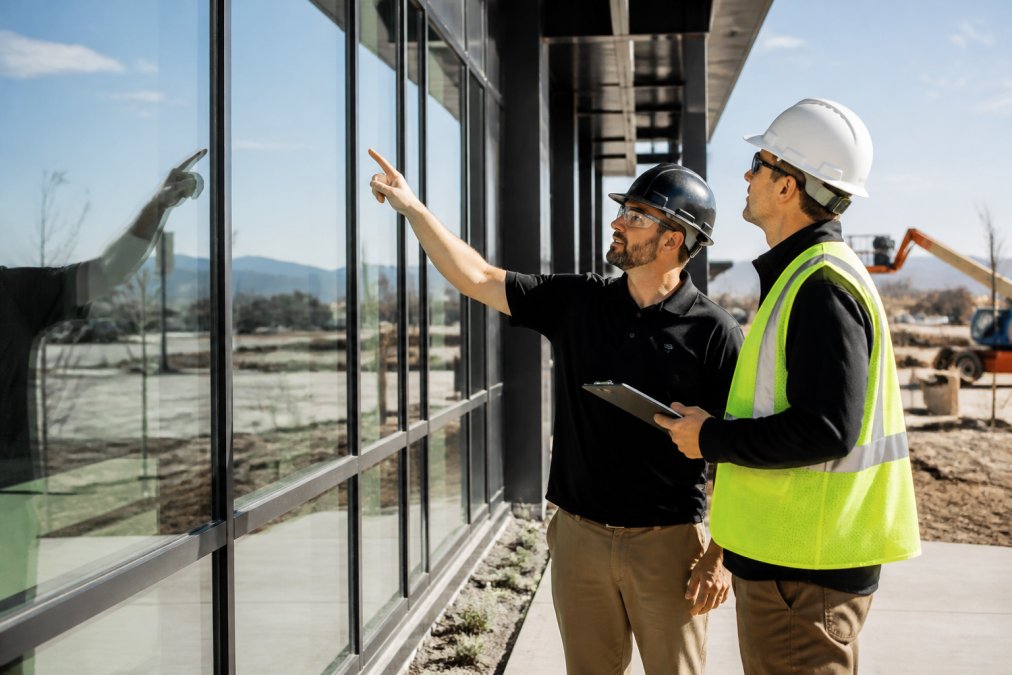
Professional post-construction window cleaning carefully removes protective films, scrapes dried paint or sealant without scratching glass, and addresses mineral deposits left by construction processes. This work demands expertise because aggressive scraping or inappropriate chemicals can permanently damage glass or building finishes.
When managing a construction project, coordinate window restoration with your general contractor and final cleaning schedule. Ideally, window cleaning happens after interior work is complete but before occupancy, so occupants move into a facility with pristine glass and clear views.
Clarity provides post-construction window restoration services for industrial properties. Our team understands the specific challenges of removing construction debris and can schedule work to fit your project timeline.
Conclusion
Professional window cleaning for industrial properties is an investment in facility appearance, worker safety, and regulatory compliance. The difference between standard cleaning and professional service designed for industrial facilities comes down to expertise, safety protocols, and attention to operational requirements that only experienced providers understand.
When you're ready to improve your facility's window maintenance, Clarity Window Cleaning delivers OSHA-compliant service with certified technicians, comprehensive safety documentation, and detailed post-service reporting that facilities managers and property managers depend on. Clarity provides free estimates for all window cleaning needs, so you can understand your options and how we can support your facility's maintenance requirements without any obligation.
Frequently Asked Questions
What safety certifications should industrial window cleaners have?
Professional window cleaners for industrial properties should hold OSHA certifications in fall protection and working at heights, ANSI standards compliance, and industry-specific training in high-rise access equipment. They must also carry liability insurance and be bonded. Clarity's certified technicians maintain full OSHA compliance and provide documentation of safety protocols for your records, giving you confidence that your facility meets all regulatory requirements.
How often should industrial properties schedule window cleaning?
Industrial properties typically benefit from quarterly or semi-annual cleaning schedules, depending on environmental exposure, pollution levels, and operational needs. Properties near construction sites or in areas with high mineral deposits may need more frequent service. Clarity works with facilities managers to develop customized commercial window cleaning maintenance schedules that fit your operational calendar and budget, ensuring your windows stay clear without disrupting tenant or worker activities.
What should I expect in a commercial window cleaning service estimate?
A comprehensive commercial window cleaning service estimate should include building size and height, access method and equipment needed, frequency of service, any special requirements (hard water removal, post-construction debris), timeline, and detailed pricing. Clarity provides free estimates for all window cleaning needs, with transparent reporting on scope, safety protocols, and scheduling options so you can make informed decisions for your industrial property.
How can I verify that a window cleaning company is OSHA-compliant?
Request proof of OSHA certification, liability insurance, and bonding documentation from any provider. Ask about their fall protection protocols, equipment inspection schedules, and incident history. Professional companies like Clarity provide detailed safety plans specific to your building and maintain records of all compliance measures. Before signing a contract, confirm they can document their practices and provide post-service reporting for your insurance and board records.
This article was written using GrandRanker