 How-to
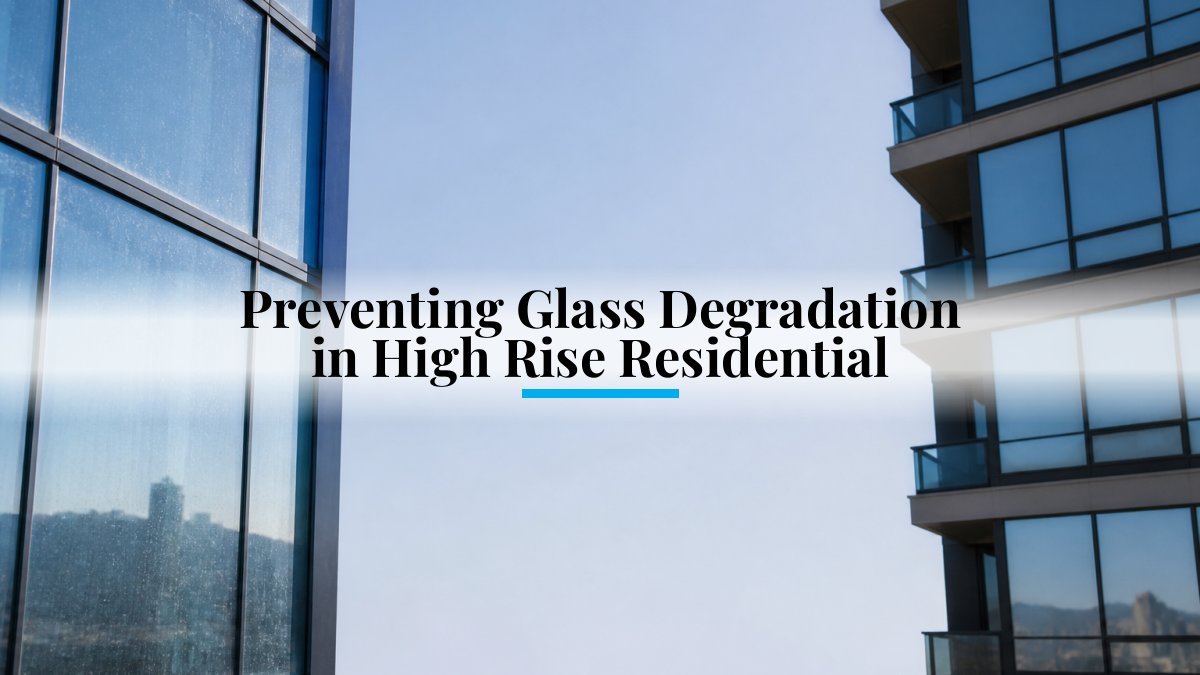
Preventing Glass Degradation in High Rise Residential
Table of Contents
- Preventing Glass Degradation in High Rise Residential Buildings: Start With an Inspection Checklist
- Preventing Hard Water Stains on Windows and Construction Debris Removal From Glass
- A Window Maintenance Schedule for Property Managers
- Frequently Asked Questions
Last Updated: October 20, 2026
Preventing Glass Degradation in High Rise Residential Buildings: Start With an Inspection Checklist
Preventing glass degradation in high rise residential buildings starts with scheduled inspections. Clarity Window Cleaning works with facilities and property managers every week, and buildings that catch small glass problems early avoid the expensive ones later.
Glass degradation is the slow breakdown of a window's surface and seals from sun, water, dirt, and stress, showing up as hazy panes, etched spots, fogged insulating glass, and mineral buildup. Left alone, each shortens the service life of the glazing system.
A good high-rise window inspection checklist covers:
- Cracks, chips, and edge damage on each pane
- Cloudy or fogged insulating glass units
- Hard water spots and mineral film
- Scratches from past cleaning or construction
- Sealant gaps around frames and curtain wall joints
- Water streaks or staining below joints
- Construction debris, mortar, or coating residue

Walk the facade at least twice a year and after any major storm, logging findings with photos and dates to keep small issues from becoming glass failure.
Preventing Hard Water Stains on Windows and Construction Debris Removal From Glass
Hard water stains form when mineral-rich water dries on glass and leaves deposits that bond to the surface and etch it. Preventing hard water stains on windows comes down to two things: dry the glass after cleaning, and remove mineral film before it hardens.
Construction debris is different. Mortar splatter, stucco overspray, paint, and silicone residue can scratch glass if scrubbed with the wrong tool, so post-construction glass needs a staged approach:
- Dry-remove loose grit and dust.
- Soften mortar and overspray with water before touching the glass.
- Use plastic scrapers, never metal, on coated panes.
- Finish with a pH-neutral cleaner and clean squeegee.
- Dry edges and frames so water does not spot.
A Window Maintenance Schedule for Property Managers
A window maintenance schedule for property managers should match the building, not a generic calendar. High-rise residential towers face more wind pressure, weather exposure, and glass surface than low-rise buildings, so the schedule needs to reflect that.
Here is a practical framework to build from:
| Task | Frequency | Who Handles It |
|---|---|---|
| Visual inspection walk | Twice a year | Facilities team |
| Routine exterior cleaning | 2-4 times a year | Professional crew |
| Full facade inspection | Annually | Qualified inspector |
Adjust cleaning frequency for local conditions, buildings near highways, industrial sites, or heavy tree cover collect grime faster.
Clarity Window Cleaning builds customized schedules for high-rise and commercial properties, with detailed post-service reporting so managers can document maintenance for boards and insurers. Clarity also provides free estimates for all window cleaning needs, and the team works directly with facilities and property managers to plan service around tenant schedules.
Frequently Asked Questions
What causes glass to degrade in high-rise buildings?
Glass degradation in high-rise buildings comes from several sources: dirt and grime buildup, hard water minerals from rain and irrigation, construction debris left after projects, weather exposure including wind pressure and temperature swings, and improper cleaning methods that scratch the surface. Over time, these factors reduce clarity and can damage protective coatings. Regular cleaning and inspection catch most issues early.
How often should high-rise building windows be inspected?
A practical schedule is a quick visual check monthly, a detailed inspection quarterly, and a professional facade review annually. After severe weather or nearby construction, add an extra inspection. Property managers should document each check to track changes and plan repairs. Clarity provides free estimates for window cleaning and can help set up a maintenance schedule.
Can hard water stains permanently damage architectural glass?
Yes, if left untreated. Hard water minerals etch into the glass surface over time, and what starts as a surface stain can become permanent damage that requires professional polishing or replacement. Regular cleaning with deionized water and prompt removal of sprinkler spray or rain spots prevents this. Clarity offers hard water stain removal as part of commercial window cleaning.
Glass degradation rarely announces itself. It builds quietly until a fogged unit or etched pane forces a costly replacement. The fix is steady, scheduled care backed by good records.
Clarity Window Cleaning helps property and facilities managers protect their glass with certified technicians, high-rise service, and reporting that stands up to board and insurance review. Get started with Clarity Window Cleaning and keep your building's glass clear, protected, and on schedule.