
 ultimate-guide
How to Remove Hard Water Stains: Complete Guide
Table of Contents
- What Causes Hard Water Stains and Mineral Deposits
- Best Tools for Removing Hard Water Stains
- Step-by-Step: How to Remove Hard Water Stains from Glass and Shower Doors
- Removing Buildup from Faucets, Fixtures, and Toilet Bowls
- Benefits of Professional Hard Water Stain Removal for Commercial Properties
- Preventing Mineral Buildup on Commercial Windows and High-Rise Glass
- Conclusion
- Frequently Asked Questions
Last Updated: September 13, 2026
What Causes Hard Water Stains and Mineral Deposits
Hard water stains form when water carrying dissolved minerals evaporates and leaves them behind. In most U.S. buildings the culprits are calcium and magnesium, which bond to glass, chrome, and porcelain as a chalky white film ordinary glass cleaner will not touch.
That film is not dirt but a mineral deposit that behaves like a thin crust. Water from a municipal supply or private well picks up calcium and magnesium as it moves through rock and soil, then carries those minerals to every faucet, shower head, and window.
Understanding Calcium Buildup and Magnesium Deposits
Calcium buildup is harder to remove: calcium carbonate crystallizes as water evaporates, forming a rigid layer that clings to glass and metal. Magnesium leaves a softer haze that wipes away easily but returns quickly if the source water is not addressed.
Both minerals react to acid, which drives nearly every effective removal method in this guide, from white vinegar to commercial descalers.
How Limescale Forms on Glass and Fixtures
Limescale is calcium and magnesium accumulating layer by layer. Each wetting and drying cycle adds another thin sheet of minerals, which is why a shower door that looks slightly cloudy in spring can look frosted by fall.
On glass, limescale starts as spotting near the edges and water channels, then spreads. Left long enough, the minerals etch into the surface itself. Glass etching is permanent damage, not a stain, and no amount of scrubbing will reverse it, the line where professional restoration becomes the only real option.
Best Tools for Removing Hard Water Stains
The right tools matter more than the cleaning solution: the wrong pad can scratch a surface you can never fix. A non-scratch pad, microfiber cloth, and plastic scraper handle most jobs; a power scrubber saves time on large glass but needs the correct pad.
Here is what belongs in a hard water stain removal kit:
- Non-scratch pads for glass and chrome, never steel wool
- Microfiber cloths for wiping, rinsing, and buffing
- Plastic scrapers for thick limescale on flat glass
- Spray bottles for diluted solutions and clean rinse water
- A power scrubber with soft brushes for large commercial panes
- Gloves and safety glasses for any acid-based product
The most common mistake is reaching for an abrasive pad when the stain will not budge. Abrasives remove the stain and the finish together, never worth it on commercial glass.
Step-by-Step: How to Remove Hard Water Stains from Glass and Shower Doors
To remove hard water stains from glass, start with the gentlest method and escalate only if it fails: apply a diluted acid solution, let it dwell, agitate with a non-scratch pad, rinse thoroughly, and buff dry. Most light to moderate deposits come off in one pass.
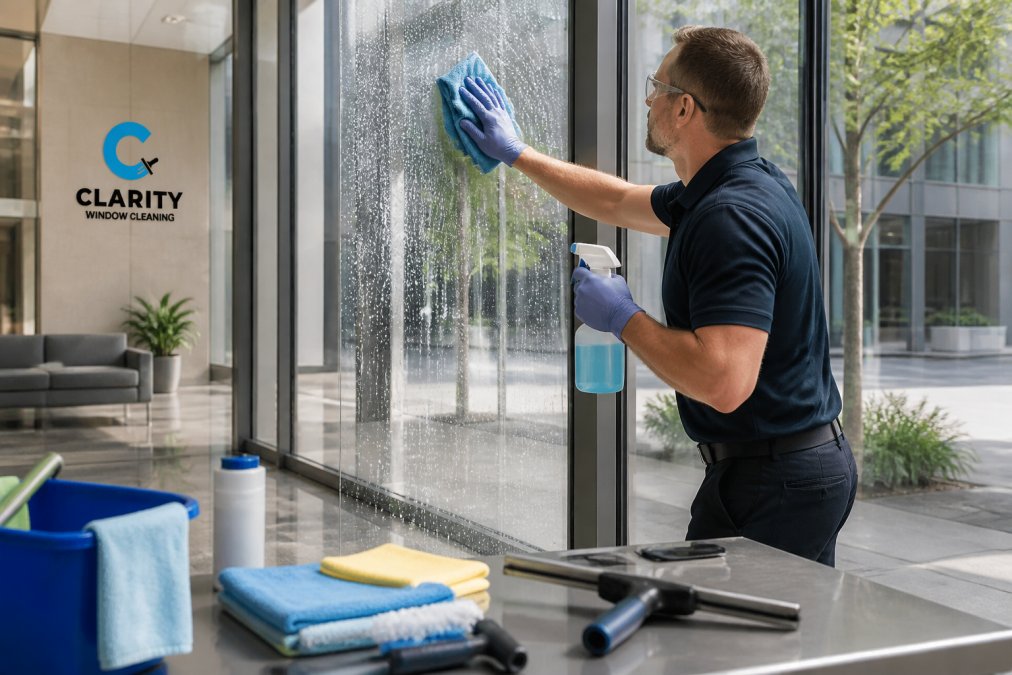
Total time: 20-40 minutes per pane, depending on deposit thickness.
Using White Vinegar and Baking Soda Safely
White vinegar is the workhorse because its acetic acid dissolves calcium and magnesium on contact. Mix equal parts white vinegar and water, spray the glass, and let it sit 5-10 minutes, dwell time does the work, not scrubbing.
Baking soda is a mild abrasive, not an acid, so use it as a paste on stubborn spots after the vinegar soak. Never mix vinegar and baking soda in the same bottle; they neutralize each other and you lose the acid you needed.
A few safety notes that matter:
- Do not let vinegar sit on natural stone, marble, or aluminum
- Test any solution on a small corner first
- Rinse with clean water so no residue dries back onto the glass
When to Use Commercial Degreasers and Acetic Acid Solutions
Commercial descalers and stronger acetic acid solutions are the right call when vinegar has failed twice. They carry higher acid concentrations, so check the label for rated surfaces, ventilate, and wear gloves and eye protection.
On a large commercial building, this is also the point where the job stops being a spray-and-wipe task. High-rise glass with heavy mineral buildup needs controlled access, the right dilution, and a rinse plan. That work is what Clarity Window Cleaning handles for facilities and property managers, and we provide free estimates for every window cleaning need.
Removing Buildup from Faucets, Fixtures, and Toilet Bowls
Faucets and fixtures respond well to soaking, while toilet bowls need a longer dwell and a gently used pumice stone. The chemistry stays the same; what separates a clean result from a damaged finish is knowing the surface first.
Faucets, Aerators, and Shower Heads
Mineral scale plugs the smallest openings first: the aerator screen on a faucet, the rubber nozzles on a shower head. Both clog with the same calcium carbonate crust that clouds glass and respond to the same acid soak.
- Unscrew the aerator with a pair of pliers wrapped in tape to avoid marring the chrome.
- Soak the aerator, screen, and any rubber washers in undiluted white vinegar for several hours or overnight.
- For a fixed shower head, fill a zip-top bag with vinegar, slip it over the head, and secure it with a rubber band so the nozzles stay submerged.
- Rinse with clean water and reinstall. Run hot water for a minute to flush loosened scale out of the supply line.
If a fixture looks clean but sprays sideways afterward, that is usually a partially cleared aerator, not a failed one. Soak it a second night before replacing anything.
Chrome, Brushed Nickel, and Aluminum
Chrome is the most forgiving bathroom metal, tolerating short vinegar contact and wiping clean with a microfiber cloth. Brushed nickel is softer and can dull under repeated acid exposure, so keep dwell times short and rinse well. Aluminum reacts with acid and can pit or discolor, use a pH-neutral cleaner.
Never use steel wool or abrasive powders on any plated fixture. They strip the finish and leave a scratch pattern that traps minerals faster than the original surface did.
Toilet Bowls and the Mineral Ring
Toilet bowls are different: mineral deposits bond to porcelain below the water line and build a ring standard cleaners skim over. Standing water dilutes any acid you pour in, which is why the ring survives.
A workable sequence:
- Turn off the supply valve and flush to empty the bowl as far as it will go. A cup or sponge removes the last inch of standing water.
- Apply undiluted white vinegar or a descaler rated for porcelain directly to the ring.
- Let it dwell 20-30 minutes. Heavier rings may need a second application.
- Scrub with a pumice stone kept wet, or a non-scratch pad. Pumice is softer than porcelain and will not scratch it when wet, but it will scratch if used dry.
- Flush and repeat on stubborn rings.
Do not mix a descaler with a chlorine bleach product. The combination can release chlorine gas. Pick one chemistry and finish the job before switching.
Surface Compatibility at a Glance
| Surface | Best Method | Dwell Time | Avoid |
|---|---|---|---|
| Glass and shower doors | Diluted white vinegar | 5-10 minutes | Abrasive pads |
| Chrome faucets | Vinegar soak, aerator removed | Several hours | Acid on aluminum |
| Brushed nickel | Short vinegar contact, rinse well | 2-3 minutes | Long acid dwell |
| Porcelain toilets | Descaler soak plus wet pumice | 20-30 minutes | Metal scrapers, bleach mixing |
| Natural stone | pH-neutral cleaner only | As directed | Any acid |
| Acrylic tubs and surrounds | pH-neutral cleaner, soft cloth | As directed | Vinegar, abrasives, solvents |
Acrylic is the surface most often ruined by generic advice. It scratches easily and reacts to acid, so the vinegar method that works on porcelain will dull it. Read the fixture label before you treat it.
Benefits of Professional Hard Water Stain Removal for Commercial Properties
Professional removal pays for itself in surface life. Deposits left in place etch glass permanently, and replacing commercial glazing costs far more than routine descaling. Facilities managers who treat stain removal as scheduled maintenance protect the asset instead of reacting to damage.
Beyond the glass, clean windows support the appearance tenants and visitors judge a building by, documented maintenance records help when reporting to a board or insurer, and a crew working from a site-specific safety plan keeps the building running.
That last point is the one most owners underestimate. Window cleaning at height is regulated work, and the safety documentation matters as much as the result. Clarity Window Cleaning builds site-specific safety plans for every high-rise job, and our technicians are certified, fully insured, and bonded.
Preventing Mineral Buildup on Commercial Windows and High-Rise Glass
Prevention comes down to two levers: stop minerals from reaching the glass, and remove what lands before it bonds. Neither is fully achievable with hard water alone, but together they push the cleaning cycle out considerably. The real lever is the water itself.
Start With the Water, Not the Glass
A water softener or reverse osmosis system removes calcium and magnesium before they hit a surface, the only true long-term fix. For high-rise upper floors, softened water on the cleaning supply line measurably slows spotting; spraying hard water and squeegeeing it off re-mineralizes the glass with every pass.
Confirm the problem with a hardness test. Test strips read in grains per gallon: above roughly 7 is hard, above 10 very hard. Municipal suppliers publish annual water quality reports listing hardness by source, so a facilities manager can often find the number without testing. A private well needs its own test.
Long-Term Water Softening Solutions for Facilities
A water softener is the single most effective prevention tool for a building with hard supply water. Ion exchange swaps calcium and magnesium for sodium, so water drying on glass leaves far less behind. Reverse osmosis removes most dissolved minerals but produces reject water and needs more maintenance.
The trade-off is cost and maintenance: softeners need salt refills and periodic service, and larger buildings may need commercial-scale units. Weighed against repeated descaling and eventual glass replacement, the math usually favors treatment. Pair a softener with a professional cleaning schedule and mineral buildup stops being a recurring emergency.
For high-rise properties, the practical move is often a dedicated softened-water line for the cleaning supply rather than treating the entire building. That keeps the capital cost contained while still removing the minerals that cause spotting on the glass.
Build a Schedule Around Exposure
Not all glass spots at the same rate. South- and west-facing elevations dry faster under direct sun and spot sooner, and irrigation overspray accelerates buildup on lower floors. Prioritize those areas so deposits never layer before they bond.
- Rinse glass after rain and irrigation cycles
- Wipe squeegee edges dry to prevent spotting
- Schedule descaling before winter, when heating dries interiors faster
- Track which elevations spot first and adjust frequency
- Log each service so you can see whether the cycle is lengthening or shortening over time
When Prevention Is Not Enough
Even a well-treated building will see some mineral film, especially on elevations exposed to irrigation or prevailing wind. At that point the question shifts from chemistry to access. High-rise glass with heavy buildup needs controlled access, the right dilution, and a rinse plan, and that work belongs with a crew set up for it. Clarity Window Cleaning handles descaling and routine cleaning for facilities and property managers, and we provide free estimates for every window cleaning need.
Conclusion
Hard water stains are a mineral problem, not a cleaning problem, and treating them that way separates a surface that lasts from one that etches. Match your method to the surface, give acid solutions real dwell time, and address the water source if you want results to hold.
For commercial and high-rise properties, that work is best handled by a crew set up for it. Clarity Window Cleaning brings certified technicians, OSHA-compliant practices, high-rise capability up to 40 stories, and detailed post-service reporting, all on a schedule that keeps your building running. We provide free estimates for all window cleaning needs. Get Clarity and protect the glass you already paid for.
Frequently Asked Questions
How do you remove calcified water stains from exterior glass?
Calcified stains on exterior glass require a two-step approach. First, apply a diluted acetic acid solution or white vinegar and let it dwell for 10-15 minutes to break down calcium buildup. Scrub gently with a non-scratch pad, then rinse thoroughly. For severe limescale or glass etching, professional restoration may be necessary. Facilities managers should schedule regular cleanings to prevent mineral deposits from bonding permanently to the surface.
Does vinegar effectively remove hard water stains from commercial windows?
White vinegar works well for light to moderate hard water stains on commercial windows because its acetic acid dissolves calcium and magnesium deposits. Dilute it with equal parts water, apply, and let it sit before scrubbing. However, vinegar may not fully address advanced limescale or glass etching on high-rise windows. For large-scale commercial properties, professional window cleaning services provide safer, more thorough results and help prevent long-term surface damage.
Can hard water stains cause permanent damage to glass surfaces?
Yes, untreated hard water stains can permanently etch glass over time. The minerals bond to the surface and, if left long enough, create microscopic pits that trap future deposits. This is called glass etching and cannot be reversed with DIY methods. Regular cleaning and preventive maintenance, including water softener installation, are critical to preserving surface integrity on both residential and commercial glass.
How often should commercial properties schedule professional glass restoration?
Most commercial properties benefit from professional glass restoration every 6-12 months, depending on water hardness and building exposure. High-rise office towers in areas with hard water may need quarterly service to prevent mineral buildup. Clarity Window Cleaning offers free estimates for all window cleaning needs, including customized schedules for facilities managers and property managers. Regular professional service protects glass and maintains curb appeal.