 how-to
How to Prevent Streaks on Glass: A Complete Guide
Table of Contents
- Why Windows Streak and How to Prevent It
- Window Cleaning Tools for Facilities Managers
- Choosing the Right Cleaning Solution
- Step-by-Step Streak-Free Cleaning Process
- The Importance of Cleaning on Cloudy Days
- Benefits of Professional Hard Water Stain Removal
- Commercial Window Cleaning Best Practices
- Common Mistakes to Avoid
Last Updated: August 23, 2026
Why Windows Streak and How to Prevent It
Window streaks frustrate property managers and facilities directors more than almost any other maintenance challenge. A freshly cleaned building facade looks professional for maybe a week, then mineral deposits, evaporation patterns, and improper technique combine to leave visible marks that undermine your facility's appearance.
Understanding why streaks form is the first step to preventing them. Most streaks aren't a cleaning failure, they're a chemistry and technique problem that becomes completely preventable once you know what causes them.
At Clarity Window Cleaning, we work directly with facilities managers across commercial properties, high-rise office towers, and industrial complexes. The strategies in this guide apply whether you're maintaining a 5-story office building or a 40-story tower.
Hard Water Deposits and Mineral Buildup
Hard water is the silent culprit behind most stubborn streaks. When water containing dissolved minerals (primarily calcium and magnesium) evaporates from glass, it leaves behind a white, cloudy film. This mineral residue doesn't wash away with plain water, it requires specific chemistry to dissolve.
The severity depends on your water supply. Some facilities have naturally softer water and rarely encounter mineral buildup. Others, particularly in areas with high mineral content, see film accumulate within days of cleaning. This isn't a reflection of poor technique, it's a water chemistry issue that demands a targeted solution.
Mineral deposits create a vicious cycle. The initial film makes glass look streaky. When you attempt to clean it with water alone, the minerals redistribute rather than disappear, often creating worse streaks. Professional hard water stain removal requires either distilled water (which has no minerals to deposit) or a cleaning solution formulated to chemically break down mineral bonds.
Evaporation Rate and Surface Temperature
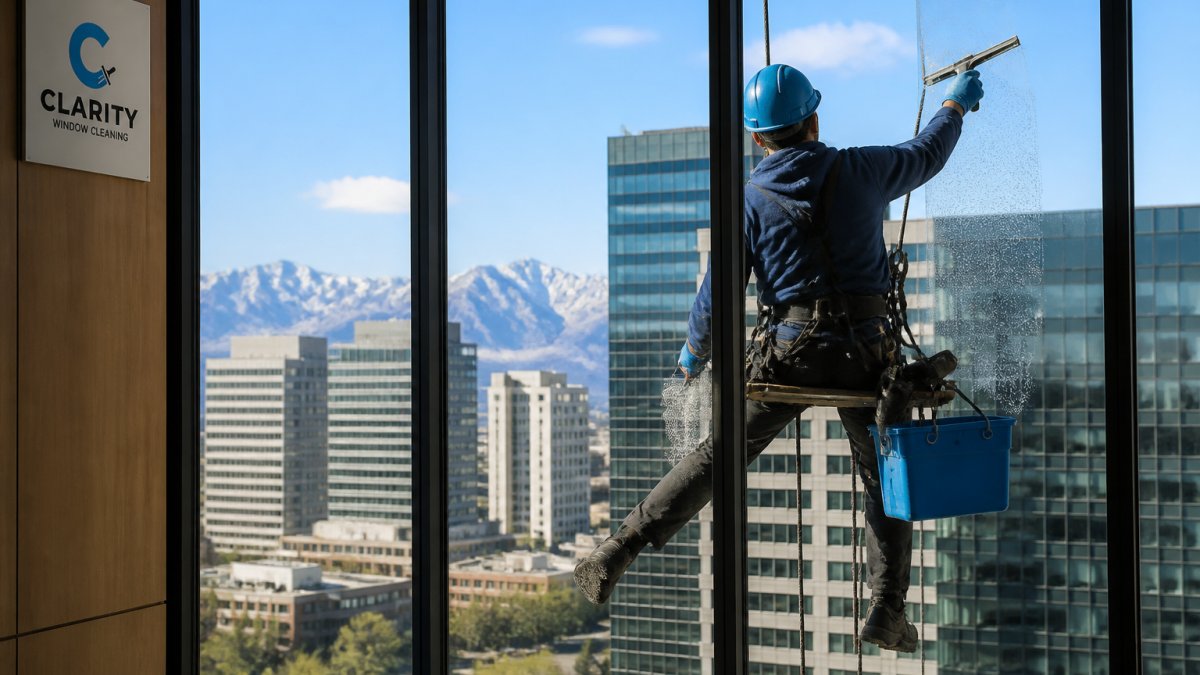
Glass temperature and evaporation speed determine whether your cleaning solution dries evenly or leaves behind streaks. When you apply cleaning solution on a hot, sunny day, the liquid evaporates faster than you can wipe it away. The minerals in the solution concentrate on the glass surface as the water disappears, creating visible marks. This is why professional cleaners deliberately avoid peak sun hours.
Cleaning on cool, cloudy days allows you to work methodically. The slower evaporation rate gives you time to apply solution, let it dwell, and wipe it completely before the water dries. Surface temperature also affects how cleaning solution behaves chemically, most formulas work optimally within a specific temperature range. This is why timing your cleaning around weather conditions isn't a luxury, it's a fundamental requirement for streak-free results.
Window Cleaning Tools for Facilities Managers
The right tools make the difference between mediocre results and professional-grade finishes. For facilities managers overseeing large properties, investing in quality equipment pays dividends across every cleaning cycle.
Squeegee vs. Cloth Wiping Techniques
A squeegee removes the bulk of water and cleaning solution in a single, controlled stroke. For large, flat panes typical of commercial buildings, a squeegee is faster and more consistent. It leaves minimal residue because it physically removes liquid rather than relying on absorption. Professional window cleaners favor squeegees for high-rise work because the technique is repeatable across hundreds of panes.
Cloth wiping, using a lint-free cloth or microfiber towel, works differently. The cloth absorbs moisture rather than displacing it. This approach works well for smaller windows or detailed work around frames, but requires more manual effort and takes longer on large surfaces.
For facilities managers managing commercial properties with extensive exterior glass, a squeegee combined with lint-free buffing cloths delivers the best results. The squeegee handles bulk removal, and the cloth performs final buffing to eliminate any remaining moisture or mineral residue.
Choosing the Right Cleaning Solution
Water alone won't prevent streaks. You need a formulation that addresses your specific water chemistry and surface conditions.
Distilled Water and Isopropyl Alcohol Formulas
Distilled water contains no minerals, so it never deposits streaks as it evaporates. This makes it the safest choice for streak-free cleaning, particularly in areas with hard water. A common professional formula combines distilled water with isopropyl alcohol at a 90:10 ratio (the CDC). The alcohol evaporates faster than water (reducing drying time) and helps break down residues like adhesive films or construction dust.
For high-rise commercial window cleaning, many professional teams use this distilled water and alcohol approach exclusively. The cost difference is minimal when spread across a large property, and the reliability is worth it.
Vinegar Solutions and Chemical-Free Alternatives
Vinegar (acetic acid) naturally dissolves mineral deposits, making it an effective alternative for facilities that prefer chemical-free approaches. A solution of equal parts white vinegar and distilled water creates a mild acid that breaks down calcium and magnesium buildup without harsh chemicals.
The downside: vinegar has a strong odor and doesn't dry as quickly as alcohol-based formulas. For facilities managers concerned about environmental impact or chemical sensitivity, vinegar solutions offer a viable middle ground, though they may require longer dwell times on severe deposits.
Step-by-Step Streak-Free Cleaning Process
This process works for both interior and exterior glass, though exterior high-rise work requires additional safety protocols that professional teams like Clarity handle with OSHA-compliant equipment and procedures.
Step 1: Prepare Your Surface and Tools
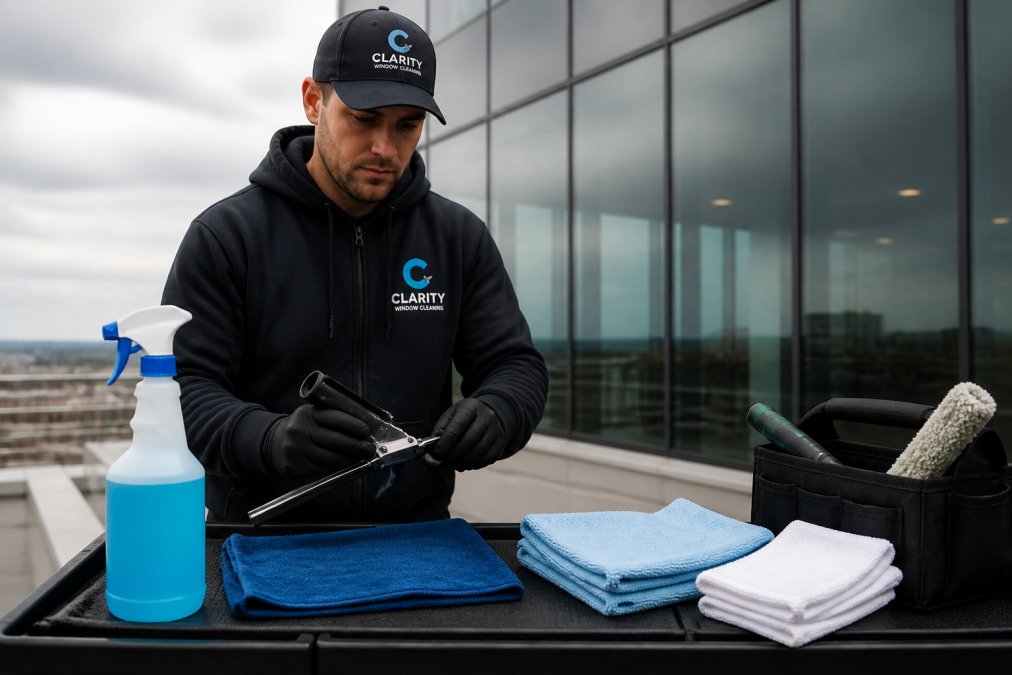
Before applying any cleaning solution, remove loose debris using a soft-bristled brush or dry cloth. This prevents particles from becoming embedded in the cleaning solution and dragged across the glass.
Inspect your tools. Your squeegee blade must be clean and undamaged, any nicks will leave lines. Your lint-free cloths should be freshly laundered. Fill your cleaning solution container and mix fresh batches rather than storing mixed solutions for extended periods.
Check the weather and time of day. Avoid direct sunlight and choose a time when glass temperature is moderate (ideally 50-70°F) (peer-reviewed research). Cloud cover is ideal.
Step 2: Apply Cleaning Solution and Let It Dwell
Spray or apply your cleaning solution generously across the glass surface. Adequate solution coverage is essential so the solution can chemically interact with mineral deposits and residue.
Let the solution dwell for 30 seconds to 2 minutes, depending on buildup severity (the EPA). This dwell time allows cleaning agents to break down mineral bonds and loosen stubborn residue. For light cleaning, 30 seconds is sufficient. For hard water stains or post-construction debris, allow 2 minutes. Don't let the solution dry completely.
Step 3: Wipe with Vertical and Horizontal Strokes
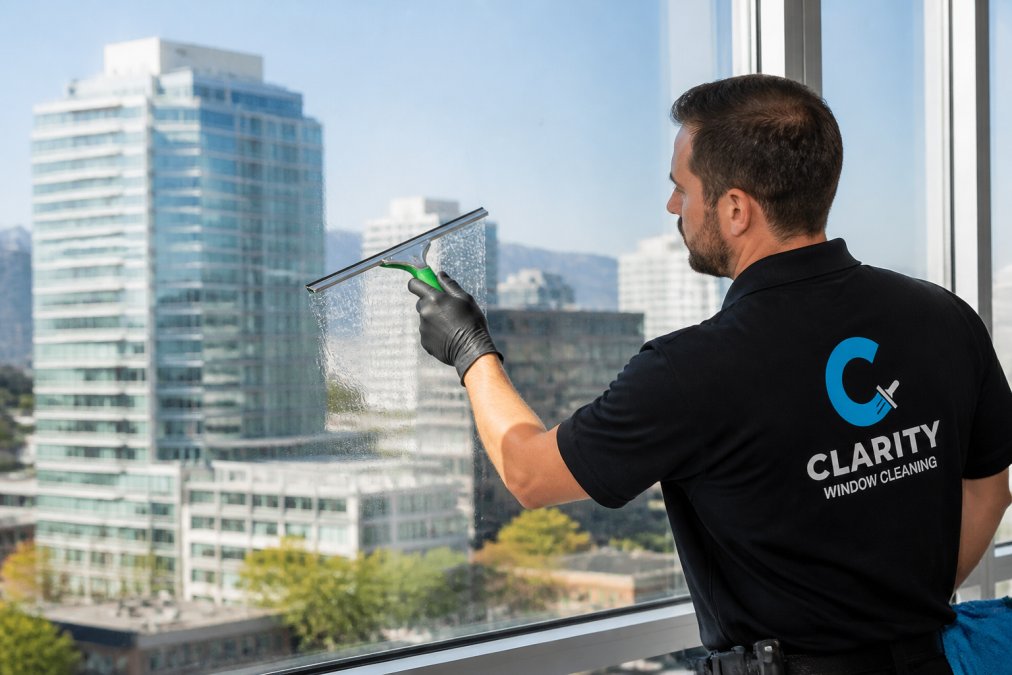
Using your squeegee, wipe the glass with deliberate, overlapping strokes. Start with vertical strokes from top to bottom, maintaining consistent pressure and overlapping each stroke by about half an inch. After completing vertical passes, perform horizontal strokes from one side to the other.
Wipe your squeegee blade between each stroke. A wet blade spreads moisture rather than removing it. For cloth wiping, use circular motions on smaller panes, working from the center outward, and change to a fresh cloth section frequently.
Step 4: Buff with Lint-Free Cloth
After removing the bulk of moisture with your squeegee or cloth, perform a final buff with a clean, dry, lint-free cloth. Use light pressure and circular motions, paying special attention to edges and corners where moisture tends to collect.
The key to this step is ensuring your cloth is genuinely lint-free. Microfiber cloths, when new and properly laundered, provide superior absorbency without lint.
The Importance of Cleaning on Cloudy Days
Weather conditions directly control whether your cleaning technique succeeds or fails. On cloudy days, glass stays cooler and evaporation slows dramatically. This extended working window allows your cleaning solution to dwell longer on the surface, giving it more time to chemically break down mineral deposits.
Sunny days present the opposite problem. Direct heat accelerates evaporation, often faster than you can wipe. The cleaning solution begins drying before you finish the first pass, leaving mineral residue and streaks. This is why professional teams schedule cleaning during overcast periods or early morning and late afternoon when sun angle is low.
For facilities managers with large properties, scheduling cleaning on the day after rain or during cloudy stretches isn't a preference, it's a requirement for consistent, streak-free results.
Benefits of Professional Hard Water Stain Removal
Hard water stains are notoriously difficult to remove without professional-grade equipment and formulations. Professional hard water stain removal uses specialized solutions designed specifically for mineral deposits. These formulas contain stronger chelating agents that chemically bind to mineral deposits and lift them away from the glass surface.
For facilities with severe mineral buildup, particularly common in areas with naturally hard water or on buildings with recirculating water systems, professional removal restores glass clarity that DIY approaches can't match. This is especially important for commercial properties where glass clarity directly impacts the building's professional appearance.
Clarity provides free estimates for all window cleaning needs, allowing facilities managers to assess whether professional hard water stain removal makes sense for their specific property. For high-rise buildings or extensive glass surfaces, the time savings and superior results of professional service can justify the investment.
Commercial Window Cleaning Best Practices
Facilities managers overseeing large commercial properties face unique challenges that differ from residential cleaning. Scale, safety, and operational continuity demand a specialized approach.

The first best practice is scheduling cleaning to minimize operational disruption. Professional teams coordinate with facilities management to clean early morning, evening, or weekend hours when the building is less occupied.
Safety is non-negotiable for high-rise work. OSHA regulations govern how cleaning must be performed on buildings above a certain height. Professional teams maintain current certifications, use properly inspected equipment, and follow site-specific safety plans.
Establish a consistent cleaning schedule. Rather than cleaning reactively when streaks become visible, a proactive schedule prevents buildup from accumulating. Monthly or quarterly cleaning (depending on your water quality and building location) maintains consistent appearance.
Documentation matters for facilities management. Professional cleaning teams provide detailed reporting showing what was cleaned, when, and any issues noted. This documentation supports insurance claims, board reporting, and maintenance planning.
Common Mistakes to Avoid
Understanding what not to do is as important as knowing the correct technique.
The most common mistake is cleaning during peak sunlight. This guarantees streaks because evaporation outpaces your ability to wipe. Using tap water instead of distilled water is another widespread error, tap water contains the exact minerals that create streaks.
Reusing dirty cloths or squeegees introduces old residue back onto the glass. A squeegee with mineral buildup on the blade transfers that buildup to every pane it touches. Fresh, clean tools are essential.
Insufficient dwell time prevents your cleaning solution from working. Allowing 30 seconds to 2 minutes of dwell time dramatically improves results. Over-relying on water and under-estimating the need for proper cleaning solution is another frequent mistake. Water alone doesn't address mineral deposits effectively.
Finally, many facilities managers don't account for their specific water chemistry. A solution that works perfectly in one location may be inadequate in another area with harder water.
| Common Mistake | Why It Fails | Solution |
|---|---|---|
| Cleaning in direct sunlight | Evaporation outpaces wiping, concentrating minerals | Schedule cleaning on cloudy days or early morning |
| Using tap water | Contains minerals that deposit as streaks | Switch to distilled water or professional solution |
| Reusing dirty tools | Old residue transfers back to glass | Use fresh, clean squeegees and cloths |
| Skipping dwell time | Solution can't chemically break down deposits | Allow 30 seconds to 2 minutes for solution to work |
| Wrong cleaning solution | Formula doesn't match water chemistry or residue type | Test solution on small area first; use distilled water or alcohol formula |
| Wiping with absorbent cloths only | Leaves lint and moisture streaks | Use squeegee first, then buff with lint-free cloth |
For facilities managers managing commercial properties, high-rise office towers, or industrial complexes, preventing streaks requires understanding the chemistry of water, mineral deposits, and evaporation, not just technique. However, for large-scale properties where consistency and professional appearance are non-negotiable, professional commercial window cleaning eliminates the variables.
Clarity provides free estimates for all window cleaning needs, allowing you to assess whether professional service makes sense for your facility. Our certified technicians understand hard water chemistry, OSHA safety requirements for high-rise work, and the specific scheduling constraints that facilities managers face. We work directly with property and facilities managers to deliver streak-free results without disrupting your operations.
=== FAQ ANSWERS (audit these too, same rules) ===
[1] Q: Why does my glass look streaky after I clean it? A: Streaks form when cleaning solution dries too quickly due to direct sunlight or high surface temperature, leaving mineral deposits and residue behind. Hard water contains minerals that evaporate and leave visible film buildup. Using distilled water instead of tap water, cleaning on cloudy days, and buffing immediately with lint-free cloth prevents this. Avoid paper towels, which leave lint residue that catches light and appears streaky.
[2] Q: What are the benefits of professional hard water stain removal? A: Professional hard water stain removal uses specialized cleaning agents and techniques to dissolve mineral deposits that regular solutions cannot remove. Professionals understand surface chemistry and apply solutions with the right dwell time to break down mineral bonds. This restores glass clarity, improves building appearance for tenants and visitors, and protects glass from permanent etching. For commercial properties, professional removal prevents costly glass replacement and maintains property value.
[3] Q: How do professionals clean windows without streaks? A: Professionals prevent streaks by controlling evaporation rate through timing and technique. They clean on cloudy days or when glass is in shade to slow drying. They use squeegees with proper angle and pressure, applying vertical strokes followed by horizontal overlap strokes. They finish by buffing with microfiber cloth to remove any remaining surface tension and moisture. They use distilled water or specialized solutions that minimize residue, and they work systematically to avoid re-contaminating cleaned areas.
[4] Q: What cleaning solution works best to prevent streaks on glass? A: Distilled water mixed with isopropyl alcohol (1 part alcohol to 3 parts water) creates an effective streak-free solution because alcohol evaporates quickly without leaving mineral deposits. Vinegar solutions work for light residue but can leave their own film on hard water deposits. Avoid ammonia-based cleaners on tinted or coated glass. For commercial properties with heavy mineral buildup, professional-grade degreasers designed for glass can deliver better results than DIY solutions. Always test any cleaning agent on a small area first.
Frequently Asked Questions
Why does my glass look streaky after I clean it?
Streaks form when cleaning solution dries too quickly due to direct sunlight or high surface temperature, leaving mineral deposits and residue behind. Hard water contains minerals that evaporate and leave visible film buildup. Using distilled water instead of tap water, cleaning on cloudy days, and buffing immediately with lint-free cloth prevents this. Avoid paper towels, which leave lint residue that catches light and appears streaky.
What are the benefits of professional hard water stain removal?
Professional hard water stain removal uses specialized cleaning agents and techniques to dissolve mineral deposits that regular solutions cannot remove. Professionals understand surface chemistry and apply solutions with the right dwell time to break down mineral bonds. This restores glass clarity, improves building appearance for tenants and visitors, and protects glass from permanent etching. For commercial properties, professional removal prevents costly glass replacement and maintains property value.
How do professionals clean windows without streaks?
Professionals prevent streaks by controlling evaporation rate through timing and technique. They clean on cloudy days or when glass is in shade to slow drying. They use squeegees with proper angle and pressure, applying vertical strokes followed by horizontal overlap strokes. They finish by buffing with microfiber cloth to remove any remaining surface tension and moisture. They use distilled water or specialized solutions that minimize residue, and they work systematically to avoid re-contaminating cleaned areas.
What cleaning solution works best to prevent streaks on glass?
Distilled water mixed with isopropyl alcohol (1 part alcohol to 3 parts water) creates an effective streak-free solution because alcohol evaporates quickly without leaving mineral deposits. Vinegar solutions work for light residue but can leave their own film on hard water deposits. Avoid ammonia-based cleaners on tinted or coated glass. For commercial properties with heavy mineral buildup, professional-grade degreasers designed for glass can deliver better results than DIY solutions. Always test any cleaning agent on a small area first.
This article was written using GrandRanker