
 listicle
Commercial Window Cleaning Service Pricing: 2026 Guide
Table of Contents
- What Drives Commercial Window Cleaning Service Pricing
- Commercial Window Cleaning Cost Per Window and Pane
- Hourly Labor Rates and Service Frequency Discounts
- OSHA-Compliant Window Cleaning Services and Safety Costs
- How to Request a Commercial Window Cleaning Estimate
- Budgeting for Commercial Window Maintenance
- Conclusion
Last Updated: August 29, 2026
Commercial Window Cleaning Service Pricing: 2026 Guide
Commercial window cleaning service pricing depends on multiple interconnected factors that facilities managers and property managers must understand to budget accurately and negotiate fair contracts. Whether you manage a small storefront, a mid-rise office complex, or a high-rise tower, pricing structures vary significantly based on building characteristics, access requirements, safety compliance, and service frequency.
At Clarity Window Cleaning, we work with facilities managers across the region to help them understand what actually drives costs and how to evaluate quotes fairly. Clarity provides free estimates for all window cleaning needs, allowing you to compare pricing models and understand exactly what you're paying for before committing to a contract.
What Drives Commercial Window Cleaning Service Pricing
Commercial window cleaning service pricing isn't one-size-fits-all. The cost per window, hourly labor rates, and total project cost depend on how your building is configured, how accessible your windows are, and what type of glass and frames you have.
Building Size and Square Footage
Larger buildings typically cost more overall, but the per-square-foot rate often decreases as projects scale. A small storefront with 500 square feet of glass costs significantly more per square foot than a 50,000-square-foot office tower, because fixed costs (travel, setup, equipment positioning) spread across more area.
Building size also affects scheduling complexity. Larger properties require detailed planning to avoid disrupting tenant operations. Multi-tenant commercial complexes need coordination with individual tenants, staggered cleaning schedules, and careful timing around business hours.
Access Difficulty and Safety Requirements
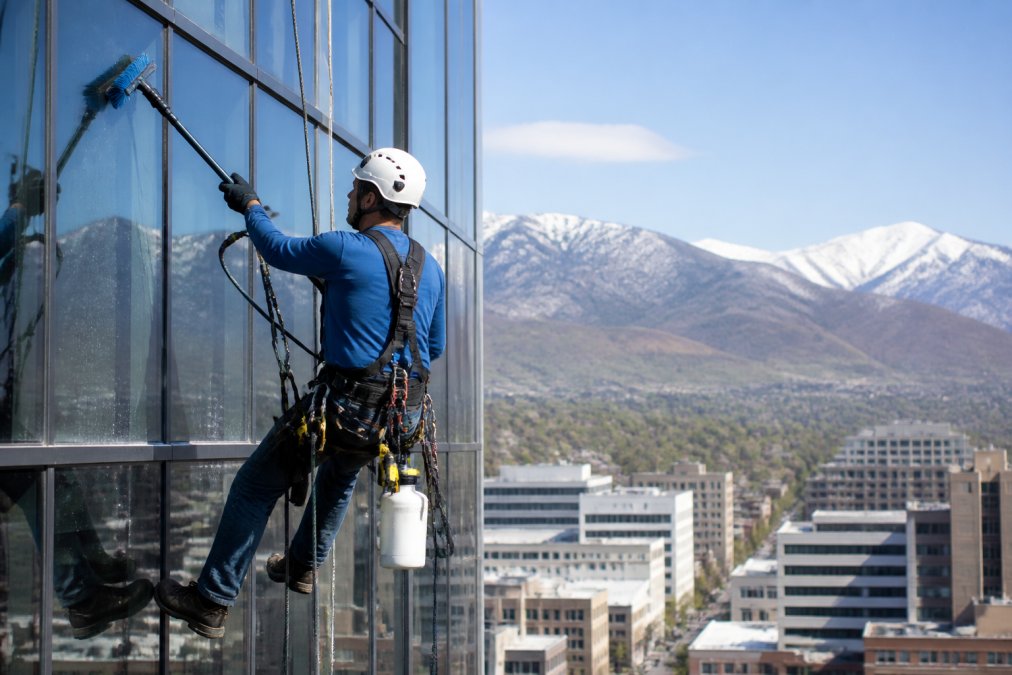
How your windows are positioned directly impacts labor intensity and therefore cost. Street-level windows on a single-story storefront are inexpensive to clean. Windows on a 28-story office tower require specialized equipment, safety protocols, and trained technicians.
Access difficulty includes building height, window placement (corner vs. interior), presence of obstacles like HVAC units or signage, and whether exterior access requires scaffolding, rope systems, or water-fed poles. Buildings with complex architectural features, setbacks, or unusual angles cost more because technicians must adapt their approach for each section.
Interior access matters too. Some buildings have narrow hallways or furniture placement that limits movement, while others have open floor plans that make interior window cleaning straightforward.
Window Configuration and Glass Type
The number of panes per window, frame material, and glass type affect pricing. Single-pane windows clean faster than multi-pane windows. Specialty glass, tinted, reflective, or low-emissivity (low-E) coatings, sometimes requires different cleaning solutions or techniques.
Older buildings with single-pane windows and many divided lights (muntins) take longer per window than modern glass curtain walls. A historic downtown building with 100 small-pane windows costs more to clean than a modern office with 20 large-pane windows, even if total square footage is similar.
Commercial Window Cleaning Cost Per Window and Pane
Commercial window cleaning service pricing often breaks down to a per-window or per-pane rate, though the exact figure varies by region, building type, and service complexity.
Small Storefront vs. High-Rise Pricing Models
A small storefront with 10-15 windows may see a higher per-window cost because the cleaner's travel time and setup aren't distributed across as many windows. High-rise window cleaning costs more in absolute dollars but often has a lower per-pane rate because the technician stays on-site longer and cleans many more panes per visit.
Small storefronts typically fall into a minimum service charge category. Most commercial cleaners won't travel for less than a certain amount. High-rise buildings (10+ stories) require specialized equipment and OSHA-compliant safety protocols, which increases labor costs. However, because high-rise buildings have so many windows, the cost-per-pane can actually be competitive compared to small buildings.
Travel Fees and Minimum Service Charges
Most commercial cleaners charge a travel fee or build it into a minimum service charge. Travel fees typically cover the cost of getting to your location, positioning equipment, and initial setup. Facilities in remote areas or far from the cleaner's service center pay higher travel fees.
Some cleaners offer reduced travel fees for recurring contracts or multiple properties in the same area. If you manage several buildings in close proximity, bundling them into one service agreement can lower your per-property cost.
Hourly Labor Rates and Service Frequency Discounts
Commercial window cleaners typically charge either by the hour or by the job (fixed quote). Hourly rates vary based on experience, location, equipment, and whether the work is high-rise or standard access.
Frequency of Commercial Window Maintenance Schedules
Service frequency directly impacts pricing. Monthly cleaning costs more per visit than quarterly cleaning, but the annual cost often works out to less per cleaning because windows are less dirty. Quarterly service is the most common frequency for office buildings, while retail storefronts often choose monthly.
Many commercial cleaners offer frequency discounts. A quarterly contract might be cheaper per visit than one-time cleans, and monthly service might be cheaper per visit compared to quarterly. These discounts reward consistency and allow the cleaner to plan their schedule more efficiently.
Contract vs. One-Time Service Pricing
Contract pricing (recurring service over 12 months) is almost always cheaper than one-time cleaning. A one-time clean might cost more per visit compared to a 12-month contract, because the cleaner has guaranteed work and can schedule your building into a regular rotation.
Contracts also provide budget certainty. You know your cleaning cost for the year and can plan facility budgets accordingly. Contract terms typically range from 6 months to 3 years, with longer contracts often including modest discounts.
OSHA-Compliant Window Cleaning Services and Safety Costs
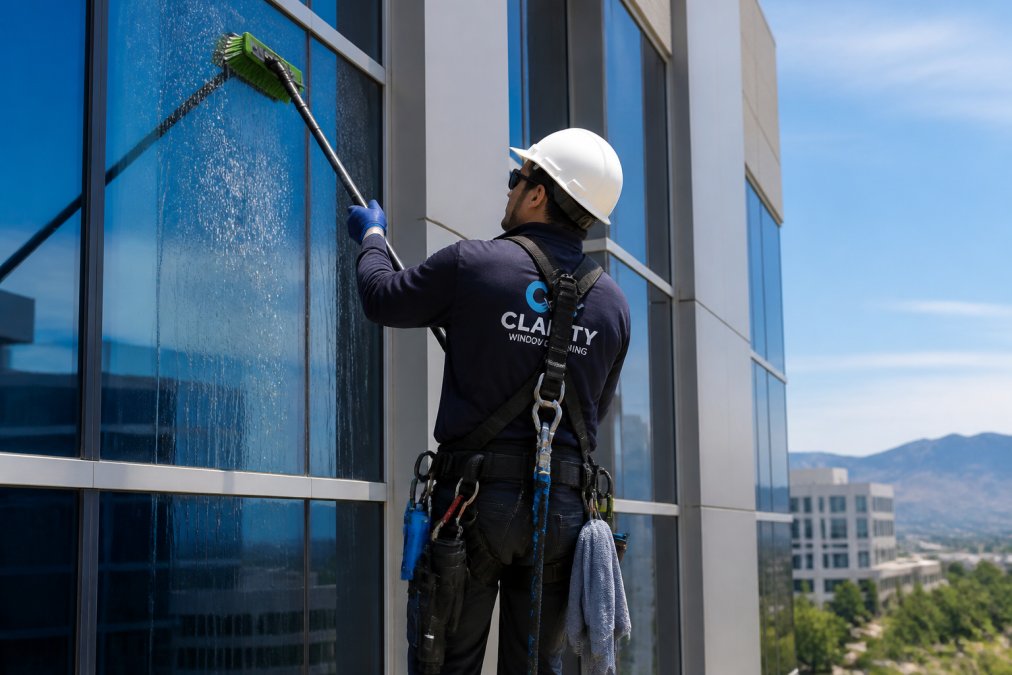
OSHA-compliant window cleaning is non-negotiable for high-rise and exterior work. Compliance adds cost, but it's the cost of doing business safely and legally.
High-rise window cleaning requires compliance with OSHA standards for fall protection, worker safety, and equipment inspection. Technicians must use certified harnesses, anchor points, and safety equipment. Buildings must have proper rigging points and structural integrity assessments to support safety systems. These requirements increase labor costs because setup is more involved and technicians must be specially trained and certified.
Facilities managers should verify that any commercial cleaner they hire carries proper OSHA certification and provides evidence of worker training.
Insurance and Liability Impact on Pricing
A fully insured and bonded commercial window cleaner costs more than an uninsured operator, but the difference in price is negligible compared to the liability risk you assume by hiring someone uninsured. Insurance covers worker injuries, property damage, and accidents.
When requesting quotes, ask specifically about general liability insurance limits, workers' compensation coverage, and whether the cleaner carries umbrella insurance for high-value properties. Premium commercial cleaners will provide certificates of insurance without hesitation.
Liability costs are built into the cleaner's pricing structure. You're paying for a professional operation that carries proper protections. Facilities managers should budget accordingly and never accept the lowest bid if it comes from an uninsured provider.
How to Request a Commercial Window Cleaning Estimate
Getting accurate quotes starts with providing detailed information about your property. Vague requests lead to vague estimates that don't reflect actual costs.
What to Include in Your Site Assessment Request
When you contact a commercial window cleaner for a quote, provide:
- Building height and number of floors
- Total square footage of glass (or an estimate)
- Window types (single-pane, multi-pane, specialty glass)
- Building age and condition
- Interior access (are hallways clear, is furniture movable?)
- Exterior access (ground level, roof access, need for equipment?)
- Current cleaning frequency (if applicable)
- Specific problem areas (hard-water stains, post-construction debris, algae)
- Preferred service schedule (monthly, quarterly, annually)
Clarity provides free estimates for all window cleaning needs, and we ask these questions to ensure our quote is accurate and reflects your specific situation.
Understanding Your Quote Breakdown
A professional quote should itemize costs clearly:
- Labor (hourly rate or per-window rate)
- Travel and setup fees
- Equipment rental or specialized access costs
- Frequency discount (if applicable)
- Contract terms and payment schedule
- What's included (interior, exterior, both)
- What's excluded (pressure washing, frame cleaning, gutter cleaning)
A quote that simply states a flat dollar amount without breakdown is incomplete. Ask the cleaner to explain each line item so you understand what you're paying for.
| Quote Component | Purpose | What to Look For |
|---|---|---|
| Labor rate | Core cleaning cost | Clearly stated hourly or per-pane rate |
| Travel fee | Access and setup | Should be itemized separately |
| Equipment costs | Specialized access needs | Transparent if high-rise or scaffolding required |
| Frequency discount | Recurring service savings | Reduction for contracts |
| Insurance notation | Liability coverage | Certificate of insurance should be attached |
Budgeting for Commercial Window Maintenance
Facilities managers need a clear picture of annual window cleaning costs to include in facility budgets and capital planning.
Post-Construction Window Restoration Costs
New construction or major renovations leave windows covered in dust, debris, protective film residue, and sometimes concrete overspray or paint. Post-construction window cleaning costs more than standard maintenance because the work is labor-intensive and often requires specialized cleaning solutions.
This work is typically a one-time service, so there's no frequency discount. Budget separately for post-construction cleaning and schedule it after all construction dust has settled but before occupancy.
Seasonal and Interior vs. Exterior Considerations
Spring and fall are peak seasons for commercial window cleaning. Demand is high, and some cleaners may charge premium rates or have longer wait times. Winter cleaning is less common and may be unavailable in regions with harsh weather.
Interior vs. exterior cleaning affects cost. Exterior cleaning is typically more expensive because of access challenges and safety requirements. Interior cleaning is faster and lower-cost but is often included in a comprehensive contract. Consider your building's visibility and tenant expectations when deciding on scope.
Conclusion
Commercial window cleaning service pricing reflects real costs: labor, equipment, safety compliance, and access complexity. Understanding these factors helps you evaluate quotes fairly, negotiate reasonable contracts, and budget accurately for facility maintenance.
When you're ready to get a professional assessment of your building's window cleaning needs, Clarity Window Cleaning offers free estimates tailored to your specific property. Our certified technicians evaluate access difficulty, building configuration, and safety requirements to provide transparent pricing and detailed service recommendations. We work directly with facilities managers and property managers to develop customized maintenance schedules that fit your budget and operational needs.
Contact Clarity today for a free estimate and discover how professional commercial window cleaning service pricing works in practice.
Frequently Asked Questions
What factors most influence commercial window cleaning service pricing?
Building size, window configuration, access difficulty, and safety requirements drive costs. High-rise properties require specialized equipment and OSHA-compliant safety protocols, which increase labor expenses. Storefront cleaning costs less per window than 20-story office towers because technicians can access windows from ground level. Travel surcharges, minimum service fees, and whether you need interior or exterior cleaning also affect the final quote. Clarity provides free estimates that account for your specific property conditions.
How do facilities managers determine the frequency of commercial window maintenance?
Frequency depends on your building type, location, and operational standards. High-rise office towers typically need quarterly or semi-annual cleaning to maintain professional appearance and tenant satisfaction. Retail storefronts may require monthly service to protect brand image. Industrial properties with dust or debris exposure need more frequent cleaning. Properties in areas with heavy rainfall or seasonal dust may benefit from adjusted schedules. Recurring service contracts often offer discounts compared to one-time visits, making regular maintenance more cost-effective.
Why does OSHA-compliant window cleaning cost more than standard cleaning?
OSHA compliance requires certified technicians, specialized safety equipment, site-specific safety plans, and liability insurance. Workers cleaning above 6 feet must use fall protection systems, harnesses, and anchoring points that add setup time and equipment costs. Technicians must complete safety training and maintain documentation. Insurance premiums for OSHA-compliant operations are higher. These requirements protect your facility from liability if an accident occurs and ensure your property meets federal safety standards. Facilities managers and property managers benefit from knowing their window cleaning contractor carries full insurance and follows safety protocols.
What's included in a commercial window cleaning quote breakdown?
A detailed quote should specify labor costs based on square footage or hourly rates, equipment and access fees, travel surcharges, minimum service charges, and any special services like post-construction debris removal or interior cleaning. It should clarify whether the price covers single-pass cleaning or spot-free finish, and detail the frequency and duration of service if you're signing a contract. A professional estimate also documents building height, window configuration, and safety requirements. Clarity provides comprehensive quotes that break down each cost component so you understand exactly what you're paying for.
Supporting Resources
For more information about commercial window cleaning and facility maintenance:
OSHA Guidelines for Fall Protection and Worker Safety
National Association of Building Owners and Managers Best Practices
Commercial Property Management Standards and Maintenance Benchmarks
This article was written using GrandRanker
Frequently Asked Questions
What factors most influence commercial window cleaning service pricing?
Building size, window configuration, access difficulty, and safety requirements drive costs. High-rise properties require specialized equipment and OSHA-compliant safety protocols, which increase labor expenses. Storefront cleaning costs less per window than 20-story office towers because technicians can access windows from ground level. Travel surcharges, minimum service fees, and whether you need interior or exterior cleaning also affect the final quote. Clarity provides free estimates that account for your specific property conditions.
How do facilities managers determine the frequency of commercial window maintenance?
Frequency depends on your building type, location, and operational standards. High-rise office towers typically need quarterly or semi-annual cleaning to maintain professional appearance and tenant satisfaction. Retail storefronts may require monthly service to protect brand image. Industrial properties with dust or debris exposure need more frequent cleaning. Properties in areas with heavy rainfall or seasonal dust may benefit from adjusted schedules. Recurring service contracts often offer discounts compared to one-time visits, making regular maintenance more cost-effective.
Why does OSHA-compliant window cleaning cost more than standard cleaning?
OSHA compliance requires certified technicians, specialized safety equipment, site-specific safety plans, and liability insurance. Workers cleaning above 6 feet must use fall protection systems, harnesses, and anchoring points that add setup time and equipment costs. Technicians must complete safety training and maintain documentation. Insurance premiums for OSHA-compliant operations are higher. These requirements protect your facility from liability if an accident occurs and ensure your property meets federal safety standards. Facilities managers and property managers benefit from knowing their window cleaning contractor carries full insurance and follows safety protocols.
What's included in a commercial window cleaning quote breakdown?
A detailed quote should specify labor costs based on square footage or hourly rates, equipment and access fees, travel surcharges, minimum service charges, and any special services like post-construction debris removal or interior cleaning. It should clarify whether the price covers single-pass cleaning or spot-free finish, and detail the frequency and duration of service if you're signing a contract. A professional estimate also documents building height, window configuration, and safety requirements. Clarity provides comprehensive quotes that break down each cost component so you understand exactly what you're paying for.