 blog
blog
Commercial Window Cleaning for Historic Buildings: A Guide
Table of Contents
- Why Historic Buildings Demand Specialized Commercial Window Cleaning
- Chemical Compatibility with Historic Glazing and Putty Preservation
- Benefits of Professional Hard Water Stain Removal for Landmark Properties
- OSHA-Compliant Window Cleaning for High-Rise Buildings with Historic Facades
- Commercial Window Cleaning Maintenance Schedules for Historic Properties
- Essential Tools and Techniques for Fragile Glass and Specialty Materials
- Regulatory Compliance and Documentation for Historic Districts
- Conclusion
- Frequently Asked Questions
Last Updated: September 17, 2026
Why Historic Buildings Demand Specialized Commercial Window Cleaning
Commercial window cleaning historic buildings demands specialized approaches that standard maintenance cannot provide. A pressure washer and generic detergent will damage original leaded glass and deteriorating putty irreversibly. Historic preservation requires understanding material interactions: leaded glass expands differently than modern tempered glass, original putty becomes brittle over time, and harsh chemicals or abrasive techniques compromise structural integrity.
Commercial window cleaning for historic buildings requires methodical, chemical-aware approaches documented for compliance. Facilities managers and property managers overseeing landmark properties face regulatory constraints and preservation requirements that typical cleaning crews don't understand. Historic buildings demand respect for original materials, awareness of local landmark district regulations, and techniques refined specifically for fragile glass and specialty materials.
Chemical Compatibility with Historic Glazing and Putty Preservation
Original window putty degrades when exposed to harsh alkaline or acidic solutions. Many commercial cleaning products contain pH levels between 10 and 14, accelerating putty breakdown within months, causing cracking, separation, and water infiltration that represents structural failure, not cosmetic damage.
pH-neutral cleaning agents (6.5-7.5) preserve putty integrity while removing mineral deposits and atmospheric grime. Surfactants break down oils and mineral buildup without chemical etching or material degradation.
Lead came, the metal strips holding individual panes, corrodes when exposed to sulfates or chlorides in certain cleaners. Over years, corroded lead becomes structurally weak and the window assembly fails.
Selective chemistry is essential: identify contaminants and choose cleaners formulated to dissolve specific deposits without harming surrounding materials. Hard water stains, atmospheric oxidation, and biological growth each require different chemistry. Facilities managers should require cleaning providers to disclose exact pH and chemical composition, documented best practice for landmark preservation.
Benefits of Professional Hard Water Stain Removal for Landmark Properties
Hard water deposits damage historic glass differently than modern commercial buildings. Historic glazing with original putty absorbs mineral-laden water differently, and putty becomes a mineral deposit trap. When hard water evaporates on leaded glass, calcium and magnesium minerals remain behind, migrate into putty cracks, accelerate degradation, and create water infiltration pathways, a structural compromise, not merely a clarity issue.
Damage progresses in three stages: Stage one (0-6 months) shows white, chalky residue easily removed with pH-neutral solutions. Stage two (6-18 months) involves chemical bonding requiring deionized water systems. Stage three (18+ months) causes permanent frosted etching requiring professional restoration or replacement.
Stage-three damage triggers expensive interventions: replacing a single window in a high-rise historic building often exceeds several hundred dollars per window when accounting for custom glazing and lead came restoration. Professional hard water stain removal during stages one and two costs a fraction of that and prevents putty failure and water damage.
Professional removal maintains visual integrity required by historic district commissions and preservation easements, preventing regulatory violations and complications during property assessments or tax-credit audits.
Deionized water systems represent the gold standard: they strip mineral content before water contacts glass, preventing new deposits during cleaning. This investment extends intervals between cleanings and prevents accelerated etching from repeated mineral-laden water exposure.
A documented maintenance schedule with quarterly professional hard water stain removal during the first two stages prevents permanent etching, extends window lifespan, and protects compliance standing. Clarity provides free estimates for all window cleaning needs and can assess your property's mineral deposit stage to recommend appropriate removal techniques and maintenance frequency.
OSHA-Compliant Window Cleaning for High-Rise Buildings with Historic Facades
High-rise window cleaning introduces occupational safety requirements that most facility managers don't fully understand. OSHA regulations establish mandatory safety standards for work at heights, and violations carry substantial penalties.
The standard that governs this work is OSHA's Fall Protection Standard (29 CFR 1926.500), which requires fall protection systems for any work six feet or higher. For high-rise buildings, this means rope-access techniques, harnesses, anchor points, and documented safety plans.
Rope-access techniques allow technicians to descend while maintaining constant connection to secure anchor points, requiring no attachment to building structure itself. OSHA mandates site-specific safety plans documenting hazards, anchor points, rescue procedures, and worker training. For historic buildings, plans must address preservation concerns, as certain anchor points may damage historic materials, requiring alternative rigging strategies.
Professional providers maintain OSHA certifications and develop customized safety plans for each high-rise property, creating compliance documentation essential for inspections or incidents. OSHA penalties for fall protection violations range from thousands to tens of thousands of dollars per violation, plus potential criminal liability if injury occurs.
Commercial Window Cleaning Maintenance Schedules for Historic Properties
Historic buildings require different cleaning frequency than modern commercial properties based on climate, facade exposure, building materials, and preservation standards. Seasonal factors matter: hard water climates see worst accumulation in spring and fall; high-altitude locations experience accelerated oxidation; coastal and industrial areas accumulate contaminants faster.
Most historic commercial properties benefit from quarterly cleaning to prevent buildup without over-stressing materials. High-traffic or severe-weather facades may need semi-monthly attention; protected locations may extend to semi-annual schedules. Targeted spot cleaning between major cleanings prevents etching while reducing costs and material exposure.
Documentation is critical: each cleaning visit should include photographic records, damage observations, chemical products used, and techniques applied. Facilities managers should establish written agreements specifying frequency, techniques, chemicals, documentation requirements, and quality standards to ensure consistent preservation-focused care.
Essential Tools and Techniques for Fragile Glass and Specialty Materials
Professional commercial window cleaning historic buildings requires specialized equipment designed for fragile materials. Understanding the distinction between standard commercial tools and historic-preservation tools is essential when evaluating cleaning providers.
Squeegee and Blade Selection
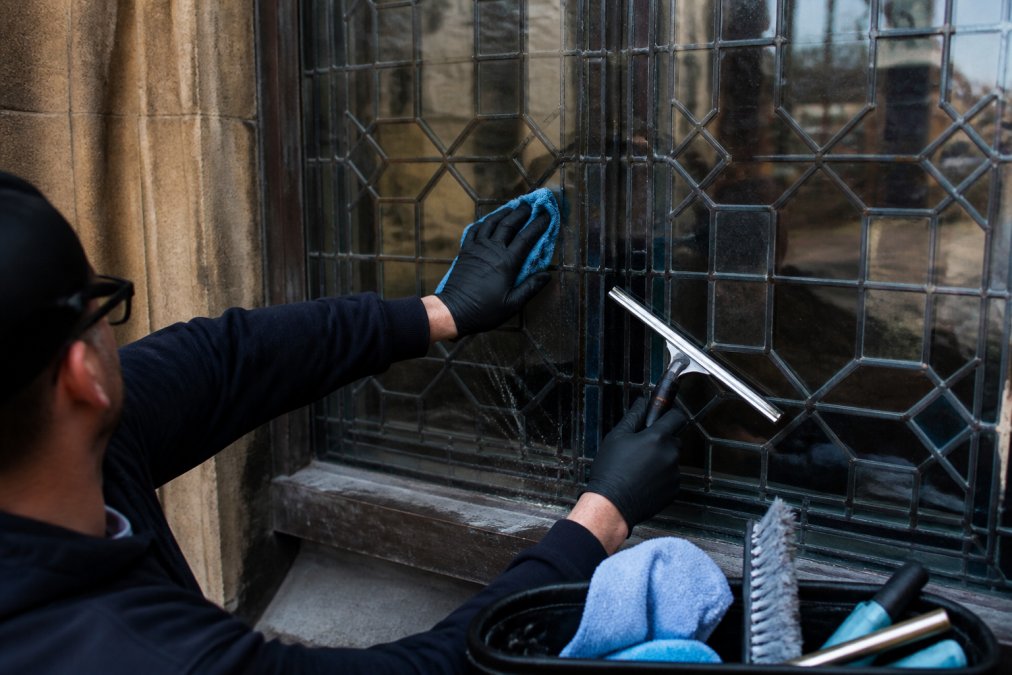
Squeegee blade material and pressure determine whether you preserve or damage historic glass. Standard commercial squeegees use rigid rubber blades (durometer 70-80) for high-pressure work; historic applications require softer blades (durometer 50-60) that conform to leaded glass without downward pressure. Rigid blades catch on lead came joints and create micro-scratches; soft blades glide without mechanical stress. Historic preservation requires minimal pressure and slower strokes that follow glass contours, taking 30-50% longer per window but preventing cumulative damage.
Microfiber Cloths and Lint Prevention
Microfiber cloths are non-negotiable for historic glass. Cotton towels and paper products leave lint that becomes trapped in putty joints and accelerates degradation. Microfiber cloths (0.5-1 micrometer fiber diameter) trap lint and mineral residue without shedding, preventing hidden contamination that causes long-term structural problems.
Deionized Water Systems and Hard Water Prevention
Deionized water systems represent the most significant advancement in historic window preservation. Standard commercial cleaning uses tap water, which contains 100-500 parts per million (ppm) of dissolved minerals depending on local water hardness. When this water evaporates on historic glass, minerals remain behind. Over multiple cleanings, mineral deposits accumulate and bond to the glass surface.
Deionized water systems filter water through ion-exchange resin beds, reducing mineral content to 0-10 ppm and preventing new deposits during cleaning. For high-rise historic buildings, portable systems rigged to facade platforms deliver mineral-free water to every window. This investment prevents hard water etching cycles that would otherwise require expensive restoration.
Soft-Bristle Brushes and Surface Contaminant Removal
Algae, lichen, and atmospheric oxidation accumulate on historic glass, particularly on north-facing facades. Wire brushes and stiff-bristle tools scratch leaded glass and damage putty. Professional providers use soft-bristle brushes (0.3-0.5 millimeters) gentle enough to avoid scratching but firm enough to dislodge biological growth, using natural or high-quality synthetic materials that don't shed fibers.
Chemical Application Precision
How cleaning solutions are applied matters as much as what solution is used. High-pressure sprayers force chemicals into putty joints and lead came crevices, causing hidden damage. Professional providers use low-pressure mist sprayers delivering pH-neutral solutions in controlled fog, allowing chemistry to work without forcing liquids into structural gaps and minimizing lead came contact time.
The Technique Framework: Passive Chemistry Over Aggressive Mechanics
Historic preservation reverses commercial cleaning priorities: allow pH-neutral solutions to chemically break down deposits over 5-10 minutes, then apply gentle mechanical action to remove loosened material. This approach is 40-60% slower but prevents microscopic damage accumulating over decades. Facilities managers should ask providers to describe tools, blade materials, water systems, and technique protocols. Providers carrying deionized water systems and soft-bristle equipment as standard demonstrate preservation-focused expertise. Clarity provides free estimates for all window cleaning needs and can walk your team through equipment specifications and technique protocols during consultation.
Regulatory Compliance and Documentation for Historic Districts
Many historic buildings sit within designated landmark districts with preservation requirements overriding standard commercial maintenance practices. Local landmark commissions often require advance notification before facade work involving chemical treatments or equipment that might affect historic materials. Some jurisdictions prohibit certain methods entirely, high-pressure washing, for example, is often forbidden on historic masonry.
Documentation becomes your compliance evidence. Photographs before and after cleaning, records of chemicals used, descriptions of techniques applied, and any observations of damage all create a preservation record.
Conclusion
Commercial window cleaning for historic buildings requires expertise extending far beyond standard facade maintenance. Clarity Window Cleaning brings together OSHA-compliant practices, pH-neutral chemistry, site-specific safety documentation, and detailed post-service reporting. Our certified technicians understand leaded glass vulnerabilities, putty preservation, hard water damage prevention, and landmark district regulations. We deliver customized maintenance schedules with documentation satisfying facility management and regulatory requirements.
Frequently Asked Questions
What makes commercial window cleaning solutions different for historic buildings?
Historic buildings contain specialty glass, leaded glass, hand-blown panes, and original glazing, that cannot tolerate standard commercial cleaners. pH-neutral solutions prevent chemical etching and preserve the glass integrity that defines landmark properties. Professional cleaners understand putty preservation and avoid abrasive pads that damage original materials. Historic preservation demands both technical knowledge and specialized equipment that general window cleaning services typically lack.
How does professional hard water stain removal protect historic glass?
Hard water deposits and mineral buildup degrade historic glass clarity over time. Professional hard water stain removal uses deionized water and resin filtration systems that dissolve mineral deposits without chemical etching. This preventative maintenance preserves glass integrity and extends the life of specialty glazing. Regular professional removal prevents permanent surface oxidation that would require costly restoration rather than simple cleaning.
What OSHA-compliant practices are required for high-rise historic window cleaning?
OSHA regulations mandate fall protection, safety certifications, and site-specific safety plans for work above 6 feet. High-rise historic building cleaning requires rope-access techniques, certified technicians, and documented safety protocols. Facilities managers should verify that service providers carry current safety certifications and maintain insurance coverage. Professional teams develop building-specific safety plans that address both structural glass requirements and worker protection standards.
How often should historic commercial windows be professionally cleaned?
Frequency depends on climate, building exposure, and air quality. Most historic commercial properties benefit from quarterly or semi-annual professional cleaning to prevent mineral deposits and environmental damage. High-rise buildings in industrial areas may need more frequent maintenance. A customized maintenance schedule, developed with your facilities team, ensures consistent glass clarity while protecting specialty materials from cumulative damage. Clarity provides free estimates and can help establish the right schedule for your property.