 blog
blog
Business Window Washing: A Guide for Facilities Managers
Table of Contents
- Why Business Window Washing Matters for Your Facility
- Residential vs. Commercial Window Cleaning: Key Differences
- High-Rise and Multi-Story Building Services
- OSHA Window Cleaning Safety Standards and Compliance
- Commercial Window Cleaning Frequency and Maintenance Schedules
- Creating a Commercial Window Cleaning Estimate Template
- Choosing the Right Business Window Washing Provider
- Frequently Asked Questions
Last Updated: September 21, 2026
Why Business Window Washing Matters for Your Facility
For facilities managers overseeing commercial properties, business window washing is one of the most visible aspects of building maintenance. Dirty or streaky windows signal neglect to clients, employees, and visitors before they step inside, affecting tenant satisfaction and property value.
Professional business window washing handles technical challenges in-house teams cannot: hard water stains, high-rise access, OSHA compliance, and consistent quality across large buildings. A facilities manager at a 15-story office tower cannot reasonably expect maintenance staff to rappel down the exterior or work from unsafe platforms.
Professional business window washing extends glass lifespan by removing corrosive deposits, improves natural lighting and energy efficiency, maintains curb appeal for tenant retention, and for retail properties directly impacts customer perception and foot traffic.
Clarity Window Cleaning understands these pressures. We work with facilities managers across the Wasatch Front to deliver OSHA-compliant, scheduled business window washing that doesn't disrupt operations. Our approach combines safety-first practices with transparent reporting so you can document maintenance for insurance and board purposes.
Residential vs. Commercial Window Cleaning: Key Differences
Commercial window cleaning differs fundamentally from residential work in scope, safety requirements, and operational complexity. Understanding these differences helps you choose the right service for your facility.
Residential window washing involves single-story homes or small multi-unit buildings, completed in hours using standard ladders. Residential jobs are scheduled around homeowner convenience and rarely disrupt operations.
Business window washing operates at a different scale. Commercial properties, office towers, retail centers, industrial facilities, mixed-use complexes, require high-rise access equipment, specialized safety protocols, and tenant coordination. Commercial crews must work around occupied spaces, maintain strict safety documentation, and deliver consistent results across dozens or hundreds of windows.
Commercial work must comply with OSHA regulations mandating fall protection systems, site-specific safety plans, and documented technician training. Commercial providers must carry workers' compensation, liability insurance, and often bonding, far more stringent than residential requirements.
Commercial teams deploy water-fed pole systems, rope access equipment, building-mounted systems, or suspended scaffolding depending on building height and design, all requiring specialized training and maintenance.
A commercial property with 40 stories of exterior glass might need quarterly or seasonal cleaning. Facilities managers must coordinate with multiple tenants, plan around business hours, and ensure minimal disruption.
Commercial clients demand streak-free, spotless results reflecting professional standards. Many contracts include satisfaction guarantees and detailed post-service reporting.
High-Rise and Multi-Story Building Services
High-rise window cleaning represents the most technically demanding segment of business window washing. Buildings over 5 stories require specialized equipment, extensive safety planning, and certified technicians trained in advanced access methods.
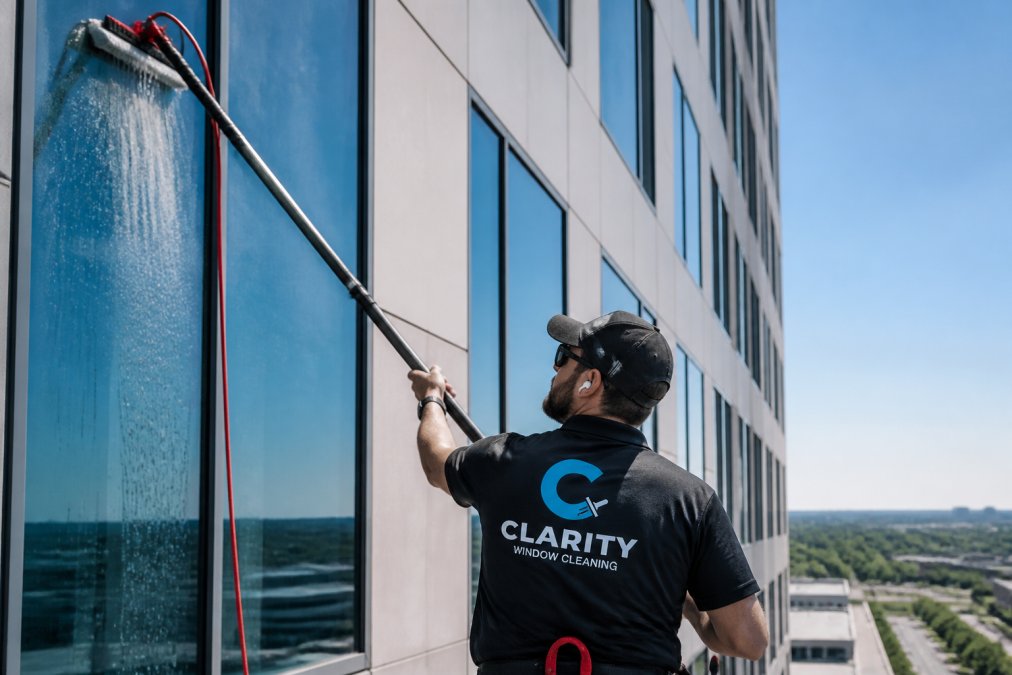
High-rise cleaning uses various access methods, including water-fed pole systems, building-mounted systems, and rope access.
Each method requires different certifications.
The planning process for high-rise business window washing requires building specifications (height, facade material, window type, obstacles, tenant locations) and a site-specific safety plan documenting access methods, fall protection, weather protocols, and emergency procedures, kept on file for insurance and compliance.
Weather is critical: most high-rise teams halt work if sustained winds exceed safe thresholds or rain compromises visibility. Winter cleaning requires additional planning as deionized water systems can freeze.
Tenant coordination is essential. Professional teams work in phases during early mornings or evenings to minimize disruption. Facilities managers benefit from providers who handle tenant communication proactively.
The cost and timeline for high-rise business window washing reflect complexity. A 30-story tower with complex facade geometry could require multiple days and specialized equipment. Clarity provides free estimates for all window cleaning needs, including high-rise properties, so you understand scope and planning before committing.
OSHA Window Cleaning Safety Standards and Compliance
OSHA regulations govern how window cleaning work must be performed on commercial buildings. For facilities managers, understanding these standards is critical because they apply to any cleaning work performed on your property, whether in-house or contracted.
The primary OSHA standard covering window cleaning addresses fall protection for construction and maintenance work. Any employee working at heights above 6 feet must be protected from falling by guardrails, safety nets, or personal fall arrest systems. Window cleaning on commercial buildings almost always exceeds 6 feet, making fall protection mandatory.
OSHA requires a written site-specific safety plan documenting hazards, fall protection methods, rescue procedures, and weather protocols. Facilities managers should request this documentation from any contractor performing business window washing above ground level.
Personal fall arrest systems (PFAS) are a common fall protection method, including anchor points, body harness, lanyard, and shock absorber.
Technician training is non-negotiable: workers must receive documented instruction on fall hazards, fall protection equipment use, and safe practices. OSHA requires employers maintain injury and near-miss records.
Weather protocols are part of OSHA compliance. Facilities managers should verify contractors have written weather protocols and won't pressure crews to work unsafely.
When hiring a business window washing provider, request proof of current insurance and ask about OSHA compliance record. Clarity Window Cleaning maintains OSHA-compliant practices and provides documentation of safety certifications and training.
Fall protection equipment must be inspected before each use and replaced if damaged. Professional cleaning teams maintain detailed equipment logs and replace gear on schedule.
Commercial Window Cleaning Frequency and Maintenance Schedules
How often should your commercial property receive professional business window washing? The answer depends on building type, location, environmental factors, and tenant expectations.
Most office buildings benefit from quarterly cleaning to maintain professional appearance and prevent heavy accumulation of dust, pollen, and debris. Urban or construction-adjacent buildings may need more frequent service.
Retail storefronts require monthly or bi-weekly cleaning. Dirty storefront glass directly impacts customer perception and foot traffic, with ROI through improved sales.
Industrial facilities near highways, rail yards, or dust-generating activities need quarterly or monthly cleaning to prevent degradation of glass and frames.
Buildings in areas with hard water deposits, mineral-rich air, or salt spray require more frequent cleaning. Seasonal factors, spring pollen, summer dust, fall debris, winter salt residue, affect glass condition.
Tenant complaints often signal that cleaning frequency is too low. If multiple tenants report dirty windows or reduced natural light, increasing frequency is more cost-effective than losing tenants or facing lease renewal challenges. Conversely, some facilities over-clean, incurring unnecessary costs.
The best approach is a customized maintenance schedule. Clarity works with facilities managers to assess building-specific factors and recommend frequency balancing appearance, cost, and operational impact.
Documentation of cleaning frequency protects your facility. Regular, documented business window washing demonstrates proper property care. Facilities managers should request detailed service reports after each cleaning, including date, scope, weather conditions, and any issues noted.
Creating a Commercial Window Cleaning Estimate Template
A well-structured estimate template ensures you compare cleaning quotes fairly and understand what you're paying for. Many facilities managers receive vague quotes, a single price with no breakdown, making it impossible to compare services or justify the cost to leadership.
A strong commercial window cleaning estimate should include: building specifications, access method, frequency and scope, labor and equipment costs separated, OSHA compliance and safety certifications, timeline and scheduling, quality standards and guarantees, post-service reporting with photos and documentation, and payment terms.
When comparing estimates, don't default to the lowest price. A significantly lower quote may indicate the provider is using less-trained technicians, lower-quality equipment, or cutting safety corners.
Choosing the Right Business Window Washing Provider
Selecting a cleaning provider affects your building's appearance, tenant satisfaction, and operational continuity. The decision shouldn't rest on price alone.
Start with credentials. Verify that the provider carries current workers' compensation insurance, general liability insurance, and bonding. Request certificates of insurance and confirm coverage amounts are adequate for your building type and height. Check whether technicians hold certifications in fall protection, rope access, or water-fed pole systems depending on your building's access requirements.
Experience with your building type matters. A provider experienced with office towers may struggle with retail storefronts or industrial facilities. Ask for references from similar properties and follow up with calls. Ask specific questions: Did they meet scheduling commitments? Were tenants satisfied? Did they handle unexpected issues professionally?
Evaluate their safety culture. Ask about their OSHA compliance record, safety training frequency, and equipment inspection protocols. Request their safety plan template and ask how they'd develop a site-specific plan for your building. A provider that treats safety as a checkbox rather than a core value will eventually cause problems.
Communication and responsiveness matter more than you might expect. Can you reach them easily? Do they respond to questions promptly? Will they coordinate with your maintenance team and tenants? A provider who communicates proactively prevents scheduling conflicts and tenant complaints.
Assess their reporting capabilities. Do they provide post-service documentation? Can they supply photos or reports for your records?
Frequently Asked Questions
How often should a commercial building have professional business window washing?
Commercial window cleaning frequency depends on your building type, location, and environmental factors. High-traffic retail storefronts typically benefit from monthly or bi-weekly cleaning, while office towers often need quarterly service. Buildings near construction sites or in areas with heavy dust may require more frequent cleaning. Facilities managers should schedule a free estimate to assess their specific property and receive a customized maintenance plan that keeps windows streak-free and spotless year-round.
What OSHA compliance documentation should I request from my window cleaning contractor?
When hiring a professional window washing service, request proof of OSHA window cleaning safety standards compliance, including site-specific safety plans, worker certifications, and insurance documentation. Your contractor should provide evidence of fall protection protocols. Clarity provides detailed safety compliance documentation for all jobs, ensuring your facility meets regulatory requirements and protects your liability. Always verify that technicians understand OSHA requirements for working at height before any work begins.
What factors affect the cost of a commercial window cleaning estimate?
A commercial window cleaning estimate template should account for building height, window quantity, glass condition, accessibility, frequency of service, and cleaning method. High-rise buildings require specialized equipment and safety measures, which impacts pricing. Hard water stain removal, post-construction debris cleanup, and gutter cleaning add to the scope. Rather than guessing at costs, Clarity provides free estimates for all window cleaning needs, allowing you to compare detailed breakdowns and understand exactly what you're paying for before committing to a service contract.
Why is professional business window washing worth the investment compared to in-house cleaning?
Professional window washers have the training, equipment, and insurance to deliver streak-free results safely, especially on high-rise and multi-story buildings where DIY cleaning poses serious risks. Commercial window cleaning requires specialized techniques like water-fed pole systems and squeegee methods that in-house staff typically lack. Professional services minimize operational disruption, provide detailed post-service reporting for board documentation, and guarantee satisfaction. For facilities managers overseeing large properties, outsourcing window maintenance frees staff to focus on core responsibilities while ensuring your building exterior maintains curb appeal and property value.