 ultimate-guide
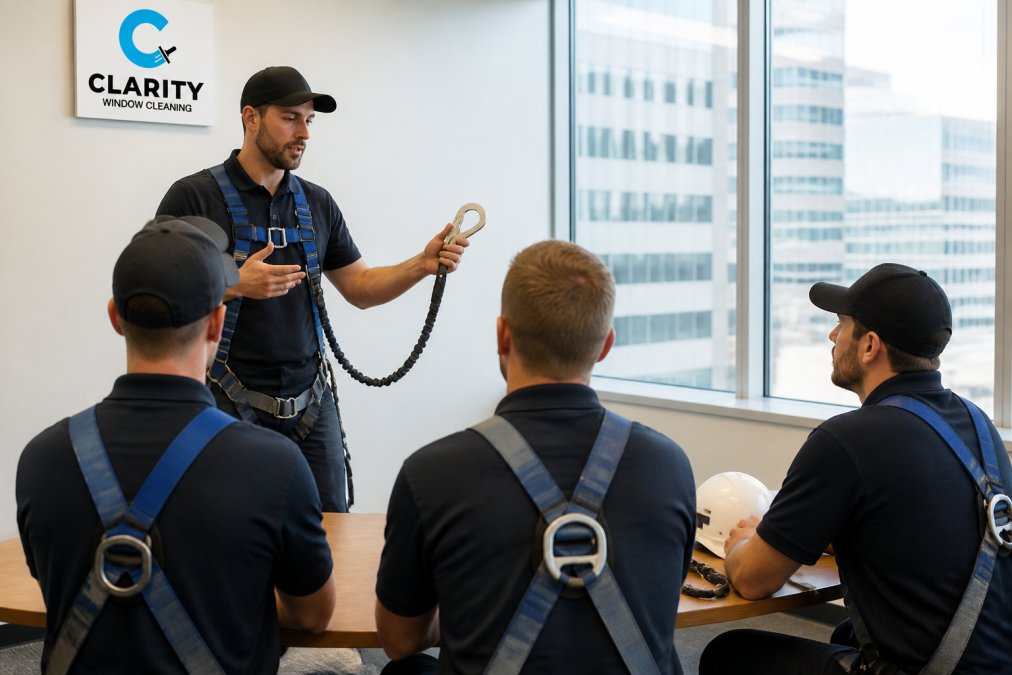
Why Safety Training Is Vital for Window Washers
Table of Contents
- Why Safety Training Is Vital for Window Washers
- The Real Cost of Inadequate Safety Training
- OSHA Window Cleaning Regulations and Compliance Requirements
- Fall Protection and High-Rise Window Cleaning Safety Standards
- How Commercial Window Cleaning Maintenance Reporting Protects Your Facility
- Building a Safety-First Culture on Your Team
- Liability Reduction and Insurance Benefits for Property Managers
- Conclusion
Last Updated: August 30, 2026
Why Safety Training Is Vital for Window Washers
Window cleaning at height demands more than skill and technique. It demands a culture where safety training is treated as non-negotiable. Why safety training is vital for window washers comes down to one simple fact: the work happens at elevation, where mistakes don't result in do-overs. They result in injuries or worse.
At Clarity Window Cleaning, we've built our entire operation around this principle. Our team understands that why safety training is vital for window washers isn't abstract, it's the difference between a team going home whole and a team dealing with tragedy. For facilities managers and property managers overseeing high-rise buildings, this matters directly. Your liability, your insurance costs, your reputation, and your team's wellbeing all hinge on whether the people cleaning your windows have been properly trained.
The stakes are high. Window washing involves suspended access equipment, rope descent systems, anchor points, and personal protective equipment. One lapse in training, one missed step in a safety protocol, and the consequences cascade. This guide walks you through why safety training is vital for window washers, what regulations demand, and how to build a safety-first culture that actually sticks.
The Real Cost of Inadequate Safety Training
Most facility managers don't think about window cleaning safety until something goes wrong. By then, it's too late.
Inadequate safety training creates a cascade of problems. Workers who haven't been properly trained on fall protection systems don't understand anchor points or load limits. They cut corners. They skip steps in pre-shift equipment inspection because nobody taught them why those steps matter. They work tired or distracted because nobody has addressed fatigue management or mental health as part of the safety culture.
The financial impact is immediate. A single incident involving a fall or injury triggers workers' compensation claims, OSHA fines, potential litigation, and increased insurance premiums. But the real cost runs deeper than one incident. Inadequate training creates a pattern of near-misses, close calls that nobody reports because the team doesn't understand incident reporting protocols. Each near-miss is a warning sign that the system is breaking down.
Beyond the financial hit, there's the operational disruption. When an accident happens on your property, your facility becomes a crime scene. Tenants are disturbed. Operations halt. Your reputation takes a hit. For commercial buildings with high-profile tenants, this disruption can cost far more than the cleanup bill.
The solution isn't complicated: invest in proper safety training before you hire anyone to work at height on your building. Require certification. Verify credentials. Make it clear that safety training isn't optional, it's the price of admission.
OSHA Window Cleaning Regulations and Compliance Requirements
Federal regulations exist to establish baseline safety standards for work at height. The Occupational Safety and Health Administration (OSHA) sets requirements that apply to window cleaning operations, particularly for commercial work on high-rise buildings.
OSHA's fall protection standards require that workers at heights of 6 feet or more be protected from falling. For window cleaning, this typically means a combination of personal protective equipment, fall arrest systems, and proper anchoring. The regulation isn't vague, it specifies that fall protection systems must be able to stop a fall and prevent contact with lower levels.
OSHA also mandates that employers provide training on the hazards of the work, the procedures to be followed, and the proper use of equipment. This isn't a one-time checkbox. It's an ongoing requirement that includes refresher training and updated protocols as conditions change.
Compliance also means documentation. OSHA requires that you maintain records of training, equipment inspection, and any incidents or near-misses. For facilities managers, this means demanding detailed reporting from your window cleaning contractor. You need to know that the team working on your building has been trained, certified, and that their equipment has been inspected.
A contractor who can't provide evidence of OSHA compliance, current certifications, and detailed maintenance records isn't worth the risk. The liability falls on you if an incident occurs on your property. Clarity provides free estimates for all window cleaning needs, and part of that estimate process includes a full walkthrough of our OSHA-compliant protocols and documentation practices.
Fall Protection and High-Rise Window Cleaning Safety Standards
Fall protection isn't a single system, it's a layered approach that combines equipment, training, and protocols.
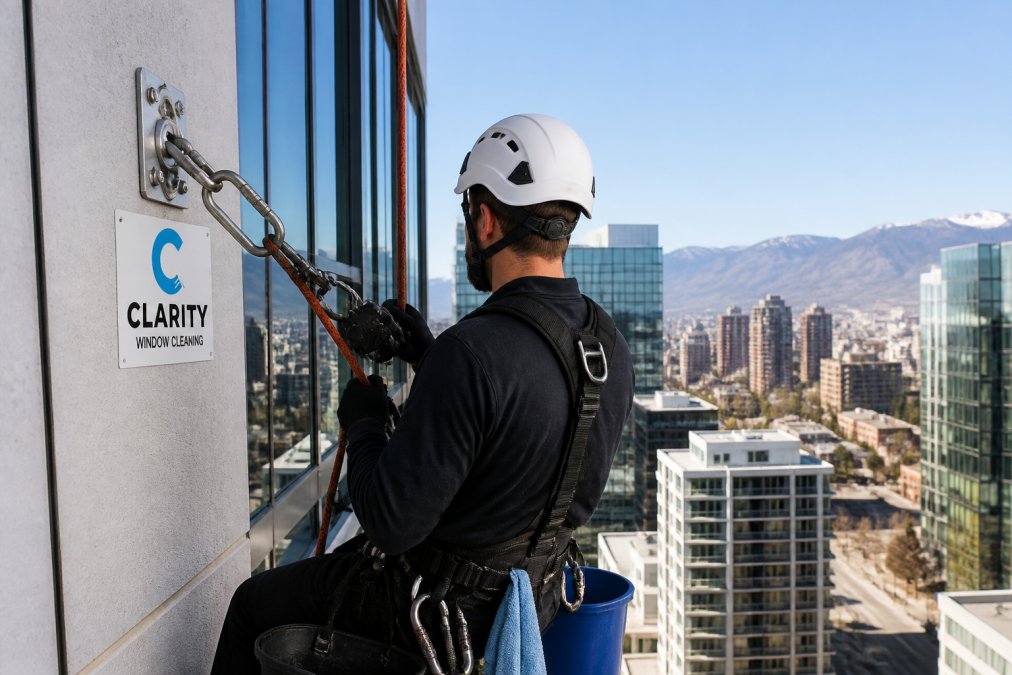
The foundation is the safety harness, which distributes the force of a fall across the body in a way that minimizes injury. But a harness alone doesn't work. It must be connected to an anchor point, a fixed structure capable of supporting the load. For high-rise window cleaning, anchor points are often roof-mounted or built into the building's structure. The integrity of that anchor point determines whether the harness actually protects the worker.
Rope descent systems allow workers to control their descent while remaining connected to the anchor. These systems require training to use safely. A worker who doesn't understand load limits, friction, or proper rigging can create a situation where the system fails under stress.
Personal protective equipment extends beyond the harness. It includes hard hats to protect against falling objects, eye protection, gloves, and footwear designed for work at height. Each piece serves a specific purpose. Each piece requires proper fit and maintenance.
High-rise window cleaning presents unique challenges. Wind speeds increase with elevation. Temperature swings can affect equipment performance. The building's architecture may create anchor points that are difficult to access or require specialized rigging. Workers need training specific to these conditions.
The standard that guides this work is ANSI/ASSE A10.48, which covers criteria for safety practices with window cleaning using rope descent systems. This standard specifies training requirements, equipment specifications, and operational procedures. Contractors who follow this standard, and can prove it through documentation and certifications, are the ones you want on your building.
How Commercial Window Cleaning Maintenance Reporting Protects Your Facility
Documentation is the thread that ties safety training to accountability. Without it, you have no way to verify that the work was done safely or to defend yourself if something goes wrong.
Commercial window cleaning maintenance reporting should include several key elements. First, a pre-service safety assessment that documents the condition of the building, anchor points, and any hazards identified. Second, a detailed log of what work was performed, when it was performed, and by whom. Third, equipment inspection records showing that harnesses, ropes, and other gear were checked and found suitable for use. Fourth, any incidents or near-misses, no matter how minor, documented with details about what happened and what corrective action was taken.
This reporting serves multiple purposes. For you as a facilities manager, it creates a paper trail that demonstrates due diligence. If an incident occurs, you can show that you hired a qualified contractor, verified their training, and received documentation of safe practices. That documentation protects you legally.
For the contractor, detailed reporting demonstrates professionalism and accountability. It shows that they take safety seriously and aren't cutting corners. It also helps them identify patterns, if near-misses cluster around a particular anchor point or time of day, the reporting system flags it so they can investigate.
The reporting should be specific enough to be useful. "Window cleaning completed" tells you nothing. "Window cleaning completed on north facade, 40-story building, using rope descent system with anchor points on roof level 38-40, all equipment inspected and certified, no hazards identified, completed by technicians Smith and Johnson on 8/30/26" tells you everything.
Demand this level of detail from your contractor. Make it a requirement in your contract. Clarity provides free estimates for all window cleaning needs, and part of our service is delivering the kind of detailed reporting that gives you confidence in what's happening on your building.
Building a Safety-First Culture on Your Team
Safety culture isn't created by a single training session. It's built through consistent messaging, accountability, and leadership that demonstrates commitment to safety as a core value.
For facilities managers, building this culture starts with hiring decisions. You set the tone by requiring certifications, verifying training, and refusing to work with contractors who cut corners on safety. When you make it clear that safety is non-negotiable, contractors understand that you're serious.
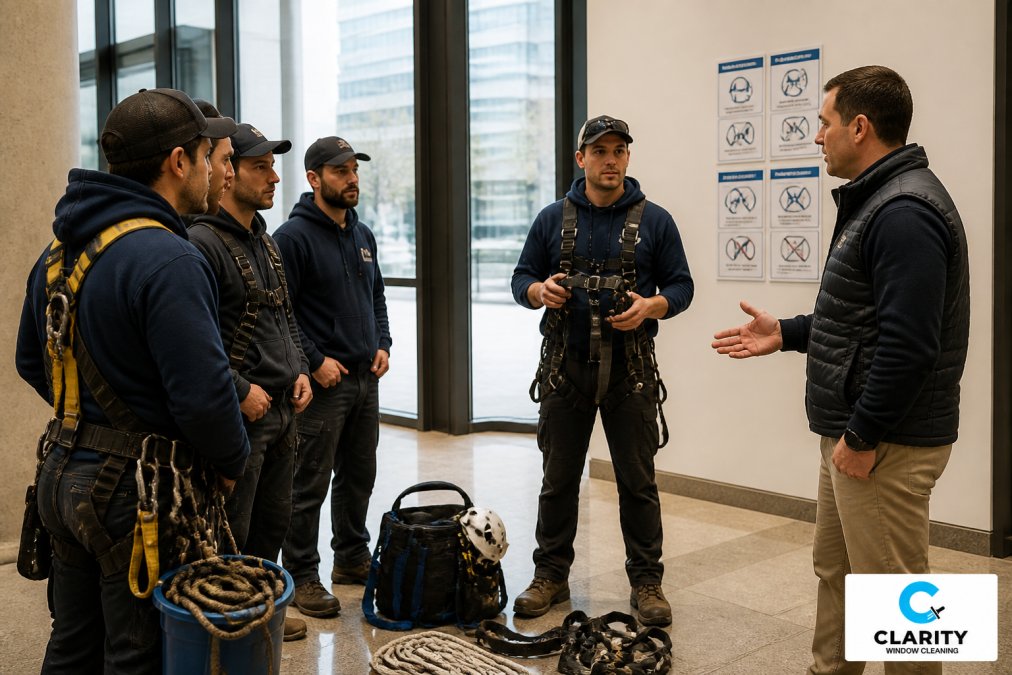
It continues with pre-shift briefings. Before any work begins, the team should gather to review the day's specific hazards, the procedures they'll follow, and any changes from previous sessions. These briefings take 15 minutes and catch problems before they become incidents. A worker who's tired or distracted gets flagged during the briefing. A hazard that wasn't obvious during planning gets identified and addressed.
Equipment inspection is part of the daily routine, not an afterthought. Harnesses are checked for cuts or wear. Ropes are inspected for fraying or damage. Anchor points are verified. This takes time, but it's time that prevents failures.
Incident reporting, including near-misses, is essential. If a worker nearly slips but catches themselves, that's reported. If a carabiner doesn't clip smoothly, that's reported. These small incidents are early warnings. If they're ignored, they eventually become serious incidents.
Fatigue management is often overlooked but critical. Window cleaning at height is physically demanding. A tired worker makes mistakes. A worker who's been working long hours without proper rest is a liability. Building a safety culture means acknowledging that rest and recovery are part of the safety system, not obstacles to productivity.
Mental health matters too. Workers who are stressed, anxious, or dealing with personal crises are more likely to have accidents. A safety-first culture includes checking in with team members, offering support, and understanding that sometimes the safest choice is to pause work and address what's happening with a person.
Liability Reduction and Insurance Benefits for Property Managers
Insurance companies reward safety. When you hire contractors with proper training, certifications, and documented safety protocols, your insurance premiums reflect that lower risk.
More importantly, insurance coverage itself depends on it. If you hire an uninsured or under-insured contractor and an accident occurs, your insurance may deny the claim. You become liable. The contractor's lack of insurance becomes your problem.
When you work with a contractor like Clarity who maintains full insurance and bonding, that protection extends to your facility. If an incident occurs, the contractor's insurance covers it. You're protected. Your operations aren't disrupted by litigation or claims that drag on for years.
Liability reduction goes beyond insurance. It's about demonstrating that you exercised due diligence in hiring and overseeing the work. Documentation of contractor qualifications, training records, and safety protocols creates a defensible position. If something goes wrong, you can show that you did everything reasonable to prevent it.
For property managers overseeing multiple buildings, this becomes a strategic advantage. Buildings with documented safety records attract better tenants and command higher rents. Tenants want to know that their workspace is being maintained safely. They want to know that the people working on the building have been trained and certified.
The financial math is straightforward: investing in proper safety training and documentation costs less than dealing with an incident. Insurance premiums are lower. Liability exposure is reduced. Operations run smoothly without disruption. That's a trade-off that makes sense for any facilities manager.
Window cleaning at height will always carry risk. But that risk can be managed, reduced, and mitigated through proper training, equipment, protocols, and culture.
The contractors you hire should demonstrate expertise through certifications, detailed safety protocols, and a track record of incident-free work. They should provide documentation that proves their commitment to safety. They should be insured and bonded. They should be willing to answer your questions about how they approach fall protection, anchor points, equipment inspection, and incident reporting.
Clarity provides free estimates for all window cleaning needs, and we approach every estimate as an opportunity to show you how we build safety into every aspect of our work. We work directly with facilities managers and property managers to understand your building's unique challenges and to create a safety plan that works for your operation. Our team of certified technicians, OSHA-compliant practices, and detailed reporting give you the confidence that your building is being maintained safely and professionally. Get Clarity and experience the peace of mind that comes from knowing your window cleaning is in the hands of a team that treats safety as non-negotiable.
Frequently Asked Questions
Why is safety training important for window washers?
Safety training prevents falls, the leading cause of serious injuries in window cleaning, and ensures teams understand hazard identification, proper equipment use, and emergency protocols. For facilities managers, trained crews reduce liability exposure and demonstrate OSHA compliance. Professional safety training also improves incident response time and helps protect both workers and your facility's reputation.
What are the OSHA window washing requirements?
OSHA requires fall protection systems, anchor point inspection, and documented safety plans for any work at heights. Window cleaning crews must use approved harnesses, maintain equipment in safe condition, and receive training on fall arrest systems. Employers must maintain incident records and conduct regular safety audits. Clarity provides free estimates and ensures all work meets OSHA regulations with detailed compliance documentation for your records.
How does safety training reduce liability for property managers?
Well-trained, certified crews reduce accident risk, which lowers insurance claims and premium costs. Documented safety protocols and maintenance reporting create a liability shield, showing insurers and regulators that your facility actively prevents incidents. If an accident occurs, proof of proper training and compliance can significantly limit your legal exposure and demonstrates due diligence to boards and stakeholders.
What equipment certifications should professional window washers hold?
Window washers should hold certifications in fall protection systems, rope descent equipment (RDE), and rescue techniques. Regular recertification ensures knowledge stays current with safety standards. Professional teams also complete site-specific safety training before working on your building, tailored to its unique hazards and access points.
This article was written using GrandRanker
Frequently Asked Questions
Why is safety training important for window washers?
Safety training prevents falls—the leading cause of serious injuries in window cleaning—and ensures teams understand hazard identification, proper equipment use, and emergency protocols. For facilities managers, trained crews reduce liability exposure and demonstrate OSHA compliance. Professional safety training also improves incident response time and helps protect both workers and your facility's reputation.
What are the OSHA window washing requirements?
OSHA requires fall protection systems, anchor point inspection, and documented safety plans for any work at heights. Window cleaning crews must use approved harnesses, maintain equipment in safe condition, and receive training on fall arrest systems. Employers must maintain incident records and conduct regular safety audits. Clarity provides free estimates and ensures all work meets OSHA regulations with detailed compliance documentation for your records.
How does safety training reduce liability for property managers?
Well-trained, certified crews reduce accident risk, which lowers insurance claims and premium costs. Documented safety protocols and maintenance reporting create a liability shield—showing insurers and regulators that your facility actively prevents incidents. If an accident occurs, proof of proper training and compliance can significantly limit your legal exposure and demonstrates due diligence to boards and stakeholders.
What equipment certifications should professional window washers hold?
Window washers should hold certifications in fall protection systems, rope descent equipment (RDE), and rescue techniques. Regular recertification ensures knowledge stays current with safety standards. Professional teams also complete site-specific safety training before working on your building, tailored to its unique hazards and access points.