 ultimate-guide
Residential Window Cleaning for Condos: A Complete Guide
Table of Contents
- Why Residential Window Cleaning for Condos Requires Professional Care
- Hard Water Stain Removal and Glass Restoration
- OSHA Window Cleaning Compliance for Multi-Unit Buildings
- Commercial Window Cleaning Maintenance Schedules for Condo Communities
- Condo-Specific Logistics: HOA Coordination and Access Challenges
- Seasonal Weather Considerations for Window Maintenance
- Insurance, Liability, and Documentation for Multi-Unit Properties
- How to Choose a Window Cleaning Provider for Your Condo
- Frequently Asked Questions
Last Updated: September 4, 2026
Condo windows face a unique combination of challenges that single-family homes rarely encounter: multi-story exposure, shared maintenance responsibilities, and strict community guidelines. Residential window cleaning for condos salt lake requires more than a squeegee and a ladder; it demands specialized equipment, safety protocols, and coordination that most general cleaning services simply do not possess. At Clarity Window Cleaning, we work directly with facilities managers and property managers across the Wasatch Front, and we have seen firsthand what happens when condo communities hire the wrong provider. This guide explains what professional care actually involves, why residential window cleaning condos is a specialized discipline, and how to select a partner who protects your building, your residents, and your investment.
Why Residential Window Cleaning for Condos Requires Professional Care
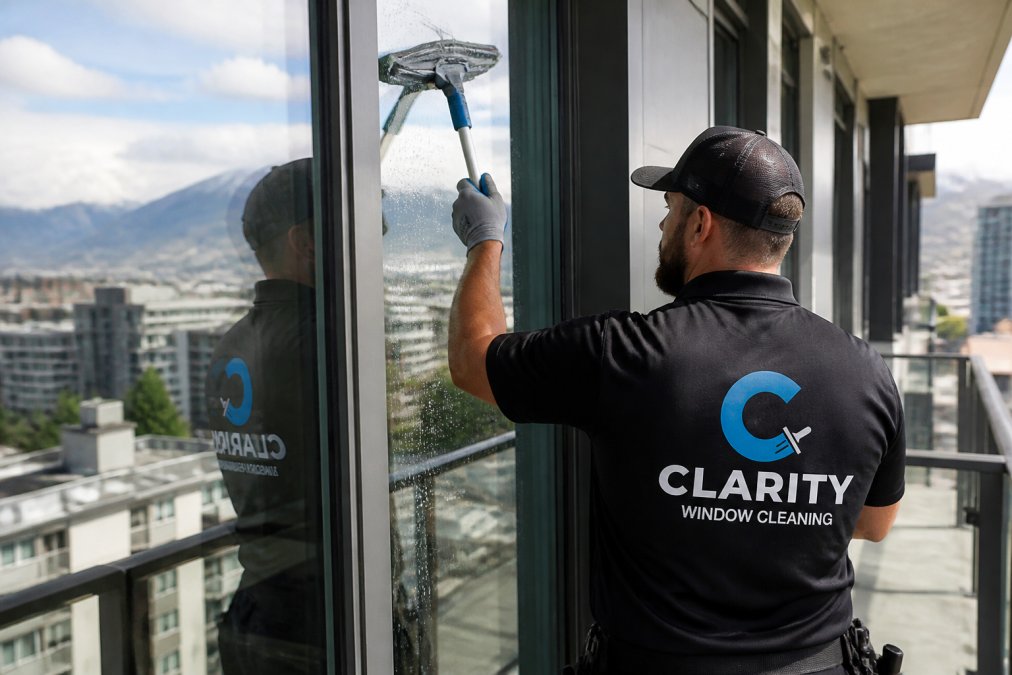
Multi-story buildings introduce fall hazards, access constraints, and mineral deposits that accumulate far faster than ground-level windows. A professional team brings certified technicians, commercial-grade equipment, and a safety-first approach that protects both workers and residents.
Professional cleaning protects property value. Streak-free results require water-fed poles, purified water systems, and proper technique. Inexperienced cleaners leave hard water spots or scratch coatings, converting routine service into expensive restoration.
Hard Water Stain Removal and Glass Restoration
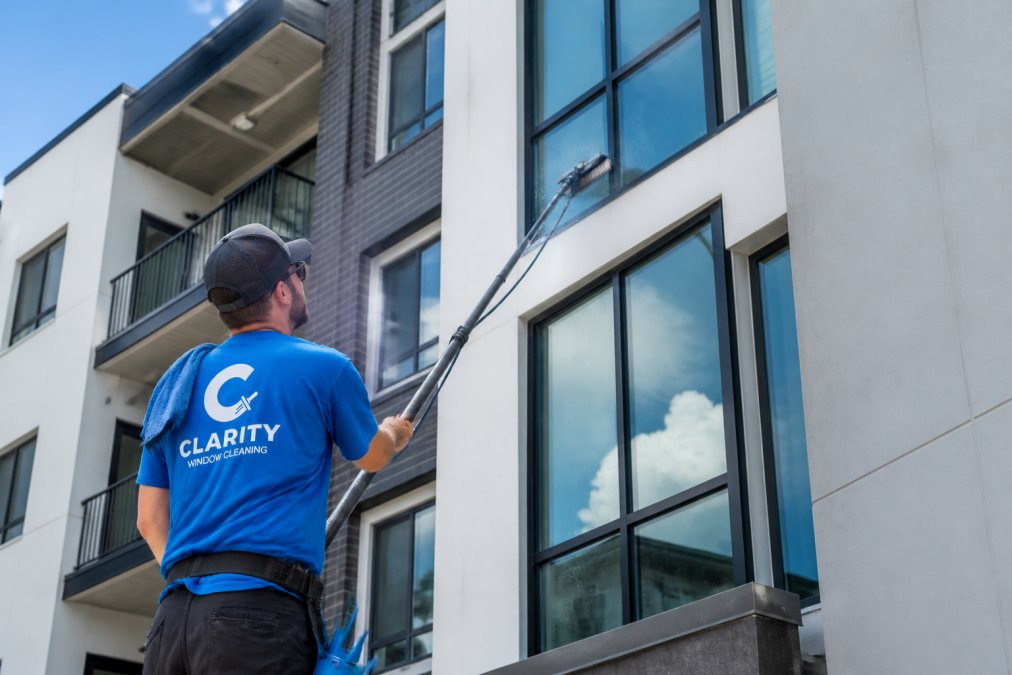
Hard water stains are the most common complaint from condo property managers and the most preventable. Mineral-rich water leaves calcium and silica deposits that standard cleaners cannot remove. Understanding why your building accumulates stains faster is the first step to controlling them.
Diagnosing Your Building's Mineral Profile
Condos near irrigation systems, construction sites, or high-mineral water supplies experience accelerated stain buildup. South-facing or west-facing exposure accelerates stains because direct sun speeds water evaporation and mineral bonding. A professional assessment identifies your building's risk factors and recommends a prevention schedule rather than reactive restoration.
A hard-water building on the west side may need quarterly cleaning to prevent etching, while a soft-water building with minimal sun exposure might maintain clarity with annual service.
Stain Removal and Glass Restoration Techniques
Hard water stain removal uses an acidic solution to break down mineral bonds, followed by rinse and polish. Severe etched stains require gentle abrasives or polishing compounds. DIY removal with razor blades or harsh chemicals often causes permanent damage.
Prevention is more cost-effective than reaction. Buildings with years of accumulated deposits require restoration-grade treatment first, then scheduled maintenance prevents stains from returning.
Building-Specific Prevention Strategies
A qualified provider assesses your building's water source, climate exposure, and maintenance history, then recommends a treatment schedule tailored to your condo's actual risk profile. This might include:
- Quarterly service for buildings with hard municipal water, high sun exposure, or proximity to irrigation systems
- Semi-annual service for standard urban exposure with moderate mineral content
- Annual service for low-rise buildings with soft water and minimal environmental stressors
Seasonal adjustments matter: spring runoff carries higher minerals, summer sprinklers deposit concentrated minerals on south-facing glass. A provider who adjusts frequency and treatment by season protects your glass.
Clarity works directly with facilities managers to develop building-specific stain prevention schedules based on your water source, exposure, and maintenance history. This diagnostic approach turns a reactive complaint into a proactive asset protection strategy.
OSHA Window Cleaning Compliance for Multi-Unit Buildings
Window cleaning above ground level is regulated by OSHA. Compliance requires specific anchor points, fall protection systems, equipment inspections, certified suspension systems, and trained personnel who understand load calculations and emergency procedures.
Many property managers assume their general contractor is OSHA-compliant. This assumption is dangerous. OSHA standards require documented training, site-specific safety plans, and equipment inspections. Violations result in fines and serious injury risk.
When evaluating a provider, ask for their written safety plan and proof of training. A reputable company will provide both without hesitation.
Commercial Window Cleaning Maintenance Schedules for Condo Communities
Condo communities benefit from scheduled maintenance like commercial properties. Maintenance schedules protect glass, maintain curb appeal, and avoid costly restoration.
A typical schedule depends on your building's environment and exposure:
| Building Condition | Recommended Frequency | Primary Benefit |
|---|---|---|
| Near construction or heavy dust | Quarterly | Prevents hard water and debris buildup |
| Standard urban exposure | Semi-annually | Maintains appearance and glass clarity |
| Low-rise with minimal exposure | Annually | Cost-effective baseline maintenance |
Seasonal cleaning addresses spring pollen, summer sprinkler residue, and winter road salt. A scheduled partner adjusts service accordingly.
Condo-Specific Logistics: HOA Coordination and Access Challenges
Condo window cleaning requires HOA coordination: vendor insurance, work hours, resident notification, elevator access plans, and designated work zones.
A professional provider handles logistics: communicates with the HOA board, provides insurance certificates in advance, and schedules work during approved hours.
Ask about interior access protocols. Experienced condo providers offer flexible scheduling and clear communication to minimize missed appointments.
Seasonal Weather Considerations for Window Maintenance
Salt Lake's climate presents specific challenges: winter freezing, summer evaporation, spring dust, and fall tannin stains.
Professional cleaners adjust methods by season: cold-weather solutions in winter, early-morning scheduling in summer to avoid rapid drying and streaks.
Seasonal planning protects your building: cleaning gutters and tracks before winter prevents ice damage, and scheduling before pollen season keeps windows clearer longer.
Insurance, Liability, and Documentation for Multi-Unit Properties
For multi-unit buildings, insurance and documentation are as important as cleaning. A provider must carry general liability and workers' compensation insurance. Many HOAs require a minimum coverage amount and a certificate naming the association as additional insured.
Detailed post-service reporting gives property managers a record of what was cleaned, when, and by whom, supporting warranty claims, board reporting, and insurance audits.
How to Choose a Window Cleaning Provider for Your Condo
Choosing a condo provider differs from hiring a single-family cleaner. Evaluate operational fit, liability management, and multi-unit building constraints across four key dimensions.
1. Condo-Specific Operational Experience
Ask prospective providers how many multi-unit buildings they service and what the average height and unit count of those buildings are. A provider experienced with multi-unit condos understands elevator coordination, resident notification, and HOA approval processes.
Specifically, ask:
- How do you handle elevator access and scheduling in buildings with limited elevator capacity?
- What is your protocol for resident notification and interior access coordination?
- Have you worked with HOA boards before, and do you understand the approval and insurance documentation they require?
- Can you provide references from at least three condo communities or property management companies?
Vague answers indicate operational friction: missed appointments, HOA approval delays, or inadequate insurance documentation.
2. Insurance Documentation and Board Compliance
Before you even discuss pricing, request a certificate of insurance and verify three things:
- General liability coverage of at least $1 million (many HOAs require this minimum)
- Workers' compensation insurance
- The ability to name your HOA as an additional insured on the certificate
Never accept verbal assurance of insurance. A written certificate issued by the provider's insurance agent protects you legally and demonstrates professional operation.
Ask whether the provider supplies detailed, itemized service reports for board reporting and insurance audits.
3. Safety Protocols and High-Rise Competency
For any condo above three stories, ask about their fall protection systems and OSHA compliance. Specifically:
- What anchor points and suspension systems do they use for buildings above ground level?
- Can they provide a site-specific safety plan before work begins?
- Do they carry OSHA training certifications for their technicians?
- What is their incident history, and do they carry workers' compensation claims history reports?
A provider who cannot answer these questions is a liability risk. OSHA violations indicate corner-cutting on safety. Worker injuries on your property create liability for the building owner.
4. Transparent Pricing and Service Scope
Request a written estimate itemizing services: exterior washing, interior washing, screens, tracks, and restoration. Avoid vague quotes that lump services together.
Also ask about re-service policies, interior access charges, seasonal adjustments, and weather delay rescheduling fees.
Transparent answers protect you from surprise charges and ensure comparable service comparisons.
Getting Started with a Condo-Focused Provider
Clarity provides free estimates for all window cleaning needs and works directly with facilities managers and property managers to develop customized service schedules. Our team brings certified technicians experienced in high-rise window cleaning, OSHA-compliant practices, and fully insured, bonded service. We handle HOA coordination, provide detailed post-service reporting, and adjust our approach based on your building's specific water quality, exposure, and maintenance history.
Frequently Asked Questions
How often should residential window cleaning be done for condos?
Most condo communities benefit from professional window cleaning twice per year, spring and fall, to address seasonal buildup and maintain curb appeal. High-traffic areas or buildings near construction zones may need quarterly service. Your HOA or property manager can determine the ideal frequency based on your building's exposure to dust, hard water stains, and weather conditions. Clarity provides free estimates to assess your specific needs and recommend a maintenance schedule.
What makes hard water stain removal different from regular window cleaning?
Hard water stain removal requires specialized techniques and equipment beyond standard squeegee cleaning. Mineral deposits from hard water bond to glass and resist ordinary washing. Professional services use deionized water systems, specialized cleaning solutions, and sometimes gentle abrasive methods to dissolve these deposits without scratching the glass. This process restores glass clarity and prevents permanent etching that can reduce property value.
Why is OSHA window cleaning compliance important for condo buildings?
OSHA compliance ensures that window cleaners follow safety protocols when working at heights, protecting both workers and residents. Compliant providers use proper fall protection equipment, maintain safety documentation, and carry liability insurance. For multi-unit buildings, this documentation protects your property from legal liability if an accident occurs. Verify that your service provider is fully insured, bonded, and can provide proof of OSHA-compliant safety practices.
How do professional window cleaners handle condo access and HOA coordination?
Experienced providers understand that condo access requires advance planning and resident notification. They coordinate with your HOA or property manager to schedule service during approved windows, post notices to residents, and use non-disruptive equipment like water-fed poles that eliminate the need for ladders against units. This approach minimizes disruption to residents while ensuring thorough cleaning of both exterior and interior surfaces. Clarity works directly with property managers to develop customized schedules that respect building operations.
This article was written using GrandRanker
Frequently Asked Questions
How often should residential window cleaning be done for condos?
Most condo communities benefit from professional window cleaning twice per year—spring and fall—to address seasonal buildup and maintain curb appeal. High-traffic areas or buildings near construction zones may need quarterly service. Your HOA or property manager can determine the ideal frequency based on your building's exposure to dust, hard water stains, and weather conditions. Clarity provides free estimates to assess your specific needs and recommend a maintenance schedule.
What makes hard water stain removal different from regular window cleaning?
Hard water stain removal requires specialized techniques and equipment beyond standard squeegee cleaning. Mineral deposits from hard water bond to glass and resist ordinary washing. Professional services use deionized water systems, specialized cleaning solutions, and sometimes gentle abrasive methods to dissolve these deposits without scratching the glass. This process restores glass clarity and prevents permanent etching that can reduce property value.
Why is OSHA window cleaning compliance important for condo buildings?
OSHA compliance ensures that window cleaners follow safety protocols when working at heights, protecting both workers and residents. Compliant providers use proper fall protection equipment, maintain safety documentation, and carry liability insurance. For multi-unit buildings, this documentation protects your property from legal liability if an accident occurs. Verify that your service provider is fully insured, bonded, and can provide proof of OSHA-compliant safety practices.
How do professional window cleaners handle condo access and HOA coordination?
Experienced providers understand that condo access requires advance planning and resident notification. They coordinate with your HOA or property manager to schedule service during approved windows, post notices to residents, and use non-disruptive equipment like water-fed poles that eliminate the need for ladders against units. This approach minimizes disruption to residents while ensuring thorough cleaning of both exterior and interior surfaces. Clarity works directly with property managers to develop customized schedules that respect building operations.