 how-to
Post-Construction Window Glass Restoration: A Step-by-Step Guide
Table of Contents
- What You'll Need Before Starting Post-Construction Window Glass Restoration
- OSHA Safety Standards for High-Rise Window Cleaning
- Step 1: Remove Construction Debris and Drywall Dust
- Step 2: Handle Adhesive Residue and Cured Adhesive Removal
- Step 3: Removing Concrete Splatter from Commercial Windows
- Step 4: Paint Overspray and Silicone Removal Techniques
- Step 5: Polishing and Restoring Glass Clarity
- Benefits of Professional Hard Water Stain Removal
Last Updated: August 27, 2026
What You'll Need Before Starting Post-Construction Window Glass Restoration
Post-construction window glass restoration requires the right tools, protective equipment, and knowledge to handle debris, adhesives, and coatings without damaging glass surfaces. Whether you're managing a high-rise office tower or commercial complex, understanding what's needed before you start determines whether your restoration succeeds or creates new problems.
Essential Tools and Equipment
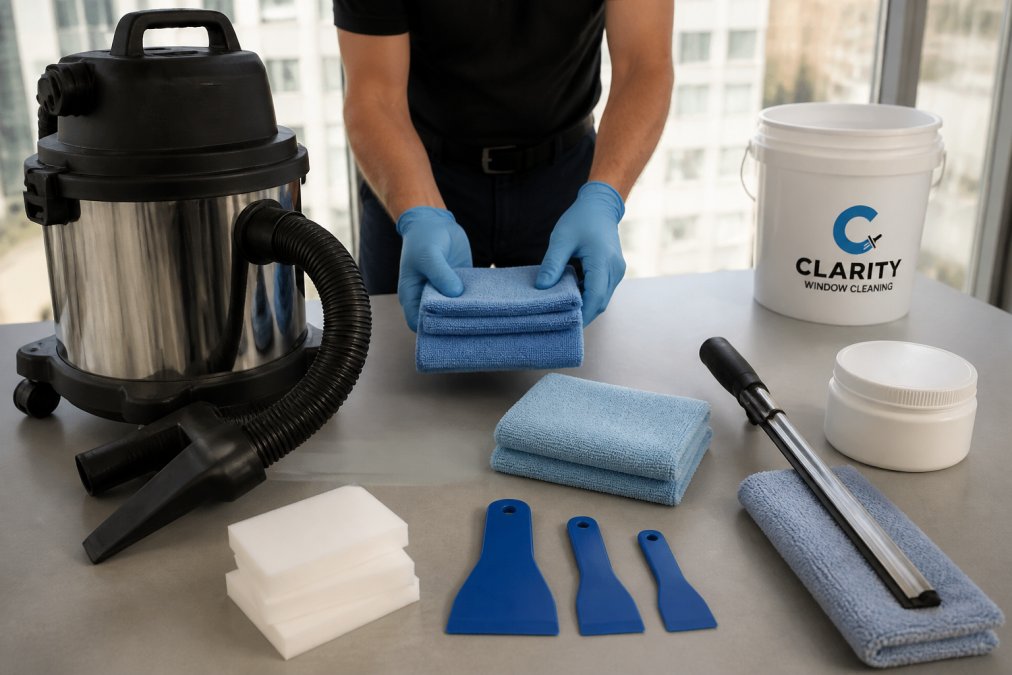
A wet-dry vacuum is non-negotiable for removing construction debris and drywall dust without scratching glass. Unlike standard household vacuums, wet-dry models handle both wet and dry materials safely, preventing fine dust particles from becoming airborne.
For adhesive residue, use a plastic scraper or putty knife rather than metal tools that can etch glass. Metal scrapers leave permanent marks on tempered and heat-strengthened glass common in modern commercial buildings. A microfiber cloth is essential for final polishing, it traps particles rather than dragging them across the surface, reducing scratch risk.
A squeegee with a rubber blade handles water and cleaning solutions effectively. For stubborn paint overspray and silicone removal, use a polishing compound designed for glass. Avoid steel wool entirely on tempered glass, as friction can damage surface integrity. Water-fed poles extend your reach on taller windows without requiring scaffolding in many cases, though high-rise work above certain heights requires professional equipment and safety systems. A bucket, clean water source, and pH-neutral cleaning solution complete your basic toolkit. Avoid acidic cleaners that can etch glass over time.
Safety Gear and Protection
Personal protective equipment is mandatory when handling construction debris and glass fragments. Safety glasses protect your eyes from flying particles and glass shards. Cut-resistant gloves are essential, as construction sites often leave sharp edges that cause serious lacerations.
A dust mask rated for fine particles prevents inhalation of silica dust, which poses long-term health risks (the CDC). If using chemical solvents for paint or silicone removal, a respirator with appropriate cartridges is necessary. Closed-toe shoes with slip-resistant soles prevent injuries from wet surfaces and dropped tools. Long sleeves provide a barrier against chemical splashes and cuts.
For high-rise work, fall protection systems are mandatory, harnesses, lanyards, and anchor points must meet OSHA requirements. Many facilities managers and property managers require proof of OSHA-compliant safety practices before allowing window restoration work. Clarity provides free estimates for all window cleaning needs and can walk you through compliance requirements for your specific property.
OSHA Safety Standards for High-Rise Window Cleaning
OSHA regulations govern fall protection, equipment safety, and worker protection on high-rise projects. Fall protection systems are required when working above 6 feet, with specific requirements for anchor points, harnesses, and rescue procedures (osha.gov). For commercial window cleaning on buildings above 4 stories, a site-specific safety plan documenting hazards, equipment, and emergency procedures is mandatory.
Window cleaning must comply with OSHA 1926.500, which specifies that workers be protected by guardrails, safety net systems, or personal fall arrest systems. Many property managers require documentation proving your team has current OSHA 10-hour or 30-hour certifications before allowing work to proceed.
Anchor points must support at least 5,000 pounds per worker with redundancy built in (osha.gov). Harnesses and lanyards must be inspected before each use, with damaged equipment removed immediately. A rescue plan must be in place before work begins.
For facilities managers overseeing post-construction restoration on mixed-use complexes or office towers, requiring proof of OSHA compliance protects both workers and liability. Clarity's team maintains OSHA-compliant practices and provides detailed documentation of safety procedures for each project.
Step 1: Remove Construction Debris and Drywall Dust
The first step in post-construction window glass restoration is removing loose debris and fine dust particles that accumulate during building construction. If you apply water or cleaning solutions over debris, they become mud that scratches glass during cleaning.
Start with a dry vacuum pass using your wet-dry vacuum in dry mode, working from top to bottom on the pane, frame, and sill. Pay special attention to edges where dust accumulates in grooves and corners. Use a small brush attachment on the vacuum to dislodge dust from crevices. Don't use compressed air, which scatters fine particles onto adjacent surfaces. After vacuuming, wipe down the pane with a dry microfiber cloth to remove remaining dust particles.
This initial dry cleaning phase prevents scratches when you apply water and cleaning solutions later. Skipping this step and moving straight to wet cleaning turns dust into an abrasive slurry that damages glass. Taking 10-15 minutes for thorough debris removal prevents hours of frustration fixing scratches afterward.
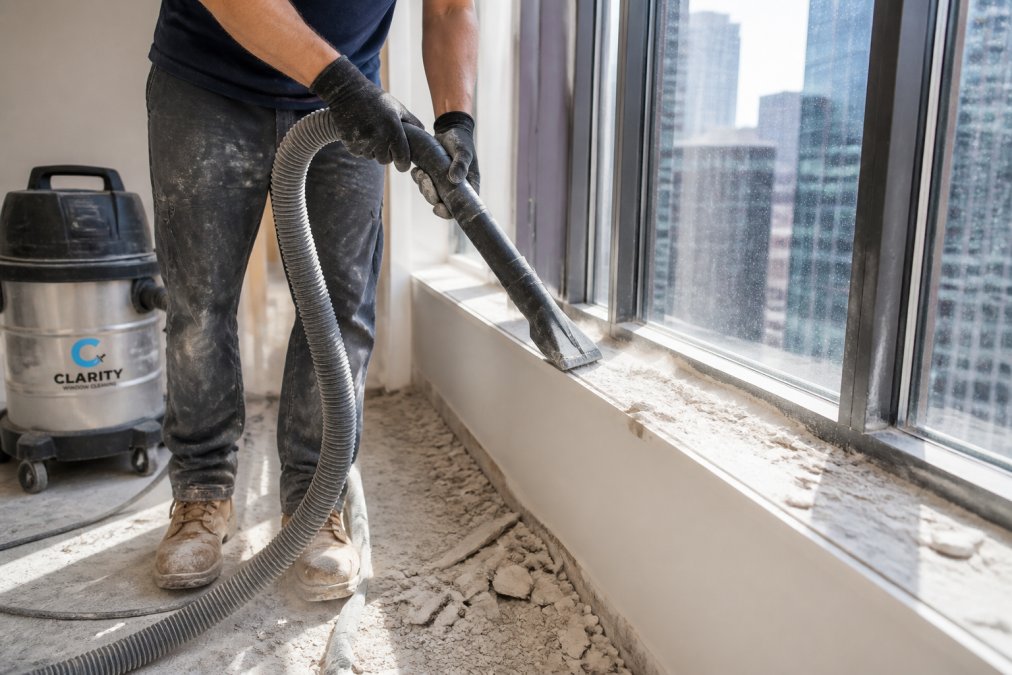
For high-rise properties, this phase can be done without water runoff, minimizing disruption to tenants below and preventing dust from entering building ventilation systems.
Step 2: Handle Adhesive Residue and Cured Adhesive Removal
Construction adhesives used during window installation cure hard and become difficult to remove without proper technique. Cured adhesive left on glass creates a cloudy, uneven appearance that polishing won't fix.
Start by testing a small inconspicuous area with a plastic scraper, applying gentle pressure at a 30-degree angle to the glass surface. Never scrape perpendicular to the glass, as this increases gouging risk. If adhesive comes away cleanly with light pressure, continue across the entire pane using slow, controlled strokes.
For stubborn adhesive, apply a solvent designed for adhesive removal. Test the solvent on a small area first to ensure it doesn't etch glass or damage frame material. Let the solvent sit for 5-10 minutes to soften adhesive, then scrape again. Avoid leaving solvent on glass for extended periods, as some formulations can damage surface integrity.
Excessive scraper pressure increases scratch risk on tempered glass or creates micro-fractures in heat-strengthened glass that can lead to failure later. Multiple light passes work better than aggressive single passes. After adhesive removal, clean thoroughly with water and a microfiber cloth to remove residual solvent or adhesive particles. Allow glass to dry completely before moving forward.
Step 3: Removing Concrete Splatter from Commercial Windows
Concrete splatter bonds to glass as it cures, creating hard spots difficult to remove without proper technique. For fresh concrete splatter (less than 24 hours old), water and a plastic scraper often work. Dampen the splatter to soften it slightly, then scrape gently.
For cured concrete (more than a day old), a specialized concrete cleaner or diluted muriatic acid solution can soften it. Always test any chemical solution on a small area first. Apply the solution, let it sit for the time specified on the product label (typically 5-15 minutes), then scrape and rinse thoroughly. Neutralize any acidic residue with a baking soda solution before final rinsing.
Never use steel wool or abrasive pads on tempered glass, as friction generates heat and stress that can cause cracking or shattering. Plastic scrapers and soft-bristled brushes remove concrete effectively without damaging surface integrity.
For facilities managers managing post-construction restoration on commercial properties, concrete splatter removal is often the most time-consuming phase. Professional services like Clarity handle this work efficiently while maintaining OSHA compliance and protecting building surfaces from damage.
Step 4: Paint Overspray and Silicone Removal Techniques
Paint overspray from construction painting creates a hazy or spotted appearance. Silicone sealant overspray is more challenging to remove because silicone bonds strongly to glass. Both require different removal approaches.
For paint overspray, start with a plastic scraper to remove loose paint. If paint remains bonded, a paint thinner or mineral spirits can help. Apply the solvent, wait 5-10 minutes for paint to soften, then scrape gently. Rinse thoroughly with water and a microfiber cloth. Latex paint typically comes off with water and gentle scraping, while oil-based paint requires mineral spirits or acetone.
Silicone removal is more involved. A plastic scraper removes bulk silicone, but residue remains bonded to glass. A silicone-specific solvent or adhesive remover breaks the bond, though these products are harsh and require careful application. Apply silicone remover to a small area, let it sit for the recommended time, then scrape again. Multiple applications may be necessary for heavy buildup. Always wear gloves and respiratory protection when using these products.
Avoid using excessive heat (heat guns, pressure washers) to remove paint or silicone, as heat stresses tempered glass and can cause failure, particularly if the glass has existing micro-fractures. Patience with scrapers and appropriate solvents is safer and more effective.
Step 5: Polishing and Restoring Glass Clarity
After removing debris, adhesives, concrete, paint, and silicone, the final step is polishing to restore glass clarity and remove remaining film or streaks.
Start with a clean microfiber cloth and plain water, wiping the entire pane to remove dust and drying residue. Inspect the glass carefully for remaining spots, haze, or film. If the glass appears cloudy after water cleaning, a polishing compound designed for glass restores clarity.
Apply a small amount of polishing compound to a clean microfiber cloth and work it across the glass in circular motions using light pressure. The compound fills microscopic imperfections and removes light oxidation that creates hazy appearance. After polishing, wipe away excess compound with a clean, dry microfiber cloth.
For stubborn haze that doesn't respond to standard polishing compound, a glass restoration product formulated for post-construction cleaning may be necessary. Test any new product on a small area first to ensure it doesn't damage glass or frame.
Step back and view the glass from different angles in natural and artificial light. Streaks, spots, or haze that aren't visible from close range become obvious from a distance. Address any remaining issues before considering restoration complete. For commercial properties, this attention to detail separates professional results from mediocre work.
Wipe down frames with a damp cloth and allow them to dry completely. For aluminum frames, a light polish restores shine and protects against oxidation.
Benefits of Professional Hard Water Stain Removal
Hard water stains are mineral deposits left behind when water containing calcium and magnesium dries on glass. They're particularly common in areas with high mineral content and are one of the most visible signs of poor maintenance on commercial windows.
Professional hard water stain removal uses chemical treatments that dissolve mineral deposits without damaging glass. A technician applies the appropriate acid-based or chelating agent to soften deposits, then uses a plastic scraper or soft brush to gently remove them. The process is faster and more effective than DIY attempts with vinegar or standard cleaners.
For facilities managers overseeing commercial properties, hard water stains create a perception of poor maintenance even when the building is otherwise well-kept. Tenants and visitors form immediate impressions based on window clarity. Professional removal restores that first impression and demonstrates commitment to property standards.
The cost-benefit analysis favors professional service for commercial buildings. A facilities manager spending time on DIY stain removal is time not spent on core responsibilities. Professional technicians complete work faster, achieve better results, and provide documentation for maintenance records. Many property managers schedule quarterly or semi-annual professional window cleaning to prevent hard water stains from building up.
Clarity provides free estimates for all window cleaning needs, including assessment of hard water stain severity and recommended treatment frequency. For high-rise buildings or commercial complexes, understanding your water supply's mineral content helps determine whether monthly, quarterly, or semi-annual professional cleaning is necessary to maintain appearance standards.
Post-construction window glass restoration is a multi-step process that separates professional results from amateur attempts. For facilities managers and property managers overseeing commercial buildings or high-rise office towers, the decision to handle restoration in-house or hire professionals depends on project complexity, timeline, and safety requirements. Clarity's team of certified technicians brings OSHA-compliant practices, specialized equipment, and expertise in handling tempered glass, heat-strengthened glass, and adhesive removal safely. Clarity provides free estimates for all window cleaning needs, allowing you to understand scope and investment before committing to the work.
Frequently Asked Questions
What is the safest way to remove concrete splatter from glass?
Use a plastic scraper or soft-bristle brush first to loosen dried splatter without scratching tempered glass. Apply a specialized chemical solvent designed for concrete removal, let it sit for 5-10 minutes, then gently scrape away the softened residue. For high-rise commercial windows, professional-grade tools and OSHA-compliant safety protocols ensure the job is done correctly without damaging surface integrity or risking worker safety. Clarity provides free estimates for post-construction window restoration on commercial properties.
Can construction debris cause permanent glass damage?
Yes. Sharp debris, abrasive materials, and improper removal techniques can cause micro-scratches, etching, or stress fractures in tempered glass. Heat-strengthened glass is especially vulnerable to thermal shock if exposed to rapid temperature changes during aggressive cleaning. Permanent damage reduces glass clarity and compromises structural integrity. Professional restoration specialists understand how to assess damage and determine whether glass polishing can restore clarity or if replacement is necessary.
What are the benefits of professional hard water stain removal?
Professional hard water stain removal uses commercial-grade polishing compounds and equipment that dissolve mineral deposits without scratching glass. Professionals understand the difference between surface staining and glass etching, applying the correct technique for each. For facilities managers managing multi-tenant commercial complexes or high-rise office towers, professional restoration ensures consistent results across hundreds of window panes, maintains aesthetic standards, and protects long-term glass condition. Professional services also document the work for insurance and maintenance records.
How do you prevent glass scratching during post-construction cleanup?
Use only soft, non-abrasive tools: microfiber cloths, plastic scrapers, and soft-bristle brushes. Avoid steel wool, rough sponges, and metal tools on glass surfaces. Always wet the glass first to reduce friction and allow debris to slide off more easily. Work from top to bottom so gravity assists removal. Wear safety gear including gloves and eye protection. For commercial windows and high-rise properties, professional technicians follow OSHA safety standards and use specialized equipment designed to clean without causing surface damage.
This article was written using GrandRanker
Frequently Asked Questions
What is the safest way to remove concrete splatter from glass?
Use a plastic scraper or soft-bristle brush first to loosen dried splatter without scratching tempered glass. Apply a specialized chemical solvent designed for concrete removal, let it sit for 5-10 minutes, then gently scrape away the softened residue. For high-rise commercial windows, professional-grade tools and OSHA-compliant safety protocols ensure the job is done correctly without damaging surface integrity or risking worker safety. Clarity provides free estimates for post-construction window restoration on commercial properties.
Can construction debris cause permanent glass damage?
Yes. Sharp debris, abrasive materials, and improper removal techniques can cause micro-scratches, etching, or stress fractures in tempered glass. Heat-strengthened glass is especially vulnerable to thermal shock if exposed to rapid temperature changes during aggressive cleaning. Permanent damage reduces glass clarity and compromises structural integrity. Professional restoration specialists understand how to assess damage and determine whether glass polishing can restore clarity or if replacement is necessary.
What are the benefits of professional hard water stain removal?
Professional hard water stain removal uses commercial-grade polishing compounds and equipment that dissolve mineral deposits without scratching glass. Professionals understand the difference between surface staining and glass etching, applying the correct technique for each. For facilities managers managing multi-tenant commercial complexes or high-rise office towers, professional restoration ensures consistent results across hundreds of window panes, maintains aesthetic standards, and protects long-term glass condition. Professional services also document the work for insurance and maintenance records.
How do you prevent glass scratching during post-construction cleanup?
Use only soft, non-abrasive tools: microfiber cloths, plastic scrapers, and soft-bristle brushes. Avoid steel wool, rough sponges, and metal tools on glass surfaces. Always wet the glass first to reduce friction and allow debris to slide off more easily. Work from top to bottom so gravity assists removal. Wear safety gear including gloves and eye protection. For commercial windows and high-rise properties, professional technicians follow OSHA safety standards and use specialized equipment designed to clean without causing surface damage.