 how-to
OSHA Compliant High Rise Window Cleaning: A Property Manager's Guide
Table of Contents
- Understanding OSHA Compliant High Rise Window Cleaning Requirements
- OSHA Window Cleaning Anchor Requirements and Structural Integrity
- Window Cleaning Safety Equipment Inspection Checklist for Building Managers
- High Rise Window Cleaning Liability for Property Managers
- Developing a Site-Specific Safety Plan for Your Building
- Worker Training and Certification Standards
- Annual Anchorage Inspection and Certification Process
- Conclusion
Last Updated: August 18, 2026
Understanding OSHA Compliant High Rise Window Cleaning Requirements
OSHA compliant high rise window cleaning is the practice of cleaning exterior windows on buildings taller than four stories while adhering to federal workplace safety standards. For property and facilities managers, this means understanding the regulatory framework that governs how your building's windows are cleaned and who can legally perform that work. The Occupational Safety and Health Administration (OSHA) sets strict requirements under 29 CFR 1910 to protect workers from fall hazards, which are among the most serious risks in high-rise maintenance.
Non-compliant cleaning operations expose your building, tenants, and liability insurance to significant risk. A single incident involving an unprotected worker can result in OSHA citations, fines, lawsuits, and reputational damage. Compliance involves specific equipment certifications, documented training records, written safety plans, and annual inspections of building anchorage points.
The federal standard that applies most directly to high-rise window cleaning is OSHA 29 CFR 1910.27, which governs rope descent systems.
OSHA Window Cleaning Anchor Requirements and Structural Integrity
Your building's structural integrity directly determines whether OSHA compliant high rise window cleaning can be performed safely. Every window cleaning operation depends on anchoring points, fixed locations where workers attach lifelines and fall protection systems.
OSHA requires that all anchorage points used for fall protection meet a safety factor of at least 5:1, meaning the anchor must support five times the maximum load it will ever bear. A structural engineer or qualified professional must verify that your building's roof edges, parapet walls, or interior anchor points meet this standard.
Many older buildings were not designed with window cleaning in mind. If your building predates modern safety standards or has undergone renovations, existing anchorage points may not meet OSHA requirements. Before any window cleaning work begins, a certified professional should evaluate your building's anchorage points and provide written certification that they meet 5:1 safety factor requirements.
The certification process typically involves visual inspection, structural analysis, and load testing. Load testing applies controlled weight to the anchor point to verify it can handle the required load without failure. Documentation of this testing becomes part of your compliance record.
Window Cleaning Safety Equipment Inspection Checklist for Building Managers
Your role as a facilities manager includes verifying that the equipment being used on your building meets safety standards.
Personal Protective Equipment (PPE) Verification
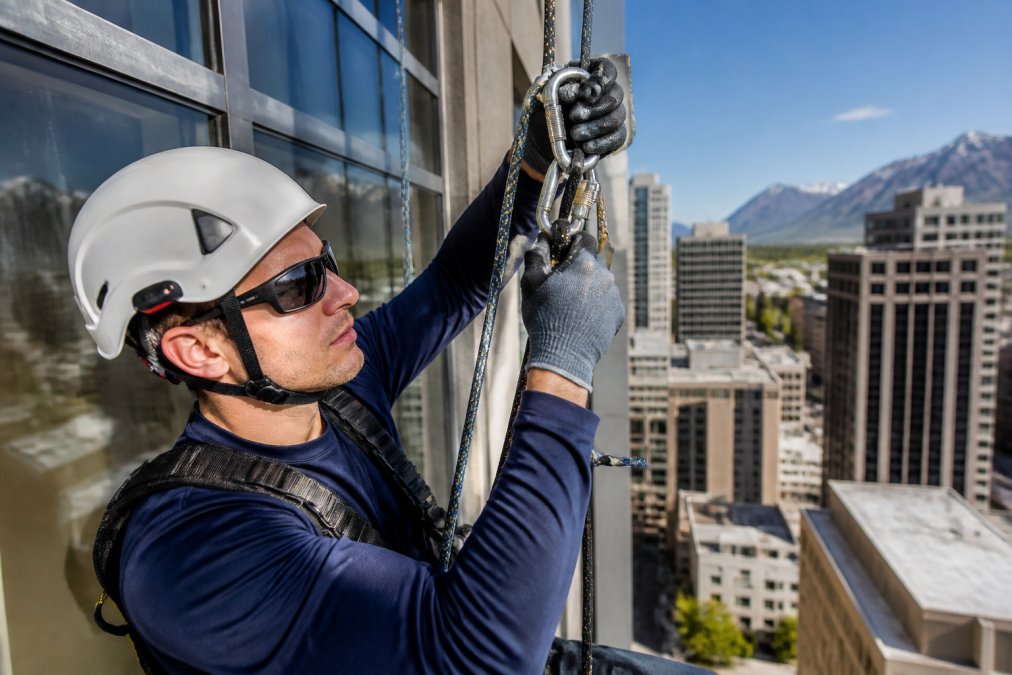
Every worker performing OSHA compliant high rise window cleaning must wear a safety harness rated for fall arrest, a lanyard or lifeline system, and a helmet. Each piece must meet ANSI standards and carry certification markings.
A safety harness must be replaced every five years from the date of manufacture, or sooner if it shows signs of wear, damage, or has arrested a fall. When your contractor arrives, inspect the harnesses and look for a label showing the manufacture date. If the date is more than five years old, the harness should not be used on your building.
Lanyards and lifelines must also be certified. These components connect the worker to the anchor point and arrest a fall by limiting descent distance. A damaged lanyard with fraying, cuts, or chemical damage can fail during a fall. Request that your contractor demonstrate the condition of each lanyard and provide certification records.
Rope Descent Systems and Fall Protection Gear
A rope descent system (RDS) is the primary method used for OSHA compliant high rise window cleaning on most buildings. This system uses ropes, harnesses, and mechanical devices to allow workers to descend safely while maintaining continuous fall protection.
The system must include primary and backup lifelines rated for the expected load, descent devices that control descent speed, mechanical rope grabs that arrest falls automatically, anchor points certified to the 5:1 safety factor, and regular inspection and maintenance logs.
Before work begins, ask your contractor to explain their specific rope descent system setup and how it handles emergency rescue scenarios. A competent contractor will have detailed procedures for worker incapacitation or injury at height.
Load Testing and Certification Records
Every rope descent system must be load-tested regularly, typically annually or more frequently with heavy use. Load testing applies controlled weight to verify that all components function correctly and can handle expected loads.
Request copies of load testing records showing the date of testing, weight applied, results, and the signature of the qualified person who performed the test. If your contractor cannot provide recent load testing records, do not allow them to begin work.
High Rise Window Cleaning Liability for Property Managers
Property managers often underestimate the liability implications of window cleaning operations. When an incident occurs, the investigation will examine whether the building owner took reasonable steps to ensure a safe operation.
Liability exposure includes worker injury liability, where inadequate safety measures can result in OSHA fines and liability claims against the building owner. Third-party liability from dropped tools or equipment can injure pedestrians or damage property below. Regulatory liability allows OSHA to cite building owners directly for creating or allowing hazardous conditions.
The most effective risk mitigation strategy is documentation. Before work begins, collect and retain proof of contractor insurance, worker certifications and training records, equipment inspection and load testing documentation, the written safety plan specific to your building, proof of anchorage certification, and any incident reports or corrective actions taken.
This documentation demonstrates that you exercised due diligence in selecting and overseeing the contractor. If an incident occurs, these records become critical evidence that you took reasonable precautions.
Developing a Site-Specific Safety Plan for Your Building
A site-specific safety plan is a written document that addresses the unique hazards present on your building and how the contractor will mitigate those hazards. This plan is mandatory for any high-rise window cleaning operation under OSHA requirements.
Hazard Assessment and Emergency Rescue Planning
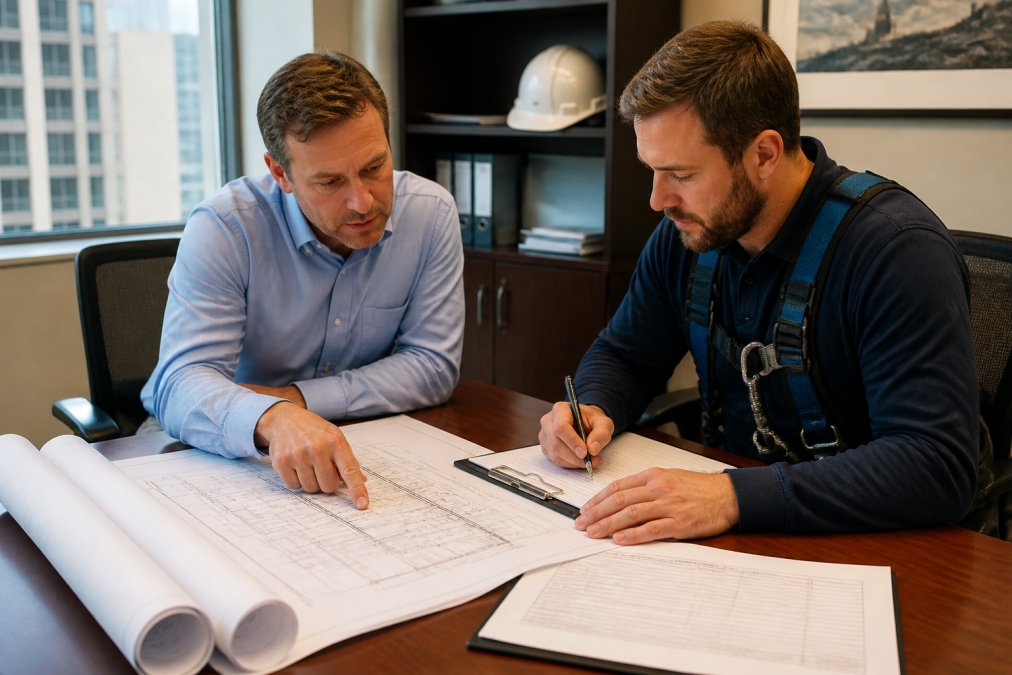
The site-specific safety plan begins with a hazard assessment identifying all unique risks present on your building that could affect worker safety. These hazards might include weather exposure and wind speeds at height, building geometry, proximity to electrical lines, tenant operations, building access limitations, and rescue access.
A qualified safety professional should conduct this assessment in collaboration with your facilities team. Emergency rescue planning is critical, OSHA requires that every high-rise window cleaning operation have a documented plan for rescuing an incapacitated or injured worker at height. This plan should address how rescue personnel will access the worker, what equipment will be available, how the building will coordinate with emergency services, training requirements for rescue personnel, and regular drills to test the rescue plan.
Documentation and Compliance Audit Trails
Your site-specific safety plan must be documented in writing and retained for at least three years. Every time window cleaning work occurs, the contractor should provide daily safety briefing records, equipment inspection logs, weather conditions, any incidents or near-misses, and corrective actions taken.
This documentation creates a compliance record that protects you legally, identifies trends requiring additional controls, and provides data supporting decisions about contractor performance. Many property managers implement digital compliance tracking systems to manage documentation, set reminders for annual certifications, and generate compliance reports for audits or insurance purposes.
Worker Training and Certification Standards
The individuals performing OSHA compliant high rise window cleaning must meet specific training and certification requirements. Formal certification is required beyond experience alone.
The most relevant certification is Rope Descent System (RDS) certification, offered by organizations specializing in high-access work training. An RDS certification program covers fall protection principles and equipment, rope descent system operation and maintenance, rescue procedures and emergency response, site-specific hazard assessment, and OSHA regulations and compliance requirements.
Workers should also have OSHA 10-hour construction safety training, first aid and CPR certification, and training specific to your building's hazards and safety plan. When evaluating a contractor, ask for copies of worker certifications and verify that certifications are current and from recognized training organizations.
Annual Anchorage Inspection and Certification Process
OSHA requires that anchorage points be inspected and certified annually by a qualified structural engineer or certified professional with expertise in fall protection systems.
The annual inspection should include visual examination of the anchor point for damage or deterioration, structural analysis to confirm the anchor meets the 5:1 safety factor, load testing to verify performance under load, and written certification that the anchor point is safe for use. The inspection report should be retained for at least three years. If the inspection identifies deficiencies, the contractor should not use that anchor point until repairs are completed and the point is re-certified.
Maintaining OSHA compliant high rise window cleaning operations requires ongoing attention to regulatory requirements, equipment maintenance, worker training, and documentation. The investment in compliance protects your building, your workers, and your liability exposure. Clarity Window Cleaning provides free estimates for all window cleaning needs and specializes in working directly with facilities managers and property managers to develop and implement OSHA-compliant procedures tailored to your building's specific hazards and requirements. Request a consultation to discuss how professional, compliant window cleaning can become part of your building's maintenance strategy.
Frequently Asked Questions
What are the OSHA requirements for window cleaning anchors?
OSHA 29 CFR 1910.27 governs anchorage points for window cleaning operations. Anchors must support a minimum safety factor of 5:1 and withstand a 5,000-pound load test. All anchorage points require annual certification by a qualified structural engineer. Building owners and property managers must maintain documentation proving that all anchor points meet these load-testing standards and have been inspected within the past 12 months.
Are building owners liable for window cleaning accidents?
Yes. Property managers and building owners face significant liability if window cleaning operations fail to meet OSHA standards. Non-compliance can result in fines, lawsuits from injured workers, and insurance claim denials. Selecting a contractor with full OSHA compliance documentation, current insurance certificates, and a proven safety record protects your building. Request proof of workers' compensation coverage and liability insurance before any work begins. Clarity provides free estimates and detailed compliance documentation for all projects.
How often must window cleaning equipment be inspected under OSHA standards?
All fall protection equipment, harnesses, lanyards, lifelines, and rope descent systems, must be visually inspected before every use and formally inspected at least annually. Load-bearing anchors and suspended scaffolding require annual structural inspection and certification. Equipment showing wear, damage, or deformation must be removed from service immediately. Maintain detailed inspection logs documenting the date, inspector name, equipment condition, and any repairs or replacements made.
What documentation should a window cleaning contractor provide to property managers?
Contractors must supply proof of OSHA compliance, including worker certifications, annual anchorage inspection reports, equipment load-test certificates, and a site-specific safety plan tailored to your building. Request workers' compensation and general liability insurance certificates showing coverage amounts. A detailed post-service report documenting work completed, equipment used, and any safety concerns identified builds accountability. Clarity provides comprehensive documentation for all high-rise projects, giving facilities managers the records needed for board reporting and insurance purposes.
This article was written using GrandRanker