 ultimate-guide
Is Professional Window Cleaning Worth It for High-Rise Residential?
Table of Contents
- Why High-Rise Window Cleaning Is a Property Management Decision, Not a Cleaning Expense
- Benefits of Professional Window Washing for Property Managers
- What Drives the Cost of High-Rise Window Cleaning
- OSHA High-Rise Window Cleaning Standards Every Property Manager Should Know
- Commercial Window Cleaning Frequency: How Often Is Often Enough?
- Post-Construction vs. Maintenance Cleaning: Two Very Different Project Scopes
- What to Look for When Evaluating a Commercial Window Cleaning Contractor
- Frequently Asked Questions
Last Updated: August 11, 2026
Why High-Rise Window Cleaning Is a Property Management Decision, Not a Cleaning Expense
For facilities managers overseeing multi-story commercial buildings, professional window cleaning is a facilities management decision with real operational consequences, not a discretionary expense. At Clarity Window Cleaning, we work directly with property and facilities managers who understand that deferred maintenance on glass facades creates compounding problems that cost far more to fix than to prevent.
Dirty, etched, or damaged glass affects property value, lease negotiations, and tenant experience. Treating window maintenance as a cleaning line item misses the point entirely. The facilities managers who get this right treat window maintenance the same way they treat HVAC servicing or roof inspections: scheduled, documented, and contracted with a qualified provider.
Benefits of Professional Window Washing for Property Managers
Professional window washing delivers value across three dimensions: physical asset protection, occupant experience, and operational documentation.
Glass Longevity and Facade Protection
Airborne pollutants, mineral deposits, construction debris, and oxidation bond to glass over time. Left untreated, these contaminants etch into the surface permanently. High-rise buildings face more intense exposure: upper floors encounter higher wind-driven particulate loads, more direct UV exposure, and greater temperature cycling, all accelerating surface degradation.
Regular professional cleaning removes deposits before they become permanent, extending glass service life and protecting seals. Glass replacement on a high-rise floor represents significant capital expenditure. Preventive maintenance through scheduled commercial window cleaning is consistently more economical.
Tenant Satisfaction and Lease Retention
Natural light quality and exterior views are consistently cited by commercial tenants as factors in lease renewal decisions. Clean glass signals that management is attentive and invested in the property. For multi-tenant office towers, this matters during renewal negotiations. For residential high-rises, it affects resident satisfaction and referral rates.
What Drives the Cost of High-Rise Window Cleaning
Pricing for high-rise window cleaning varies based on well-defined variables. Understanding these factors helps you evaluate bids accurately. Clarity Window Cleaning provides free estimates for all window cleaning needs, giving facilities managers a clear starting point without obligation.
Building Height, Facade Complexity, and Glass Surface Area
Total glass surface area is the most straightforward pricing variable. But facade complexity adds a significant multiplier: inset windows, decorative mullions, angled glass panels, and architectural recesses create access challenges that increase time per pane and require more precise equipment positioning.
Building height affects both equipment selection and risk profile. A 10-story building can often use water-fed pole systems from ground level. A 30-story tower requires either a swing stage, a building maintenance unit, or a qualified rope access team with certified anchor points. Each step up in height adds operational expenses.
Equipment: Rope Access, Swing Stage, and Water-Fed Pole Systems
Equipment method is one of the largest cost drivers in any commercial window cleaning bid.
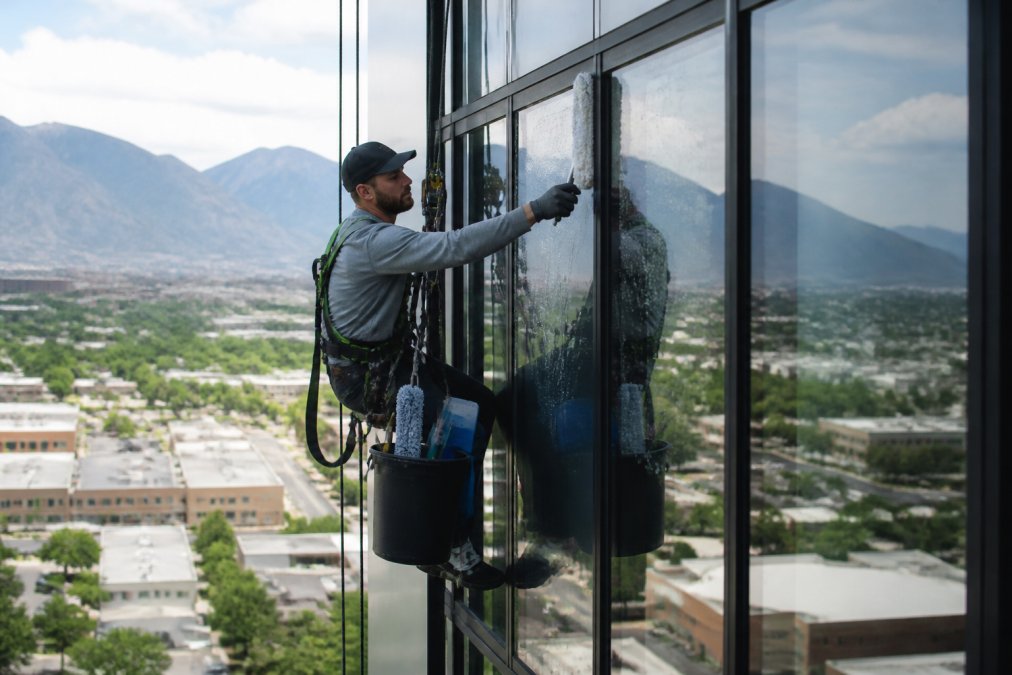
Rope access involves certified technicians descending from roof anchor points using industrial ropes and harnesses. It is highly maneuverable, requires minimal staging, and works well on irregular facades. Rope access technicians require professional certification and carry higher insurance costs.
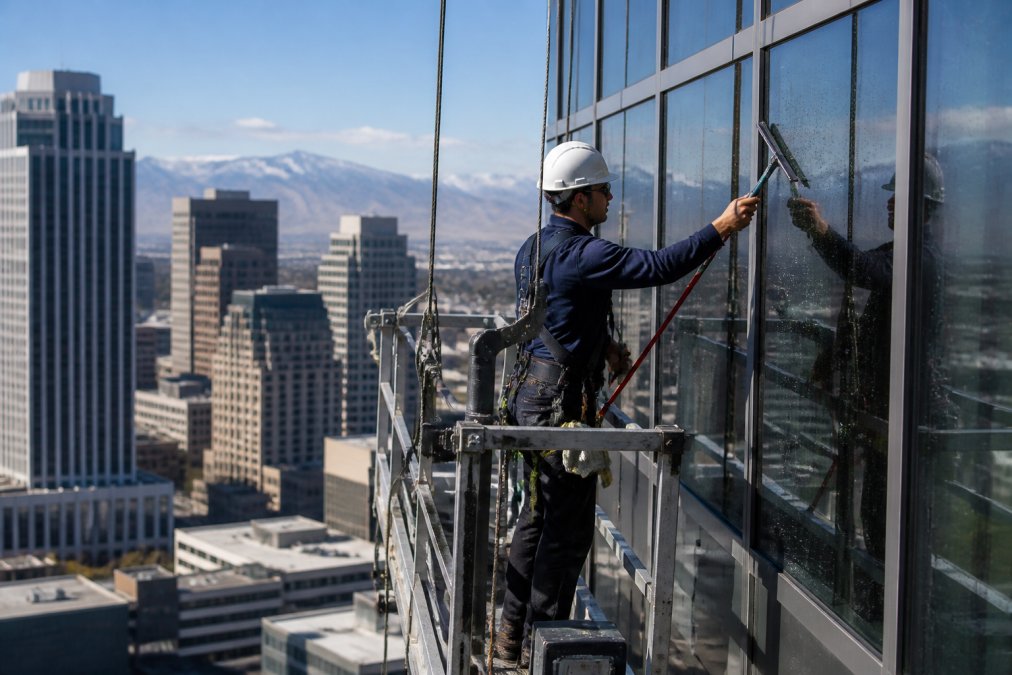
Swing stage platforms are suspended scaffolding units that traverse a building's face horizontally. They are efficient for large, flat glass surfaces and allow crews to work multiple panels simultaneously. They require adequate roof anchor points and load ratings.
Water-fed pole systems use purified water delivered through telescoping carbon fiber poles, allowing technicians to clean from ground level on lower floors. This method is faster and lower-risk for accessible areas but has practical height limits.
A qualified contractor will recommend the appropriate method based on your building's specific profile.
| Equipment Method | Best For | Key Requirement | Access Type |
|---|---|---|---|
| Rope access | Complex facades, irregular geometry | Certified anchor points, trained technicians | Roof-based descent |
| Swing stage | Large flat glass curtain walls | Roof load ratings, rigging space | Horizontal traverse |
| Water-fed pole | Lower floors, accessible ground areas | Ground-level clearance | Ground-based |
Liability Insurance, Workers Compensation, and Overhead Costs
A low bid from an unverified contractor almost always reflects inadequate insurance coverage, not superior efficiency. High-rise window cleaning is high-risk work. Legitimate contractors carry substantial liability insurance and workers compensation coverage sized for working at height on commercial buildings.
If a contractor's bid is significantly below market, ask what coverage they are not carrying. If a worker is injured on your property and the contractor lacks adequate workers compensation, liability exposure can fall back on the building owner.
OSHA High-Rise Window Cleaning Standards Every Property Manager Should Know
OSHA high-rise window cleaning standards are the regulatory baseline every property manager must understand. Ignorance of applicable standards does not protect a building owner from liability when something goes wrong.
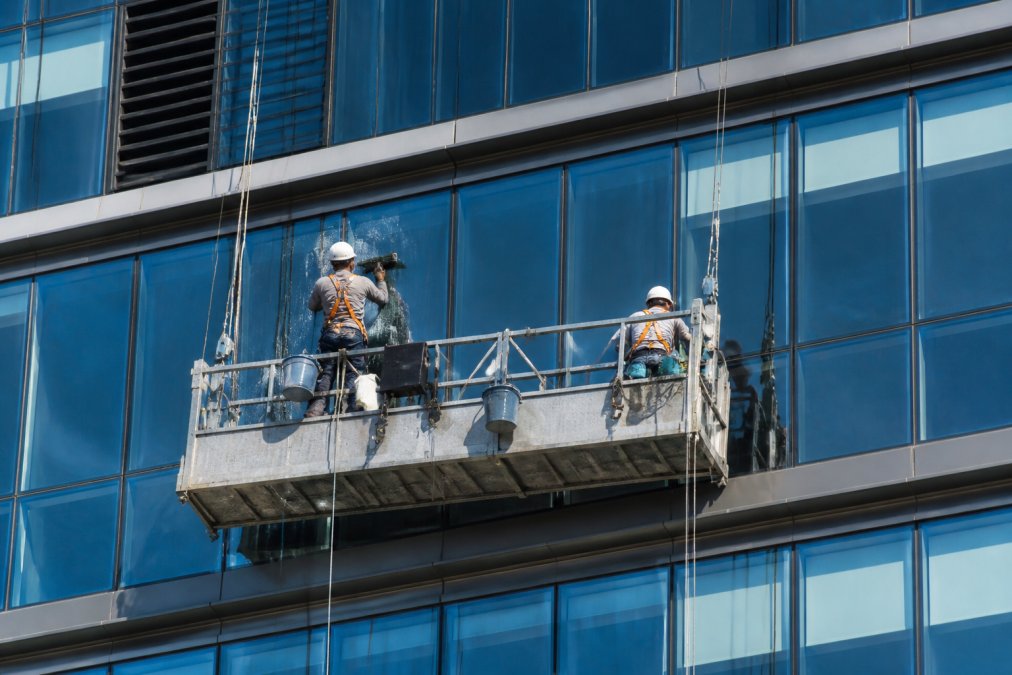
The relevant federal framework falls under OSHA's general industry and construction standards for fall protection, specifically standards governing suspended scaffolding, rope descent systems, and personal fall arrest systems. Key requirements include:
- Anchor points must meet specified load ratings and be inspected before each use
- Rope descent systems require descent control devices and independent safety lines
- All technicians working at height must have documented fall protection training
- Equipment must be inspected and certified at required intervals
- Site-specific safety plans are required for complex access scenarios
Your role is to ensure that any contractor working on your building can produce documentation proving compliance with these standards before work begins. Request site-specific safety plans, proof of technician training, and equipment inspection records. A contractor who cannot produce this documentation is a liability risk to your organization.
Commercial Window Cleaning Frequency: How Often Is Often Enough?
Commercial window cleaning frequency depends on building type, location, environmental exposure, and tenant expectations. For high-rise office towers in urban environments, quarterly exterior cleaning is a common baseline. Buildings with higher particulate exposure, nearby construction, or significant weather events may require more frequent service. Premium tenant profiles or high-visibility locations often schedule monthly or bi-monthly service.
For residential high-rises, semi-annual exterior cleaning covers most maintenance needs, with additional service after construction phases or seasonal storms. The most practical approach is establishing a schedule based on your building's exposure profile, then adjusting based on observed results after the first year. A good commercial window cleaning contractor will help you build a frequency plan that fits your operational budget and building's actual needs.
Contracted maintenance schedules lock in pricing, ensure priority scheduling during peak demand, and create documented maintenance history supporting insurance and property valuation.
Post-Construction vs. Maintenance Cleaning: Two Very Different Project Scopes
Post-construction cleaning and ongoing maintenance cleaning are not the same service. Post-construction window cleaning addresses construction adhesive, silicone overspray, concrete splatter, paint mist, sticker residue, and hard water deposits. These require specialized chemicals, different application techniques, and significantly more labor time per pane than routine maintenance.
A building coming out of new construction or major renovation needs post-construction window restoration before transitioning to a maintenance schedule. Attempting to maintain glass with construction residue bonded to it will not produce acceptable results.
Post-construction work is priced differently from maintenance contracts. Expect a separate bid, longer time estimate, and possibly multiple passes to fully restore the glass. For general contractors completing a new build, coordinating this service before handover is the professional standard.
What to Look for When Evaluating a Commercial Window Cleaning Contractor
Verify compliance documentation, not just claims. Ask for proof of OSHA compliance, site-specific safety plans, and technician certifications. A contractor who hesitates to provide these is telling you something important.
Assess their equipment for your building type. Confirm that their rope access or swing stage capabilities match your building's height and facade profile.
Ask about reporting and documentation. Facilities managers need post-service documentation for board reporting, insurance purposes, and maintenance records. If a contractor doesn't offer this as standard, it signals a less professional operation.
Evaluate their scheduling flexibility. For occupied commercial buildings, the ability to work outside business hours or in sections that minimize tenant disruption is a real operational requirement. Confirm this upfront.
Check references from comparable properties. Ask specifically for references from buildings of similar height and complexity to yours.
Understand their bid structure. A professional bid should specify the equipment method, number of technicians, estimated time on site, what is included in scope, and what constitutes additional work.
Clarity Window Cleaning works directly with facilities managers and property managers to provide detailed, scope-specific proposals backed by OSHA-compliant practices and fully insured technicians. Clarity provides free estimates for all window cleaning needs, giving you a documented starting point for your evaluation.
Managing a high-rise building means making decisions that protect your asset, tenants, and organization's liability position. Window maintenance is one of the few items where the cost of getting it wrong through deferred maintenance, unqualified contractors, or inadequate compliance documentation consistently exceeds the cost of doing it right. Clarity Window Cleaning provides certified commercial window cleaning technicians, high-rise service up to 40 stories, OSHA-compliant practices, and detailed post-service reporting designed for facilities managers. Get Clarity with a free estimate and a service plan built around your building's specific requirements.
Frequently Asked Questions
How often should high-rise residential windows be professionally cleaned?
For most high-rise residential and mixed-use buildings, a quarterly maintenance schedule is the baseline. Buildings in areas with high dust, pollen, or construction activity nearby often benefit from monthly or bi-monthly service. Your facilities manager should factor in facade complexity, window configuration, and tenant expectations when setting a commercial window cleaning frequency. A professional contractor can assess your building and recommend a maintenance schedule that protects the glass and keeps costs predictable.
What safety regulations apply to high-rise window cleaning?
OSHA high-rise window cleaning standards fall primarily under 29 CFR 1910 for general industry and 29 CFR 1926 for construction-adjacent work. Key requirements cover fall protection, personal protective equipment, anchor point load ratings, and documented safety plans. Contractors must carry workers compensation and liability insurance, and site-specific risk assessments are required before any rope access or swing stage work begins. Property managers should request proof of compliance and documentation before any crew accesses the building exterior.
What should property managers look for in a commercial window cleaning contractor?
Prioritize contractors who carry full liability insurance and workers compensation, hold professional certification in rope access or suspended scaffold systems, and provide site-specific safety plans in writing. Ask for detailed post-service reporting so you can document maintenance for your board and insurance carrier. Verify that the crew has direct experience with buildings of comparable height and facade complexity. For high-rise window cleaning specifically, OSHA compliance documentation and a clear bid proposal structure are non-negotiable.
Does professional window cleaning actually extend the life of the glass?
Yes. Hard water mineral deposits, construction debris, and airborne contaminants etch into glass over time, causing permanent surface damage that no amount of cleaning can reverse. Regular professional window washing removes these materials before they bond to the glass surface. On high-rise buildings where glass replacement means significant cost and operational disruption, a consistent maintenance schedule is far more cost-effective than deferred cleaning followed by restoration or panel replacement.
This article was written using GrandRanker