 ultimate-guide
Industrial Property Window Maintenance Solutions
Table of Contents
- Why Industrial Property Window Maintenance Matters
- Preventative Maintenance Strategies for Industrial Windows
- OSHA-Compliant Window Cleaning Practices for High-Rise Properties
- Commercial Window Cleaning Service Frequency and Scheduling
- Benefits of Professional Hard Water Stain Removal
- Glass Restoration and Graffiti Removal for Industrial Facilities
- Technology and Sustainability in Modern Window Maintenance
- Frequently Asked Questions
Last Updated: September 2, 2026
Why Industrial Property Window Maintenance Matters
Industrial property windows face unique challenges: harsh weather, airborne contaminants, hard water deposits, and graffiti that standard commercial properties rarely encounter. Deteriorated windows compromise building envelope integrity, reduce natural light that improves worker productivity, and signal poor facility management to clients and stakeholders.
At Clarity Window Cleaning, we work directly with facilities managers across industrial complexes who understand that maintenance is asset protection. A single unchecked issue like hard water stains or oxidized glass can spread across an entire façade, requiring expensive restoration instead of preventative care. The difference between reactive and strategic maintenance often comes down to whether your facility experiences emergency repairs or maintains consistent performance year after year.
Preventative Maintenance Strategies for Industrial Windows
Preventative maintenance follows a simple principle: small, scheduled interventions prevent expensive emergencies.
Establishing a Baseline Inspection Protocol
Effective preventative maintenance begins with a baseline inspection documenting the current condition of every window on your property. A trained technician photographs each window section, notes existing damage, identifies environmental risk factors (salt spray exposure, hard water sources, airborne contaminants), and flags seal or frame issues. This baseline becomes your reference point for all future inspections and reveals which buildings have higher maintenance demands, allowing efficient resource allocation.
Recognizing Early Warning Signs Before They Escalate
Industrial windows deteriorate in predictable stages. Learning to recognize each stage allows you to intervene before damage becomes expensive.
Seal and Frame Degradation typically appears first:
- Visible gaps or separation between the window frame and building envelope
- Caulk that has shrunk, cracked, or pulled away from glass or frame
- Discoloration around seals (indicates moisture infiltration)
- Soft or spongy caulk when gently pressed (sign of water saturation)
If caught at this stage, re-caulking is straightforward and inexpensive. If ignored, water infiltration can damage the frame itself, requiring frame replacement.
Hard Water Stains and Mineral Buildup progress through visible stages:
- Stage 1: Light, translucent haze on glass surface (removable with purified water cleaning)
- Stage 2: Opaque white or cloudy deposits (requires specialized removal)
- Stage 3: Etched glass where minerals have chemically bonded to the surface (requires restoration or replacement)
Regular inspections can catch Stages 1 and 2. Annual or semi-annual schedules often miss the intervention window and jump straight to Stage 3, where costs spike dramatically.
Micro-Cracks and Stress Fractures are critical to spot:
- Fine lines radiating from corners or edges of glass panes
- Cracks following a pattern (often indicate thermal stress or structural movement)
- Any crack longer than 2 inches (structural integrity is compromised)
Micro-cracks often originate from thermal cycling or building movement. A stable crack today may spread rapidly if the underlying cause is not addressed.
Scheduling Inspections Around Environmental Cycles
A scheduled maintenance program typically includes regular inspections, seasonal deep cleaning, and prompt attention to warning signs. For facilities in hard water regions, schedule inspections after periods of high water use or rain. For salt-spray zones, schedule in spring and fall when salt exposure is highest. For areas with significant temperature swings, inspect in early spring and early fall when thermal stress is greatest.
Water-fed pole systems and purified water technology have made routine maintenance less invasive, allowing technicians to clean windows from ground level on many industrial buildings, eliminating extensive scaffolding or extended downtime.
Documentation as a Preventative Tool
Detailed records of inspection dates, conditions noted, work completed, and photographs create a clear history for your insurance company, board, and future facility managers. Documentation reveals trends. If hard water stains reappear, your water source or environmental exposure may have changed. If seal failures cluster on the south-facing facade, thermal stress is the likely culprit.
OSHA-Compliant Window Cleaning Practices for High-Rise Properties
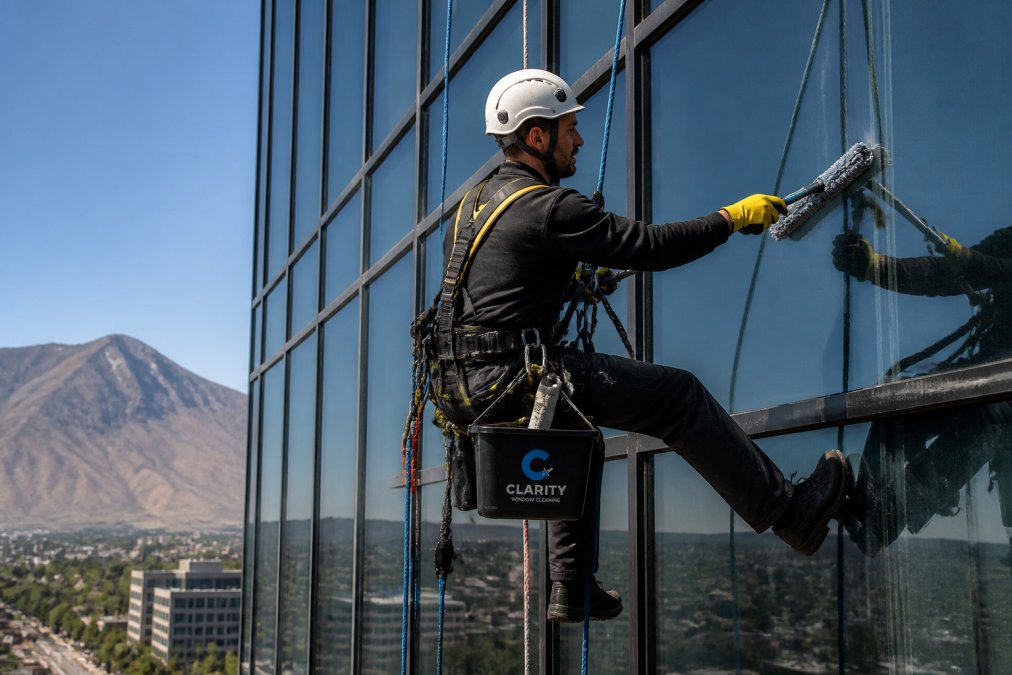
High-rise window cleaning on industrial facilities requires strict adherence to safety standards. OSHA regulations govern fall protection, equipment certification, and worker training for any work performed above 6 feet. A single incident can halt operations, expose your facility to liability, and damage your reputation.
Proper high-rise window cleaning begins with a site-specific safety plan developed before work starts. This plan addresses the building's unique features: wind exposure, adjacent structures, electrical hazards, and tenant operations below. Certified technicians use rope access equipment, harnesses rated for dynamic fall arrest, and anchor points verified to support the load. Every technician should carry current certifications in fall protection and rescue procedures.
Documentation is critical. OSHA expects facilities to maintain records of safety inspections, equipment certifications, and worker qualifications. When you work with a professional provider like Clarity Window Cleaning, this documentation is part of the service.
Many facilities managers ask whether they can reduce frequency on high-rise properties to save cost. The answer depends on your building's exposure. Facilities in areas with hard water, salt spray, or industrial air pollution typically need more frequent cleaning than those in protected locations. A regular schedule is common for industrial high-rise properties.
Commercial Window Cleaning Service Frequency and Scheduling
The right cleaning frequency depends on your facility's environment, operational demands, and appearance standards. Industrial facilities in harsh environments, those near highways with salt spray, in areas with hard water, or downwind from manufacturing, typically need regular cleaning. Facilities in cleaner environments might operate on a less frequent schedule.
Scheduling around operations is where professional coordination matters most. A service provider experienced with industrial properties schedules work during off-peak hours, coordinates with building security, and communicates clearly with occupants. Clarity provides free estimates for all window cleaning needs, and the estimate process includes a discussion of your operational constraints and how to design a schedule that works for your facility.
Multi-property portfolio management benefits from a staggered schedule so that one property is cleaned each week or month, spreading the coordination burden across the year.
| Facility Type | Recommended Frequency | Key Consideration |
|---|---|---|
| Industrial (harsh environment) | Regular | Salt spray, hard water, air pollution |
| Industrial (moderate environment) | Regular | Standard industrial exposure |
| Commercial office (standard) | Regular | Moderate dirt accumulation |
| Retail/customer-facing | Regular | Appearance directly impacts customer perception |
Benefits of Professional Hard Water Stain Removal
Hard water stains are one of the most common window problems in industrial facilities. These deposits form when mineral-rich water evaporates on glass, leaving behind calcium and magnesium buildup that clouds the surface and, over time, can etch the glass permanently.
Professional hard water stain removal uses specialized techniques that differ from routine cleaning. Standard water and detergent won't remove mineral deposits; you need purified water systems, specialized cleaning solutions, or in severe cases, careful glass restoration methods.
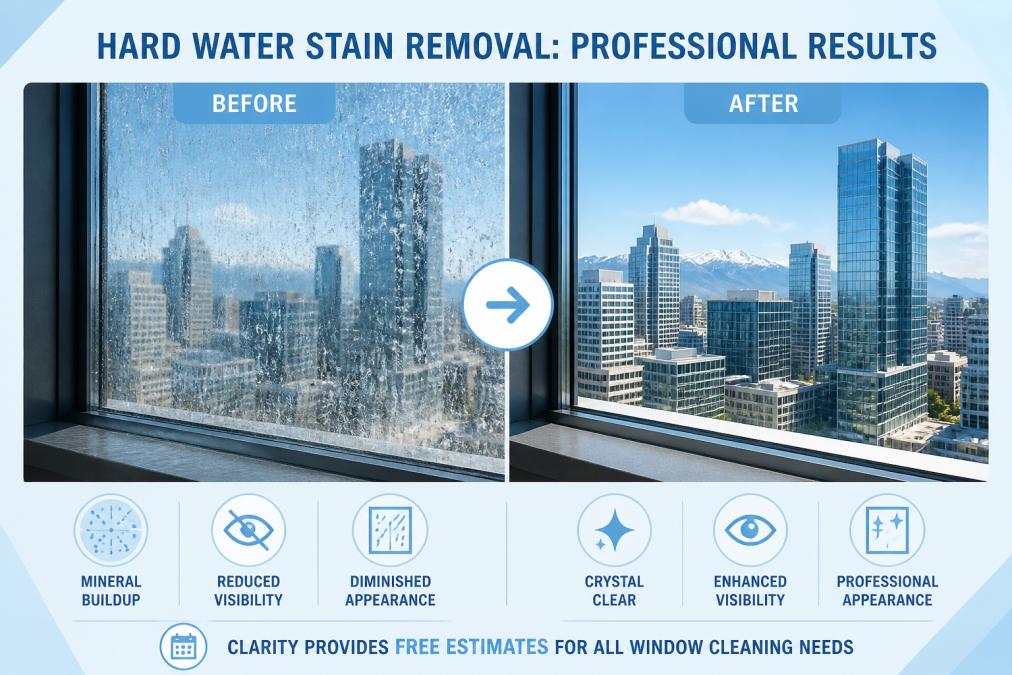
Early intervention is the key benefit. If you remove hard water stains during routine cleaning, before they etch the glass, the process is straightforward and non-invasive. If you wait until stains are severe, you may need glass restoration or replacement. A technician trained in hard water stain removal knows which methods are safe for your specific glass type and coating.
Glass Restoration and Graffiti Removal for Industrial Facilities
Industrial facilities often face challenges beyond routine dirt: graffiti, oxidized glass, and damage from environmental exposure that requires specialized restoration.
Graffiti removal on industrial properties presents a particular challenge. Spray paint, permanent markers, and etching require different removal techniques depending on the glass type and graffiti material. Professional graffiti removal technicians assess the damage, select the appropriate technique, and remove vandalism without compromising glass integrity.
Glass oxidation occurs when glass is exposed to moisture and certain atmospheric conditions for extended periods, developing a cloudy, hazy appearance that can't be removed by standard cleaning. Restoration requires careful abrasive techniques or specialized chemical treatments. For industrial facilities where appearance matters, restoration can dramatically improve the building's presentation.
Post-construction debris and coating residue are common issues on newly completed industrial projects. A restoration specialist understands how to safely remove construction debris without damaging new glass or surrounding materials.
Technology and Sustainability in Modern Window Maintenance
Modern window maintenance increasingly incorporates technology, sustainability practices, and financial planning frameworks that benefit the facility, the environment, and the balance sheet.
Window Condition as a Property Valuation Factor
Building appraisers and commercial real estate investors evaluate window condition as a key component of property value. Windows in poor condition signal deferred maintenance to potential buyers, lenders, and tenants, directly impacting property valuation and lease rates.
A property with well-maintained windows commands higher lease rates and attracts higher-quality tenants. Conversely, a facility with visibly neglected windows may see lease rates decline. For an industrial facility, this can represent significant lost revenue. Over a holding period, that's lost income from a problem preventative maintenance would have prevented.
Appraisers also factor window replacement cost into their assessment of deferred maintenance. Well-maintained windows with documented care extend their effective lifespan, deferring replacement costs and preserving property value.
Capital Expenditure Planning and Budget Justification
For facilities managers presenting maintenance budgets to ownership or boards, the financial case for preventative window maintenance is straightforward: small annual spending prevents large capital expenditures.
A preventative maintenance program, including regular inspections, seasonal cleaning, and prompt seal repair, typically costs significantly less annually than a single window replacement project. Over a 10-year period, preventative spending defers or eliminates major replacement costs. When presenting this case to decision-makers, frame it as CapEx deferral. Instead of asking for a maintenance budget, show the cost of window replacement and position preventative maintenance as the strategy that delays that capital project by 5-10 years. This reframing resonates with CFOs and board members focused on capital planning.
Technology Integration: From Reactive to Predictive Maintenance
Scheduling software and mobile documentation have transformed how facilities managers coordinate maintenance. Technicians log work in real time, upload photos of conditions before and after cleaning, and generate automated reports. This transparency helps facilities managers track maintenance history, identify patterns, and make data-driven decisions about frequency adjustments.
More advanced facilities are beginning to integrate predictive maintenance tools. Some service providers now use drone-based window inspections to assess condition across large facades without requiring technicians to access every window. Drones equipped with high-resolution cameras can photograph glass condition, seal integrity, and frame damage from a distance, reducing inspection time and cost while improving safety.
Sustainability and Environmental Stewardship
Sustainability in window maintenance goes beyond technology. Professional cleaning and preventative maintenance reduce the need for glass replacement, a significant environmental benefit. Manufacturing and installing a new window generates substantial carbon emissions. Extending the life of existing windows through proper maintenance is far more sustainable than replacing them.
Purified water systems represent a significant shift in cleaning technology. Instead of using tap water with minerals that can leave residue, purified water systems filter water to near-distilled purity. This water dries without leaving mineral deposits, reducing the need for chemical cleaning solutions and producing superior results. For industrial facilities concerned about water usage and chemical runoff, purified water systems align with sustainability goals while improving cleaning quality.
For facilities pursuing LEED certification or corporate sustainability goals, documented preventative maintenance demonstrates commitment to responsible asset stewardship.
Clarity provides free estimates for all window cleaning needs, and our detailed inspection reports document the condition of your windows and the maintenance strategy required to preserve them. Whether you're focused on asset valuation, capital planning, or sustainability goals, we work directly with facilities managers and property managers to design maintenance programs that deliver measurable business value alongside operational benefits.
Frequently Asked Questions
How often should industrial windows be professionally cleaned?
Industrial property window maintenance frequency depends on location, environmental exposure, and operational needs. High-traffic commercial facilities typically benefit from regular cleaning, while industrial complexes with heavy dust or chemical exposure may require more frequent service. Facilities managers should assess wear and tear patterns and adjust schedules based on building envelope protection goals. Clarity provides free estimates to help determine the optimal cleaning frequency for your specific property.
What are the key OSHA-compliant window cleaning practices for high-rise buildings?
OSHA-compliant window cleaning practices require fall protection systems, certified technicians, site-specific safety plans, and documented hazard assessments. High-rise window cleaning must use rope access, proper anchoring points, and regular equipment inspections. Technicians should complete OSHA safety training and follow building-specific protocols. Professional service providers maintain detailed safety documentation and insurance coverage. Clarity's certified technicians follow all OSHA standards and provide comprehensive safety documentation for facilities managers and property owners.
What makes professional hard water stain removal important for industrial glass?
Hard water stains damage glass clarity and compromise the building's professional appearance. They accumulate over time, becoming increasingly difficult to remove and potentially causing permanent etching if left untreated. Professional hard water stain removal uses specialized purified water systems and restoration techniques that prevent oxidation and structural damage to the glass. Regular professional removal maintains asset longevity, protects your property investment, and keeps your facility looking pristine for tenants and clients.
How do facilities managers coordinate window maintenance without disrupting operations?
Effective coordination requires customized scheduling that avoids peak business hours and tenant activities. Professional service providers can work early morning, evening, or weekend shifts to minimize operational impact. Clear communication with building occupants, advance notice of service dates, and non-disruptive techniques like water-fed pole systems help maintain tenant satisfaction. Detailed post-service reporting allows facilities managers to document maintenance for boards and insurance. Clarity specializes in scheduling around your facility's operational needs and provides free estimates to discuss timing and service frequency.
This article was written using GrandRanker
Frequently Asked Questions
How often should industrial windows be professionally cleaned?
Industrial property window maintenance frequency depends on location, environmental exposure, and operational needs. High-traffic commercial facilities typically benefit from regular cleaning, while industrial complexes with heavy dust or chemical exposure may require more frequent service. Facilities managers should assess wear and tear patterns and adjust schedules based on building envelope protection goals. Clarity provides free estimates to help determine the optimal cleaning frequency for your specific property.
What are the key OSHA-compliant window cleaning practices for high-rise buildings?
OSHA-compliant window cleaning practices require fall protection systems, certified technicians, site-specific safety plans, and documented hazard assessments. High-rise window cleaning must use rope access, proper anchoring points, and regular equipment inspections. Technicians should complete OSHA safety training and follow building-specific protocols. Professional service providers maintain detailed safety documentation and insurance coverage. Clarity's certified technicians follow all OSHA standards and provide comprehensive safety documentation for facilities managers and property owners.
What makes professional hard water stain removal important for industrial glass?
Hard water stains damage glass clarity and compromise the building's professional appearance. They accumulate over time, becoming increasingly difficult to remove and potentially causing permanent etching if left untreated. Professional hard water stain removal uses specialized purified water systems and restoration techniques that prevent oxidation and structural damage to the glass. Regular professional removal maintains asset longevity, protects your property investment, and keeps your facility looking pristine for tenants and clients.
How do facilities managers coordinate window maintenance without disrupting operations?
Effective coordination requires customized scheduling that avoids peak business hours and tenant activities. Professional service providers can work early morning, evening, or weekend shifts to minimize operational impact. Clear communication with building occupants, advance notice of service dates, and non-disruptive techniques like water-fed pole systems help maintain tenant satisfaction. Detailed post-service reporting allows facilities managers to document maintenance for boards and insurance. Clarity specializes in scheduling around your facility's operational needs and provides free estimates to discuss timing and service frequency.