 how-to
High-Rise Window Cleaning Quote: What to Expect
Table of Contents
- What Determines Your High-Rise Window Cleaning Quote
- OSHA Window Cleaning Safety Requirements and Their Impact on Cost
- Rope Access vs. Scaffolding: How Method Affects Your Quote
- Window Cleaning Site Assessment Checklist for Facilities Managers
- Is Professional Window Cleaning Worth It for High-Rise Residential
- Contract vs. One-Time Service: Understanding Your Options
- How to Get Your Free High-Rise Window Cleaning Estimate
- Conclusion
Last Updated: August 22, 2026
What Determines Your High-Rise Window Cleaning Quote
Getting an accurate high-rise window cleaning quote requires understanding the specific factors that drive pricing and complexity. The cost of professional window cleaning for tall buildings depends far less on a simple per-pane rate and far more on the logistics, safety requirements, and accessibility challenges unique to your property.
At Clarity Window Cleaning, facilities managers often underestimate how much building characteristics influence the final quote. The variables that matter most are rarely what property managers initially think they are.
Building Height and Accessibility
Building height is the most obvious factor, but it's not the only one that changes your quote. A 15-story building requires different safety protocols, equipment, and crew expertise than a 5-story structure. The taller the building, the more specialized the equipment and training required.
What actually drives cost variance, though, is accessibility. A building with rooftop access points, balconies, and exterior ledges is far simpler to quote than one with a completely flat facade and no anchor points. Buildings with architectural features, setbacks, overhangs, or unusual geometry, require custom safety plans that add time and resources to the project.
Window configuration matters equally. A building with uniform window sizes and spacing is straightforward. A mixed-use property with retail on the ground floor, offices above, and a penthouse section with floor-to-ceiling glass becomes a multi-method project. Some sections might use rope access, others might require scaffolding, and still others might need water-fed poles from the ground.
Window Pane Count and Configuration
The total number of panes directly affects labor hours, but so does how those panes are arranged. A commercial tower with 2,000 identical windows is easier to estimate than a residential high-rise with 800 windows that vary in size, frame type, and condition.
Single-pane windows clean faster than multi-paned windows. Skylights, glass walls, and architectural glass elements require different techniques and take longer per square foot. When you're getting your quote, provide exact counts broken down by window type.
Dirty windows also factor into the estimate. If your building hasn't been professionally cleaned in years, the first pass takes longer than routine maintenance. Oxidation, hard-water deposits, construction debris, or environmental contamination all require specialized cleaning solutions and extra time.
Current Condition and Special Requirements
Post-construction window restoration is a different service than routine cleaning. If your building is new or recently renovated, expect to pay more for the first cleaning. Concrete dust, adhesive residue, and coating overspray require aggressive cleaning methods that take significantly longer than regular maintenance.
Buildings in industrial areas or near highways accumulate heavier contamination. Coastal properties deal with salt spray. Urban environments with high pollution have different cleaning requirements than suburban locations. These environmental factors affect both the cleaning method and the timeline.
Special requirements like interior glass cleaning, skylight restoration, or glass coating application are typically quoted separately from exterior work. If your building has skylights or interior atriums, those need to be flagged during your initial assessment.
OSHA Window Cleaning Safety Requirements and Their Impact on Cost
Professional window cleaning on high-rise buildings is governed by federal safety standards that directly impact your quote. Understanding these requirements helps you evaluate whether a low quote is actually low-cost or just underestimating the work.
The Occupational Safety and Health Administration (OSHA) sets mandatory standards for work at heights. Any window cleaning above 6 feet requires fall protection systems (osha.gov). On high-rise buildings, this means rope access equipment, safety harnesses, anchor points, and trained personnel certified in work-at-height protocols.

A legitimate high-rise window cleaning company must carry liability insurance, maintain OSHA compliance documentation, and ensure every technician has current certifications. These aren't optional add-ons, they're legal requirements that increase labor costs and overhead.
When you receive a quote, it should clearly indicate that the crew will follow OSHA-compliant practices. If a quote doesn't mention safety protocols, compliance documentation, or insurance coverage, that's a red flag. Cutting corners on safety isn't cost savings, it's liability exposure for your building.
Certified technicians cost more than untrained workers. Rope access certification, fall protection training, and ongoing safety compliance require investment in personnel. A company that quotes significantly lower than competitors may not be maintaining the certifications and insurance that protect your property.
Rope Access vs. Scaffolding: How Method Affects Your Quote
The method used to reach windows on a high-rise building is the primary driver of equipment costs and labor hours. Your quote will differ substantially depending whether the crew uses rope access, scaffolding, or a combination of methods.
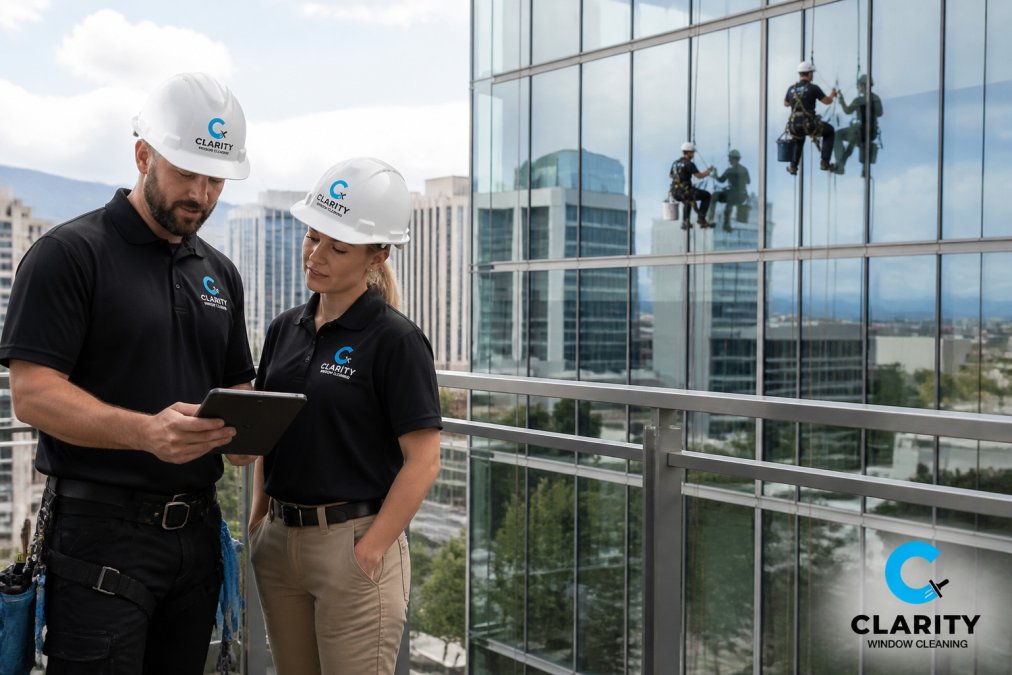
Rope access (also called abseiling or rappelling) is the most efficient method for many high-rise buildings. A trained technician descends from the roof using professional-grade ropes, harnesses, and anchor systems. This method requires minimal setup, doesn't obstruct building occupants, and reaches windows inaccessible to other methods. Rope access is ideal for buildings with rooftop access and regular window configurations.
Scaffolding is necessary for buildings without rooftop access or where the facade requires sustained contact for extended periods. Temporary scaffolding must be engineered, permitted, and installed by certified crews. Scaffolding costs are high, rental, installation, and removal add thousands to a project. However, scaffolding is sometimes the only safe option for buildings with complex geometry or limited anchor points.
Water-fed poles work from ground level for lower buildings and ground-floor windows on taller structures. They're cost-effective for accessible windows but can't reach upper floors on high-rises without additional equipment.
Most high-rise projects use a hybrid approach. Rope access handles upper floors and difficult-to-reach sections. Water-fed poles handle ground-level windows. This mixed-method approach is more efficient than a single technique but requires a crew with multiple skill sets.
When comparing quotes, ensure you understand which method is being proposed for each section of your building. A quote that doesn't specify the access method is incomplete.
Window Cleaning Site Assessment Checklist for Facilities Managers
Before you can get an accurate quote, a professional window cleaning company needs to assess your building in person. This site inspection identifies factors that affect pricing, timeline, and logistics.
Pre-Quote Site Inspection Essentials
A thorough site assessment takes 1-2 hours depending on building size and complexity (peer-reviewed research). The crew will evaluate rooftop access, anchor points, building facade condition, window types, and obstructions.

The inspector will check for safe anchor points on the roof. Buildings without adequate rooftop access may require alternative methods that cost more. They'll assess the condition of exterior surfaces, caulking, sealants, and facade materials that might affect cleaning methods.
Window accessibility is documented. Are windows blocked by HVAC units, antennas, or architectural features? Do balconies or ledges provide intermediate access points? Does the building have setbacks or recessed sections that require special equipment?
The inspector will photograph the building and document any hazards, electrical lines, neighboring structures, or environmental factors that complicate the work. This documentation becomes part of your safety plan.
Documentation You'll Need Ready
Have your building plans available during the site inspection. Floor plans showing window locations, roof access, and mechanical systems help the crew understand the full scope. If you have previous cleaning records or maintenance documentation, share those too.
Provide details about building occupancy and operational constraints. If certain areas must remain accessible during cleaning, or if specific hours are off-limits, communicate that clearly. If your building has tenants who need advance notice, that affects scheduling and may add coordination costs.
Document any special requirements. If windows have protective film, if certain sections need interior cleaning, or if there are areas with sensitive equipment, the inspector needs to know. These details prevent surprises during the actual cleaning and ensure the quote accurately reflects the work.
Is Professional Window Cleaning Worth It for High-Rise Residential
For residential high-rise buildings, the question isn't whether windows should be cleaned, it's whether the cost justifies professional service versus attempting in-house or part-time cleaning.
Professional window cleaning maintains building value and tenant satisfaction. Dirty windows affect perception of the entire property. Prospective residents notice streaky, neglected windows. Existing residents complain about poor visibility and reduced natural light quality.
The safety argument is the strongest. Cleaning exterior windows on a high-rise building without proper equipment and training is genuinely dangerous. Falls from heights are a leading cause of serious injury (the CDC). Professional crews have insurance, training, and equipment specifically designed to minimize risk.
Professional cleaning also extends window lifespan. Hard-water deposits, oxidation, and environmental contamination degrade glass and frames over time. Regular professional cleaning removes these contaminants before they cause permanent damage. For a residential building with hundreds of windows, this preventative maintenance saves money long-term.
Frequency matters for residential properties. Most residential high-rises benefit from cleaning 2-4 times per year. Interior windows might be cleaned more frequently. The cost of professional service spread across 12 months is modest compared to the value it adds to the property and resident experience.
For buildings with significant deferred maintenance, windows that haven't been professionally cleaned in years, the initial cleaning costs more. After that first deep cleaning, routine maintenance becomes more affordable and predictable.
Contract vs. One-Time Service: Understanding Your Options
Your quote will reflect whether you're requesting a one-time cleaning or establishing an ongoing service contract. These pricing models are fundamentally different.
One-time service is appropriate for new buildings, post-construction restoration, or buildings transitioning to professional maintenance. You get a single quote for a specific date and scope. Once the work is complete, you're done. This model works well if your building's cleaning needs are episodic rather than ongoing.
Contract service establishes a recurring schedule, quarterly, semi-annual, or annual cleaning depending on your building's exposure and condition. Contracts typically offer better per-cleaning rates because the company can plan crew schedules more efficiently. You also get consistency, the same crew, the same standards, predictable dates.
Contracts often include provisions for weather delays, emergency cleaning (after storms or events), and quality guarantees. If streaking or missed sections occur, the crew returns to correct them at no additional cost. These service guarantees are typically part of formal contracts.
Pricing for contracts is usually quoted as a monthly or annual fee rather than per-cleaning cost. This gives you budget predictability. You know exactly what window maintenance costs each month, which simplifies facility budgeting.
One-time quotes are higher per cleaning because the company absorbs scheduling inefficiency and doesn't benefit from repeat business. If you anticipate needing professional window cleaning regularly, a contract saves money compared to repeated one-time quotes.
When requesting a quote, be clear about your intention. Are you looking for a one-time cleaning or establishing ongoing service? This dramatically affects the pricing structure and the company's approach to the estimate.
How to Get Your Free High-Rise Window Cleaning Estimate
Getting an accurate quote starts with providing detailed building information and scheduling a site inspection. Clarity Window Cleaning provides free estimates for all window cleaning needs.
Start by contacting Clarity Window Cleaning with basic building details: address, approximate height in stories, total window count if known, and your primary concern (routine maintenance, post-construction restoration, or deferred maintenance). This preliminary information helps determine what crew expertise is needed.
Schedule the site inspection at a time that works for your building operations. The inspector will need roof access and permission to photograph exterior conditions. Coordinate with your maintenance team to ensure building access is arranged.
During the inspection, walk the site with the inspector if possible. Point out any special concerns, windows with difficult access, areas with sensitive equipment, or sections that require particular attention. Answer questions about building occupancy, operational constraints, and your cleaning frequency preferences.
After the inspection, Clarity Window Cleaning will prepare a detailed estimate. A professional quote should specify the access method (rope access, scaffolding, water-fed poles), the cleaning scope (interior, exterior, or both), the estimated timeline, and any special requirements or assumptions.
The estimate should break down labor costs, equipment costs, and any additional charges for special requirements. It should clearly state that the work will be OSHA-compliant and that the crew carries liability insurance.
Compare quotes from multiple companies, but don't choose based on price alone. The lowest quote might reflect inexperience, inadequate insurance, or underestimation of the actual work. A quote from a company with certified technicians, proper insurance, and documented safety protocols is worth the investment.
Getting an accurate high-rise window cleaning quote requires understanding the specific factors that drive cost, building height, window configuration, accessibility, and safety requirements. Professional assessment identifies these variables so you get a realistic estimate. Clarity provides free estimates for all window cleaning needs, and our team works directly with facilities managers and property managers to develop service plans that fit your building's specific requirements and operational constraints. Request your estimate today to understand exactly what professional maintenance costs for your property.
===
Frequently Asked Questions
What information do I need to provide for an accurate high-rise window cleaning quote?
Contractors need your building height, total window pane count, current window condition, building architecture details, accessibility constraints, and your preferred service frequency. A site inspection allows professionals to assess safety requirements, determine whether rope access or scaffolding is needed, and identify any special challenges like post-construction debris or hard-water stains. Clarity provides free estimates and conducts thorough site assessments to ensure accuracy.
How often should high-rise buildings schedule professional window cleaning?
Commercial high-rise buildings typically benefit from quarterly or semi-annual cleaning to maintain professional appearance and building envelope integrity. Residential high-rises may schedule annually or semi-annually depending on environmental factors and tenant expectations. Facilities managers should consider local weather patterns, building location, and visibility standards when determining frequency. A professional assessment helps establish the right maintenance schedule for your property.
Why is site inspection necessary for an accurate high-rise window cleaning estimate?
Site inspections reveal critical factors that affect scope and safety: actual accessibility challenges, building envelope condition, specific hazards, required safety equipment, and whether operations can proceed without disrupting tenants. Inspections ensure OSHA-compliant safety planning and help contractors identify post-construction debris, coating residue, or other special requirements that impact labor and materials. This prevents surprises and ensures your quote reflects the real project scope.
Is professional window cleaning worth it for high-rise residential buildings?
Yes, professional window cleaning protects your building envelope, extends window lifespan, and maintains curb appeal without disrupting resident privacy or operations. Professional cleaners use OSHA-compliant safety practices and specialized equipment that residents cannot safely replicate. For buildings above five stories, professional service eliminates liability risk and ensures consistent, streak-free results that enhance property value and tenant satisfaction.
This article was written using GrandRanker