 how-to
Pure Water Window Cleaning for Commercial Buildings
Table of Contents
- What Is Pure Water Window Cleaning for Commercial Buildings?
- How the Filtration Process Works: From Tap Water to Spot-Free Drying
- Benefits of Professional Hard Water Stain Removal with Pure Water
- OSHA-Compliant Window Cleaning Practices for High-Access Work
- Commercial Window Cleaning Frequency for Property Managers
- Water Source Quality, Surface Compatibility, and Equipment Longevity
- Conclusion
- Frequently Asked Questions
Last Updated: September 26, 2026
What Is Pure Water Window Cleaning for Commercial Buildings?
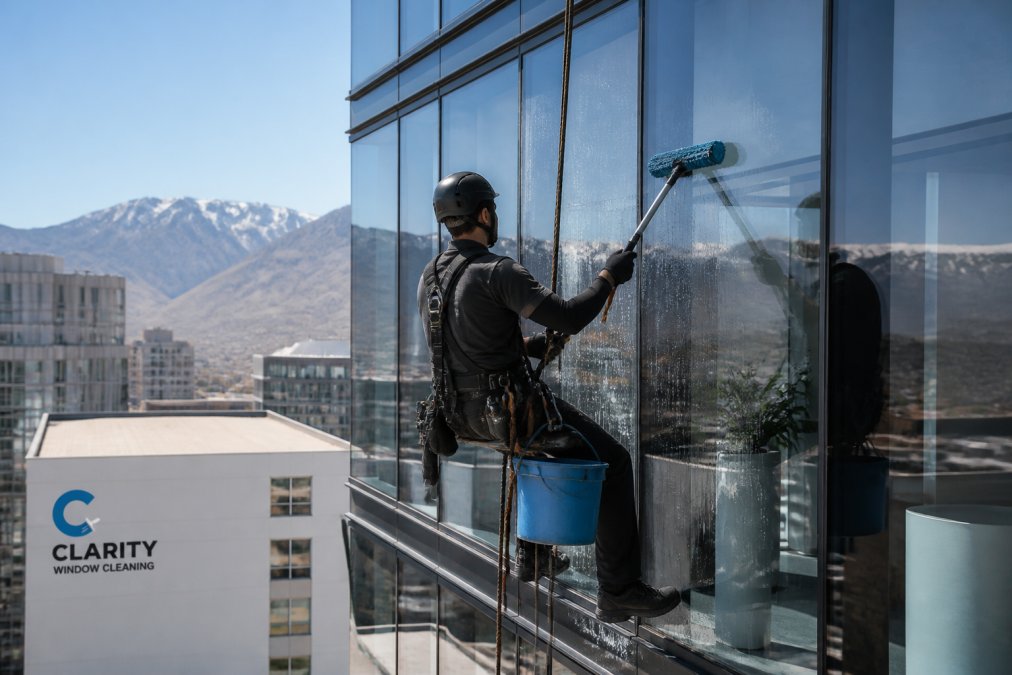
Pure water window cleaning uses filtered, mineral-free water and water-fed poles to clean glass without soaps or detergents. The water dries spot-free on its own, so technicians never touch the glass with a cloth. For commercial buildings, that means faster work, fewer ladder setups, and a finish that holds up longer between visits.
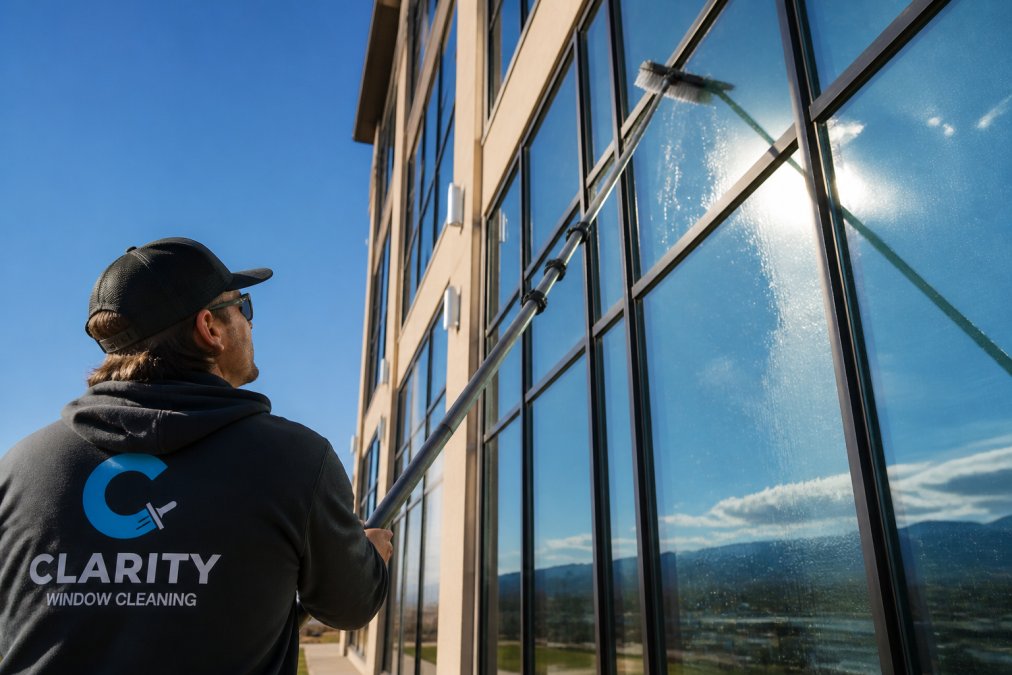
Why Facility Managers Are Switching to Water-Fed Pole Systems
The switch comes down to access and safety. A water-fed pole lets a technician clean third and fourth-story glass from the ground, removing the ladder from many jobs.
How the Filtration Process Works: From Tap Water to Spot-Free Drying
The filtration process turns tap water into purified water through stages, each removing a different impurity. The goal is water with almost no total dissolved solids, which allows spot-free drying.
Sediment Filtration, Carbon, and Reverse Osmosis
Water first passes through sediment filtration, trapping dirt, rust, and larger particles, then a carbon stage that removes chlorine and film-leaving chemicals.
Deionization and Ion Exchange Resin
The final stage is deionization, where water passes through ion exchange resin that captures the last traces of dissolved minerals, leaving deionized water close to mineral-free.
Benefits of Professional Hard Water Stain Removal with Pure Water
Hard water stain removal is one of the clearest wins for pure water cleaning. Hard water leaves mineral deposits that bond to glass over time, appearing as a cloudy film or white etching regular washing will not touch.
The benefits stack up:
- Restores glass clarity that soap and water cannot
- Removes residue-free mineral film from sprinkler spray
- Protects glass surface integrity over time
- Avoids the scratches that abrasive scrubbing can cause
OSHA-Compliant Window Cleaning Practices for High-Access Work
OSHA-compliant window cleaning practices are not optional on high-access jobs. The Occupational Safety and Health Administration sets the rules for working at height, and facilities and property managers should expect any contractor to follow them, and prove it on paper.
The Standards That Apply to High-Access Window Cleaning
Window cleaning at height touches several OSHA standards. The ones a facility manager is most likely to see cited include:
- Fall protection in general industry, OSHA's walking-working surfaces standard, 29 CFR 1910 Subpart D, which governs fall protection systems, ladder safety, and training for general industry employers.
- Fall protection in construction, 29 CFR 1926 Subpart M, which applies when work is classified as construction or alteration rather than maintenance.
- Scaffolds, 29 CFR 1926 Subpart L, relevant when suspended or supported scaffolds are used instead of rope access or water-fed poles.
- Personal protective equipment, 29 CFR 1910 Subpart I, covering eye, hand, and head protection.
- Hazard communication, 29 CFR 1910.1200, which still applies if any cleaning agents are stored or used on site, even when the primary method is pure water.
What a Compliant Crew Actually Does
Compliance is a daily habit, not a binder in a truck. On a well-run high-rise or commercial job, you should see:
- Trained, certified technicians who can describe their fall-protection system from memory
- Documented fall-protection systems for every high-access task, including anchor-point inspections
- Equipment inspection before each job, ropes, harnesses, lanyards, pole sections, and connectors
- A rescue plan that does not rely on calling 911 and waiting
- Clear communication with building staff before, during, and after the work
- Incident reporting and post-job documentation you can file with your insurer
Questions to Ask Before You Sign
Facility and property managers can verify compliance quickly with a short set of questions:
- Which OSHA standards apply to this job, and can you show me the citations?
- Who is the competent person for fall protection on this project?
- What is the rescue plan if a technician is suspended?
- When was the last equipment inspection, and who performed it?
- Can I see a sample site-specific safety plan from a comparable building?
Commercial Window Cleaning Frequency for Property Managers
Commercial window cleaning frequency depends on the building, its location, and how visible the glass is, no single schedule fits every property, which is why a customized plan matters.
| Building Type | Typical Frequency | Main Driver |
|---|---|---|
| High-rise office tower | Quarterly to monthly | Tenant satisfaction, curb appeal |
| Retail shopping center | Monthly to bi-monthly | Foot traffic, storefront image |
| Healthcare or education | Quarterly | Cleanliness standards, inspections |
| Industrial complex | Two to four times a year | Dust, exhaust, and debris exposure |
Water Source Quality, Surface Compatibility, and Equipment Longevity
Three factors separate a good result from a bad one: the water going in, the glass being cleaned, and the gear doing the work. These decide whether a commercial job succeeds, and they are the questions facility and property managers actually ask.
Water Source Quality: Why TDS and Hardness Change the Plan
Not all tap water is the same, and the difference shows up in how fast a filtration system is consumed. Two numbers matter:
- Total dissolved solids (TDS), measured in parts per million (ppm) with a handheld meter. The higher the reading, the more work the reverse osmosis membrane and deionization resin have to do.
- Hardness, the calcium and magnesium content, which is the fraction of TDS most responsible for spotting and scale.
Surface Compatibility: Where Pure Water Is Not the Right Answer
Pure water cleaning is safe on the vast majority of commercial glass, but "most" is not "all." A pre-job assessment protects the building and the contractor. Conditions that warrant caution include:
- Older glass with existing etching or scratching, pure water will not create the damage, but it will not hide it either, and aggressive brushing can widen existing defects.
- Some window films and tinted coatings, certain films and aftermarket coatings can be sensitive to repeated wetting or to the brush bristles used with water-fed poles.
- Anodized aluminum and some metal frames, mineral-free water is generally gentle, but runoff from cleaning upper floors can carry dirt and residue onto lower frames, sealants, and stone cladding. Pre-wetting or masking those surfaces is a common precaution.
- Sealants and gaskets in poor condition, water intrusion through failing seals is a building-envelope issue, not a cleaning issue, but a good crew will flag it rather than make it worse.
- Limestone, marble, and other porous stone near the glass line, runoff should be managed so mineral-free water does not carry contaminants into the stone.
Equipment Longevity: The ROI Question Facility Managers Should Ask
The filtration system is the most expensive part of a pure water setup, and its lifespan depends on use and maintenance. A commercial provider should be able to describe this cycle:
- Sediment and carbon pre-filters, replaced on a schedule, because a clogged pre-filter forces the RO membrane to work harder and shortens its life.
- Reverse osmosis membrane, performance is tracked by comparing feed water TDS to product water TDS; a falling rejection rate signals it is time to service or replace.
- Deionization resin, the consumable that runs out first. Resin is spent when the TDS reading after the DI stage climbs above zero, and it can be recharged or replaced depending on the system.
- Water-fed poles, brushes, and hoses, rinsed after each job and stored dry. Worn brush bristles leave streaks, and a kinked or contaminated hose can undo a clean rinse.
Conclusion
Keeping a commercial building's glass clear takes more than a crew and a hose, it takes the right method, the right safety practices, and a schedule built around your operations.
Frequently Asked Questions
Does pure water window cleaning leave streaks on glass?
No. Pure water window cleaning uses deionized water with total dissolved solids (TDS) near zero. Because the water contains no minerals or water-borne impurities, it dries spot-free without leaving residue or streaks. Technicians verify water quality with a TDS meter before every job. The result is a streak-free finish that meets the standards of property managers who need consistent, inspection-ready glass across multi-tenant buildings.
Is pure water cleaning safer for high-rise commercial buildings?
Yes. Water-fed poles with carbon fiber extensions let technicians clean glass from the ground or from secure roof anchors, reducing ladder work and swing-stage exposure. This supports OSHA-compliant window cleaning practices and lowers fall-risk incidents. For property managers in the Wasatch Front, this means less liability exposure and fewer operational disruptions during cleaning cycles. Clarity Window Cleaning provides free estimates for all window cleaning needs, including high-rise projects.
How does pure water technology improve cleaning efficiency?
Pure water technology combines reach-and-wash systems with filtered water to clean more glass per hour than traditional squeegee-and-bucket methods. Technicians can reach multiple stories from one setup, reducing equipment moves and labor hours. For commercial exterior maintenance, this means faster completion, less disruption to tenants, and predictable scheduling. Facilities managers often see fewer callbacks for streaky glass because the water itself prevents the mineral spots that cause complaints.
What are the environmental benefits of using pure water for windows?
Pure water cleaning is chemical-free. The filtration process removes minerals and impurities from tap water, so no soaps, solvents, or harsh detergents enter storm drains or surrounding landscaping. This supports environmental sustainability goals that many commercial property owners track. Because the water is mineral-free, it also reduces the need for repeat cleaning, which conserves water over time. Clarity Window Cleaning provides free estimates for all window cleaning needs, including eco-conscious commercial portfolios.