 how-to
Post-Construction Window Cleaning: A Complete Guide
Table of Contents
- What Is Post-Construction Window Cleaning?
- Common Debris and Residue Removed During Post-Construction Cleaning
- Tools and Equipment Required for Safe Debris Removal
- Post-Construction Glass Scratch Removal Techniques
- OSHA-Compliant Window Cleaning Practices for Construction Sites
- Post-Construction Window Cleaning Checklist for Property Managers
- Why Professional Post-Construction Window Cleaning Matters
- Frequently Asked Questions
Last Updated: September 20, 2026
What Is Post-Construction Window Cleaning?
Post-construction window cleaning removes debris, residue, and damage left behind after construction or renovation work. This specialized service goes far beyond routine maintenance, it addresses paint overspray, adhesive residue, masonry dust, and other materials that standard cleaning cannot handle.
When a building project wraps up, windows bear the brunt of the work. Sealants cure on glass. Paint splatters dry hard. Dust from stucco and plaster settles into frames and tracks. Without proper removal, these materials etch glass, block light, and make your building look unfinished.
At Clarity Window Cleaning, we work directly with facilities managers and property managers to restore windows after construction. The process requires specialized tools, chemical knowledge, and techniques that prevent permanent glass damage. This is not a job for standard window cleaning crews.
Common Debris and Residue Removed During Post-Construction Cleaning
Construction leaves behind multiple types of debris. Each requires a different removal approach. Understanding what you're dealing with helps you know why professional expertise matters.
Paint Overspray and Silicone Sealant
Paint overspray hardens on glass and becomes nearly impossible to remove without proper technique. Silicone sealant cures even harder and can permanently bond to the glass surface if left too long.
The challenge: aggressive scraping damages tempered glass. Abrasive materials scratch the surface. Chemical solvents must be chosen carefully to dissolve the material without etching the glass itself.
Professional crews know which solvents work for specific paint types. They understand curing times and how temperature affects removal difficulty. Waiting too long makes the job exponentially harder.
Adhesive Residue and Tape Marks
Protective tape applied during construction leaves sticky adhesive residue. This residue hardens and bonds to the glass surface over time.
Attempting to scrape dried adhesive off glass often results in micro-scratches that catch light and look like permanent damage. The solution requires the right chemical solvent applied at the right temperature, followed by careful removal technique.
Tape residue also accumulates in window frames and sills. These areas trap dust and moisture, leading to mold growth if not properly cleaned.
Masonry Dust, Stucco, and Plaster
Masonry dust settles everywhere during construction. Stucco and plaster particles are especially problematic because they're alkaline and can etch glass over time.
These fine particles embed themselves in window tracks and sills. They're not just unsightly, they damage the window's mechanical function. Frames become difficult to open. Sills accumulate water instead of draining properly.
Wet-dry shop vacuums remove loose debris, but embedded particles require careful scrubbing with the right tools. Steel wool works in some cases. Soft-bristle brushes work in others. The wrong tool causes scratches.
Tools and Equipment Required for Safe Debris Removal
Proper post-construction window cleaning requires specialized equipment. Standard squeegees and bucket water won't work. More critically, the wrong chemical solvent can permanently damage glass or void manufacturer warranties.
Physical removal tools:
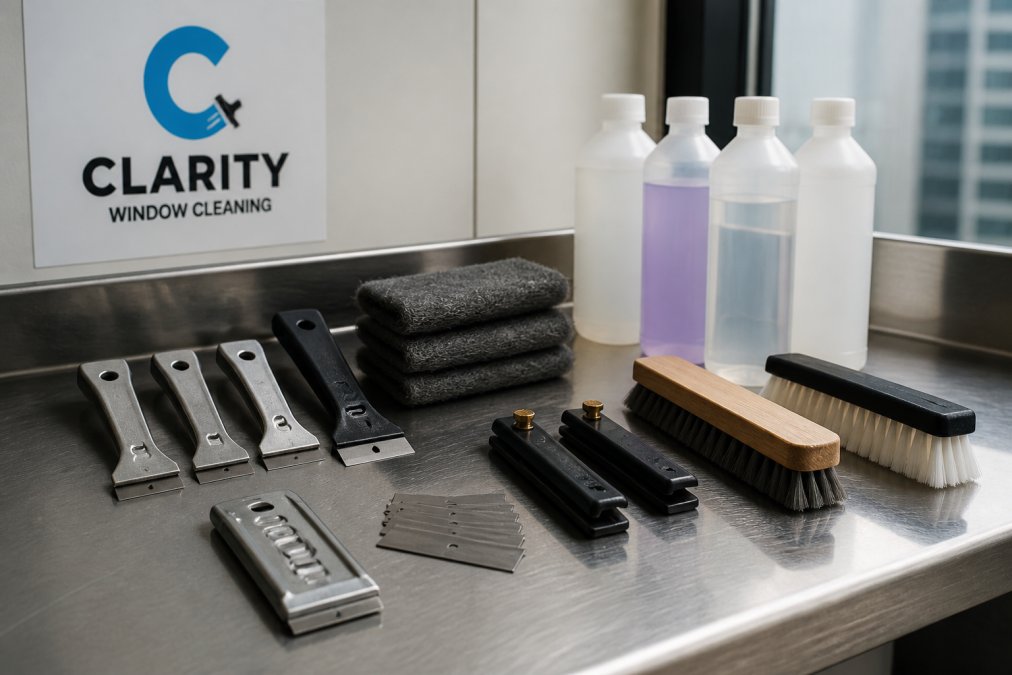
- Scrapers and blade holders: Hold razor blades at precise angles to prevent glass contact. Never use blades without proper holders. Angle matters: 45 degrees or less prevents glass damage; perpendicular pressure causes micro-scratches.
- Steel wool: Fine grades (0000) for delicate work on frames only. Coarser grades never on glass, they create permanent scratches.
- Soft-bristle brushes: Remove debris from tracks and sills without scratching. Natural bristles work better than synthetic for adhesive residue.
- Wet-dry shop vacuum: Captures dust and debris before it spreads further. Use before applying any chemical to avoid trapping particles under solvents.
- Squeegees and microfiber cloths: For final cleanup and streak-free drying. Microfiber prevents lint residue.
Chemical solvents, the critical decision:
- For paint overspray: Acetone-based solvents work on latex paint but can damage certain glass coatings. Mineral spirits are safer for oil-based paints but require longer dwell time. Always test on a small, inconspicuous area first.
- For silicone sealant: Specialized silicone removers dissolve cured sealant without etching. Generic degreasers often fail and leave residue that hardens further.
- For adhesive residue: Isopropyl alcohol (70% concentration) removes fresh adhesive safely. For hardened tape residue, citrus-based solvents are gentler than petroleum distillates but work slower.
- For masonry dust and alkaline residue: Mild acidic cleaners (pH 3-4) neutralize alkaline particles without etching glass. Avoid strong acids; they etch permanently.
Protective equipment:
- Nitrile gloves (latex breaks down in some solvents)
- Safety glasses rated for chemical splash
- Respiratory protection (N95 minimum for dust; P100 or organic vapor cartridge for solvent fumes)
- Apron or protective clothing
- Proper ventilation or supplied-air respirator for enclosed spaces
Why chemical knowledge matters for facilities managers:
Post-Construction Glass Scratch Removal Techniques
Not all marks on glass after construction are permanent damage. Understanding the difference between removable residue, micro-scratches, and permanent etching determines whether cleaning solves the problem or whether glass replacement is required.
Distinguishing residue from true scratches:
- Residue: Feels smooth when you run your fingernail across it. Responds to chemical treatment. Disappears completely when the right solvent is applied.
- Micro-scratches: Barely visible to the naked eye but catch light at certain angles. Often caused by improper scraping technique during debris removal. May be removable if shallow enough.
- Permanent etching: Rough texture when you feel it. Light scatters through the damaged area. Caused by acidic or alkaline residue left too long, or aggressive scraping that damaged the glass surface itself. Cannot be reversed.
Professional inspection protocol:
- Tactile test: Run a fingernail or plastic scraper gently across the mark. Residue feels smooth; true scratches feel rough or have a raised edge.
- Angle inspection: View the glass from multiple angles and lighting conditions. Residue looks the same from all angles; scratches change appearance based on light direction.
- Documentation: Photograph the mark with a date stamp. This creates a baseline for warranty claims if the mark is permanent.
Removable marks, treatment approach:
- Chemical treatment: Apply the appropriate solvent (based on debris type) and allow 5-15 minutes dwell time. Longer dwell times soften hardened material without requiring aggressive scraping.
- Soft-bristle brush application: Use circular motions with a natural-bristle brush, never linear scraping. This removes softened residue without creating new scratches.
- Microfiber cloth buffing: Final polish with a damp microfiber cloth removes solvent residue and reveals the cleaned glass.
- Patience: Rushing causes more damage. Multiple gentle applications work better than one aggressive attempt.
Permanent scratches, warranty and replacement:
- During construction: If scratches occurred during the building project (from improper tool use, inadequate surface protection, or construction debris), the general contractor or construction company is liable for glass replacement.
- During post-construction cleaning: If scratches appear after professional cleaning, the cleaning company's liability insurance covers replacement. This is why hiring certified professionals matters, they carry errors and omissions coverage.
- Pre-existing damage: If scratches were present before cleaning began, they fall outside the scope of the cleaning service. Documentation photos taken during the pre-cleaning inspection protect both parties.
Warranty implications:
OSHA-Compliant Window Cleaning Practices for Construction Sites
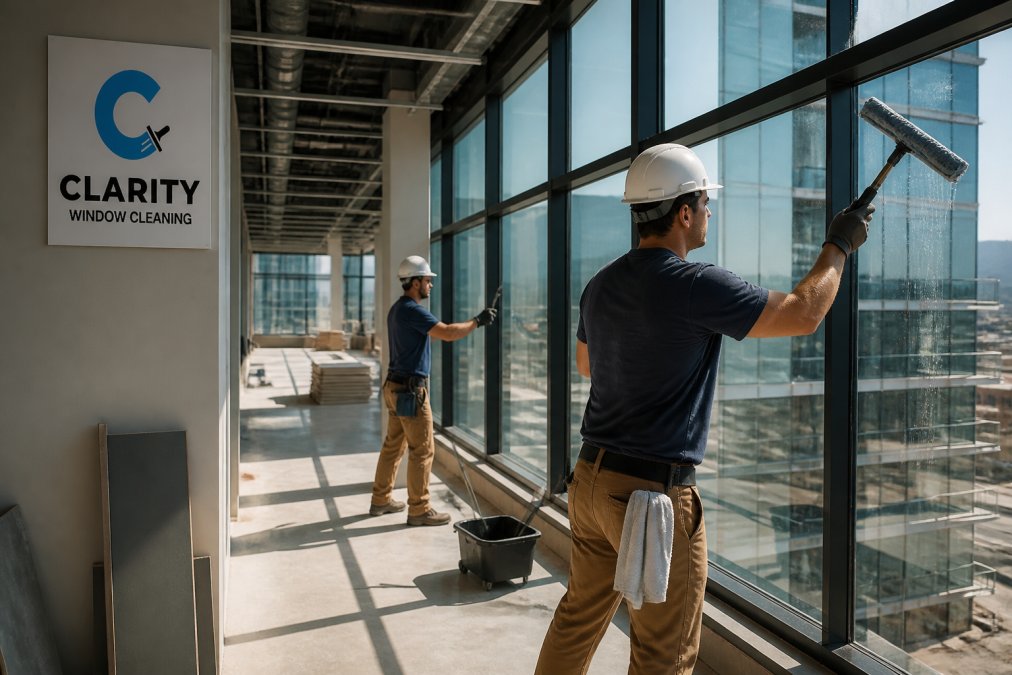
Construction sites fall under Occupational Safety and Health Administration regulations. Window cleaning on active construction sites requires compliance with fall protection, equipment safety, and hazard communication standards.
Key compliance areas:
- Fall protection systems: Harnesses, anchor points, and safety lines rated for the work
- Hazard communication: Proper labeling and documentation of chemical solvents used
- Site-specific safety plans: Written procedures for the specific building and conditions
- Training documentation: Proof that workers understand the hazards and procedures
- Insurance verification: General liability and workers' compensation coverage
Post-Construction Window Cleaning Checklist for Property Managers
A systematic approach prevents missed areas and ensures quality results. Use this checklist to verify work is complete.
Pre-cleaning inspection:
- Identify all debris types on glass and frames
- Note areas with heavy paint overspray or sealant
- Document existing scratches or damage
- Check weather conditions (avoid rain within 24 hours)
- Verify all protective coverings are in place for adjacent areas
During cleaning:
- Remove loose debris with vacuum first
- Apply appropriate solvent and allow dwell time
- Use correct scraping angle (never perpendicular to glass)
- Work from top to bottom to avoid re-soiling cleaned areas
- Inspect each pane before moving to the next
- Clean frames and sills thoroughly
Post-cleaning verification:
- Walk the entire building and inspect glass quality
- Check for streaks, residue, or missed spots
- Verify no new scratches were created
- Confirm all frames and tracks are clean
- Document completion with photos
- Obtain detailed post-service reporting from the cleaning crew
Why Professional Post-Construction Window Cleaning Matters
Attempting DIY post-construction cleaning risks permanent glass damage. Paint overspray requires specific solvents. Adhesive removal demands proper technique. Masonry dust needs appropriate tools.
Frequently Asked Questions
What specific debris is removed during post-construction window cleaning?
Post-construction window cleaning removes paint overspray, silicone sealant, adhesive residue from protective tape, masonry dust, stucco particles, plaster fragments, and construction debris from glass surfaces, frames, and window tracks. Professional crews also clear sills and inspect for micro-scratches or glass etching caused during construction. Clarity provides free estimates to assess the scope of debris on your property.
How does post-construction window cleaning differ from routine maintenance?
Routine window cleaning removes dirt and water spots from daily exposure. Post-construction cleaning addresses hardened, cured adhesive, paint overspray, and abrasive construction dust that require specialized chemical solvents, scrapers, and protective techniques. Construction cleanup also includes detailed inspection for permanent damage and glass integrity issues that standard maintenance does not address.
What are the risks of improper post-construction window cleaning?
Incorrect techniques can scratch tempered glass permanently, damage window seals, or etch glass surfaces beyond repair. Using abrasive materials without proper training, applying harsh chemical solvents without ventilation, or applying excessive pressure with scrapers can compromise glass integrity and void manufacturer warranties. Professional OSHA-compliant practices protect both the glass and building occupants from chemical exposure and safety hazards.
Why should property managers hire professionals for post-construction window restoration?
Professional post-construction window cleaning ensures OSHA-compliant practices, protects glass from permanent damage, and provides detailed documentation for insurance and board reporting. Facilities managers benefit from certified technicians who understand glass tempering, chemical safety, and high-rise safety protocols. Clarity offers free estimates and customized schedules that avoid operational disruption for commercial properties and high-rise buildings.
Post-construction window cleaning is specialized work that requires proper equipment, chemical knowledge, and technique. Attempting it without expertise risks permanent glass damage and costly replacement. Professional crews like Clarity Window Cleaning understand the materials involved, the correct removal methods, and the safety requirements. Get a free estimate from Clarity to see how we can restore your building's windows after construction.