
 blog
blog
Office Window Cleaners: 2026 Facilities Manager Guide
Table of Contents
- What Office Window Cleaners Actually Do for Your Building
- OSHA Window Cleaning Compliance: What Facilities Managers Must Verify
- Building a Window Cleaning Maintenance Schedule That Works
- Hiring Commercial Window Cleaners Checklist for Property Managers
- How Much Do Office Window Cleaners Cost? Pricing Factors Explained
- High-Rise and Post-Construction Window Cleaning: Specialized Needs
- Sustainability and Productivity: The Overlooked Benefits of Clean Windows
- Frequently Asked Questions
Last Updated: September 14, 2026
What Office Window Cleaners Actually Do for Your Building
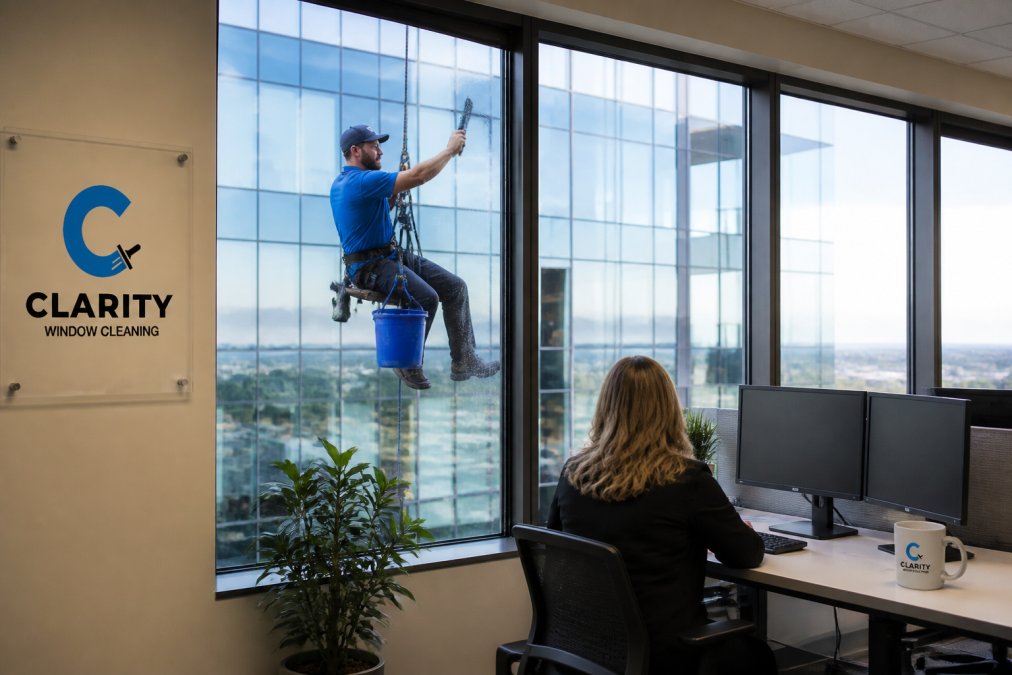
Office window cleaners manage a full exterior and interior glass maintenance program, partitions, facades, storefronts, skylights, and atrium glass, while protecting occupants and crew. At Clarity Window Cleaning, we work directly with facilities managers and property managers, and every job starts with a site-specific safety plan.
A typical commercial visit covers:
- Exterior facade glass: water-fed poles with deionized water for mid-rise sections, rope access or suspended platforms for towers
- Interior glass: lobby partitions, conference room walls, and tenant-facing glass cleaned during agreed windows
- Storefront and entry systems: daily-traffic glass that shows every fingerprint
- Detailing: frames, sills, and tracks, which is where streak complaints usually originate
Interior Glass, Exterior Facade, and Storefront Maintenance
Interior glass cleaning depends on tenant schedules, so most facilities managers prefer early-morning or after-hours slots. Exterior work depends on weather, wind speed, and access equipment availability. Storefront glass accumulates the most handling marks and often needs weekly attention in high-traffic retail and lobby areas. Splitting these three categories into separate frequencies keeps costs predictable and results consistent.
Why Streak-Free Results Matter for Tenant Retention
Streak-free glass is a retention issue, not a cosmetic one. Hard water stains etch permanently, and once mineral deposits bond to the surface, no routine cleaning removes them, turning a maintenance line item into a restoration project.
Clean glass also protects natural light optimization, which matters when tenants are paying for a view. When a tenant complains that "the windows look dirty," the fix is rarely more cleaning, it's better detailing and a documented standard.
OSHA Window Cleaning Compliance: What Facilities Managers Must Verify
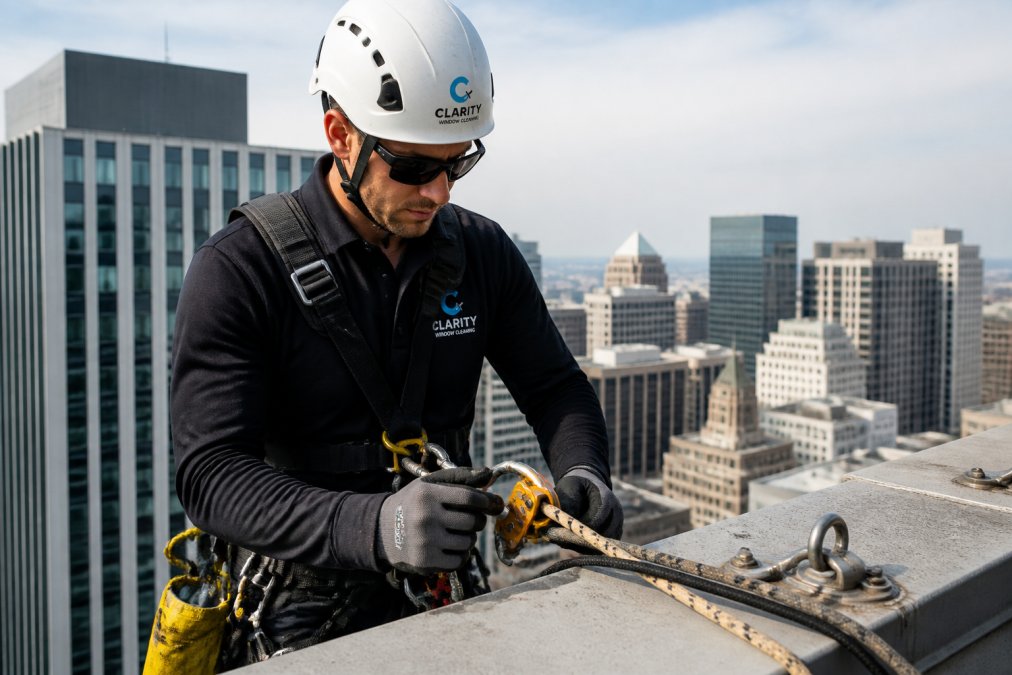
OSHA window cleaning compliance is the single item facilities managers should verify before signing anything. The Occupational Safety and Health Administration regulates window cleaning under its walking-working surfaces and fall protection standards, and the requirement sits with the building owner and contractor together.
What to confirm in writing:
- A site-specific safety plan for your building, not a generic template
- Fall protection equipment inspection records
- Rope access or suspended platform certifications for each technician assigned
- A documented rescue plan for anyone working at height
- Proof of current training for every crew member on site
The OSHA walking-working surfaces standard is the reference point to ask contractors about directly. If they can't explain how they apply it to your building, that's your answer.
Building a Window Cleaning Maintenance Schedule That Works
A window cleaning maintenance schedule should be built around exposure, not the calendar. Glass facing prevailing wind and road spray needs more frequent service than a sheltered courtyard facade. Start by mapping your building into exposure zones. Most commercial properties fall into four:
- High-exposure: west- and south-facing curtain wall, glass near loading docks, parking structures, or roadway spray
- Medium-exposure: upper floors with wind-driven rain, glass under tree canopy (pollen and sap)
- Low-exposure: sheltered courtyards, north-facing glass under overhangs
- Interior: lobby, tenant partitions, conference rooms, elevator lobbies
Once zones are mapped, set frequency by zone rather than by floor count. A common pattern for a mid-rise office building:
| Zone | Typical Frequency | Main Driver |
|---|---|---|
| Lobby and entry glass | Weekly | Foot traffic and fingerprints |
| High-exposure low-rise exterior | Monthly to quarterly | Weather, road spray, pollen |
| Low-exposure exterior | Quarterly to semi-annually | Dust and seasonal debris |
| High-rise facade | 2-4 times per year | Access cost and exposure |
| Interior tenant glass | Quarterly or on request | Tenant schedule and lease terms |
| Post-construction glass | One-time restoration, then scheduled | Debris and coating residue |
Aligning the Schedule With Building Systems and Tenant Calendars
Scheduling frequency should also account for your building's mechanical systems and tenant rhythms. Aligning window cleaning with facade inspections, roof work, or HVAC service reduces mobilization costs and disruption. On the interior side, tie cleaning to the tenant calendar, lease-mandated standards, tenant improvement schedules, and move-in/move-out dates create natural service windows. A provider who works directly with facilities managers and property managers, as Clarity Window Cleaning does, will build the schedule around your operations rather than forcing a fixed route.
Documenting the Schedule for Boards and Insurers
A schedule is only as strong as the paper trail behind it. For each service visit, ask for a post-service report that records:
- Date, time, and zones serviced
- Access method used (water-fed pole, rope access, suspended platform)
- Any glass conditions noted (scratches, etching, failed seals, hard water staining)
- Any safety observations or near-misses
- Technician names and certifications on site
That record creates a maintenance history you can hand to ownership or your insurer if a claim arises, and it flags glass conditions early, before a hard water stain etches permanently and turns a routine cleaning line item into a restoration project.
Clarity Window Cleaning provides free estimates for all window cleaning needs, including commercial and high-rise properties, and builds customized schedules that avoid tenant disruption.
Hiring Commercial Window Cleaners Checklist for Property Managers
Hiring commercial window cleaners comes down to documentation. Any provider can promise a clean result; the ones worth contracting prove safety compliance, insurance, and quality control before the first visit, and can explain how their coverage interacts with your building's liability exposure.
Use this checklist when vetting contractors:
- Current general liability and workers' compensation certificates
- Additional insured endorsement naming your property and, where required, your ownership entity
- Written site-specific safety plan for your building
- Technician certifications for high-rise and rope access work
- References from comparable commercial properties
- Defined quality inspection process and re-clean policy
- Post-service reporting format you can file for your board or insurer
- Confirmed service windows that avoid tenant disruption
- Written rescue plan for any work at height
- Confirmation of who supervises on-site work and how incidents are reported
Insurance, Bonding, and Liability Documentation
Insured and bonded status is the baseline, not a bonus. Request certificates directly from the contractor's insurer or broker, not the contractor, and verify the policy is active on the date work begins. A few mechanics worth understanding before you sign:
- Additional insured vs. certificate holder. A certificate of insurance proves coverage exists. An additional insured endorsement actually extends the contractor's liability policy to protect your property and ownership entity. Ask for the endorsement, not just the certificate.
- Workers' compensation. If a technician is injured on your property and the contractor's workers' comp has lapsed, the claim can flow back to the building owner. Verify the policy directly with the carrier.
- Waiver of subrogation. Where your lease or lender requires it, confirm the contractor's policy includes a waiver of subrogation so the insurer cannot pursue your building after paying a claim.
- Primary and non-contributory language. This keeps the contractor's policy first in line rather than splitting a claim with your building's carrier.
If someone is injured on your property, the documentation chain determines who pays. A contractor with lapsed coverage can leave the building owner exposed, which is why Clarity Window Cleaning provides full insurance documentation and site-specific safety plans with every commercial contract.
Contract Terms That Protect the Building Owner
Beyond insurance, the contract should address items that separate a professional commercial provider from a residential crew:
- Indemnification language that holds the building owner harmless for the contractor's negligence
- A defined scope of work that lists zones, access methods, and detailing expectations (frames, sills, tracks)
- A re-clean clause with a stated window for reporting deficiencies
- Notice provisions for schedule changes, weather delays, and access restrictions
- Confidentiality and tenant-privacy terms if interior work touches occupied suites
Clarity Window Cleaning provides free estimates for all window cleaning needs and works directly with facilities managers and property managers on commercial and high-rise contracts, including full insurance documentation and site-specific safety planning.
How Much Do Office Window Cleaners Cost? Pricing Factors Explained
Office window cleaning pricing depends on height, glass area, access method, frequency, and site conditions. There is no universal per-pane rate, and any provider quoting one without a walkthrough is guessing.
The factors that move pricing most:
- Building height and access: ground-level storefront work costs far less per square foot than rope access on a tower
- Glass area and configuration: complex facades with mullions and setbacks take longer than flat curtain wall
- Frequency: recurring contracts typically cost less per visit than one-time jobs
- Condition: post-construction residue, hard water stain removal, and window film areas add labor
- Scheduling: after-hours and weekend work carries different labor rates
Clarity Window Cleaning provides free estimates for all window cleaning needs, including high-rise and commercial properties. A proper estimate follows a site walkthrough, so you get a number tied to your building rather than a phone quote.
High-Rise and Post-Construction Window Cleaning: Specialized Needs
High-rise window washing is a different trade from ground-level cleaning. It requires rope access or suspended platform work, certified technicians, and an OSHA-compliant rescue plan, and not every commercial window cleaning company staffs for it.
Post-construction window restoration is its own specialty. New construction leaves glass coated in concrete dust, silicone overspray, paint transfer, and protective film residue. Standard cleaning won't touch most of it, and aggressive methods can scratch the glass permanently.
Clarity Window Cleaning handles high-rise window cleaning up to 40 stories with OSHA-compliant practices and certified technicians, and we provide detailed post-service reporting so facilities managers can document maintenance for boards and insurers.
Sustainability and Productivity: The Overlooked Benefits of Clean Windows
Two benefits rarely make it into a window cleaning proposal: sustainability and employee productivity. Both matter to facilities managers building a case for the maintenance budget. On sustainability, deionized water systems and water-fed poles reduce or eliminate chemical use on exterior glass, pure water lifts mineral deposits and dirt without detergent, so there's no runoff concern and no residue left on the facade. On productivity, clean glass lets more daylight into workspaces, and buildings that maintain their glazing see fewer complaints about dim conditions and lower reliance on artificial lighting during daylight hours.
U.S. Department of Energy guidance on daylighting and commercial building efficiency outlines how daylight access affects building energy performance, which gives facilities managers a second justification beyond appearance.
The workplace hygiene angle matters too. High-touch glass in lobbies, elevator banks, and conference rooms accumulates handling marks and contaminants. Regular interior glass cleaning is a visible part of a building's hygiene program, and tenants notice.
Frequently Asked Questions
How much does it cost to clean commercial windows?
Pricing for office window cleaners depends on building height, glass square footage, access requirements, and cleaning frequency. High-rise buildings needing rope access or water-fed pole systems cost more than low-rise storefronts. Interior versus exterior scope, hard water stain removal, and post-construction debris also affect quotes. Clarity Window Cleaning provides free estimates for all window cleaning needs, so facilities managers can get a tailored quote based on their specific building rather than a generic rate.
What safety certifications should commercial window cleaners hold?
OSHA window cleaning compliance requires proper fall protection training, scaffold and rope descent system certification, and hazard communication training. Reputable office window cleaners carry documented safety protocols, site-specific safety plans, and proof of workers compensation insurance. Ask for a written safety plan before hiring. Clarity Window Cleaning technicians are OSHA-compliant, fully insured and bonded, and provide documentation for your records.
How often should high-rise office windows be professionally cleaned?
Most high-rise office buildings need exterior window cleaning two to four times per year, depending on local pollution, weather, and nearby construction. Interior glass in lobbies and tenant spaces may need monthly or quarterly attention. A window cleaning maintenance schedule should account for pollen season, rainy periods, and building events. Facilities managers in dusty or urban environments often schedule quarterly exterior cleanings to maintain a streak-free building facade and protect glass from hard water stains.
How do facilities managers vet window cleaning contractors?
Use a hiring commercial window cleaners checklist: verify OSHA compliance and safety training records, confirm general liability and workers compensation insurance, check bonding status, request references from similar buildings, and review their process for quality control and reporting. Ask whether they provide site-specific safety plans and post-service documentation. Clarity Window Cleaning works directly with facilities managers and property managers, offering free estimates and detailed reporting so you can document maintenance for boards and insurers.