 ultimate-guide
How to Vet High-Rise Window Cleaners: A Manager's Guide
Table of Contents
- Why Vetting High-Rise Window Cleaners Matters
- OSHA Window Cleaning Safety Standards and Compliance
- High-Rise Window Cleaning Insurance Requirements
- Window Cleaning Contractor Vetting Checklist
- Key Questions to Ask Before Hiring
- Verifying Insurance and Bonding
- Evaluating Service Agreements and Reporting
- Frequently Asked Questions
Last Updated: September 1, 2026
Why Vetting High-Rise Window Cleaners Matters
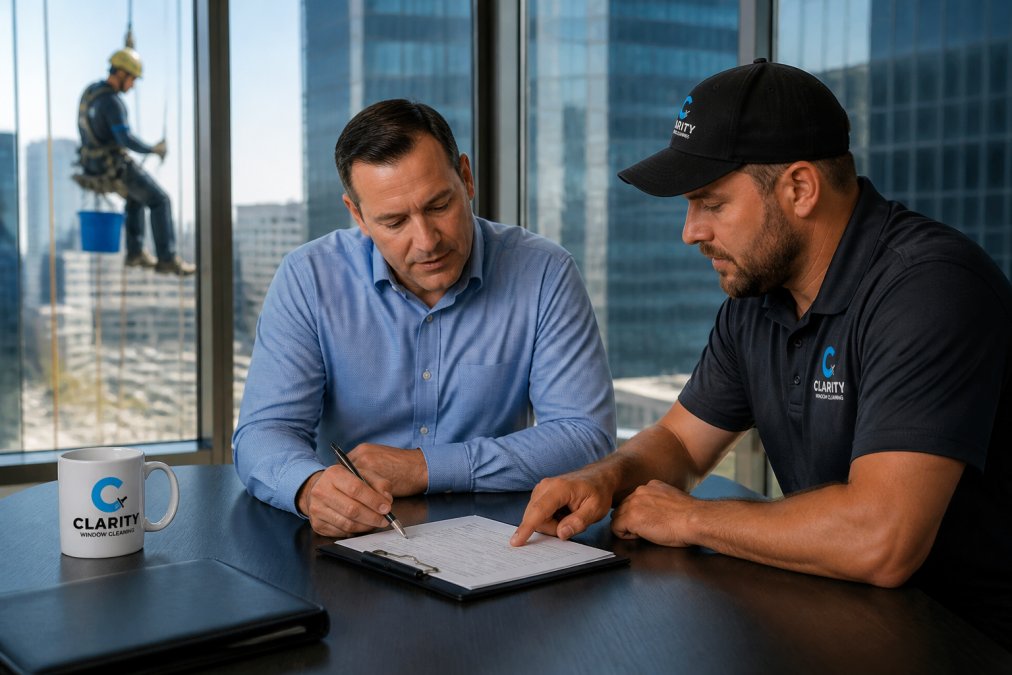
High-rise window cleaning demands rigorous safety protocols, proper certifications, and comprehensive insurance coverage. Property and facilities managers overseeing office towers, mixed-use complexes, and industrial buildings know that a single misstep can result in catastrophic injury, liability exposure, and operational disruption. This guide walks you through exactly how to vet high-rise window cleaners so you can confidently hire professionals who meet industry standards and protect your facility.
The stakes are high because the work itself is inherently dangerous. Workers suspended from buildings face fall hazards, equipment failures, weather exposure, and the constant pressure of working at heights where mistakes have no margin for error. When you vet high-rise window cleaners thoroughly, you're ensuring your facility has professionals who understand rope access techniques, maintain proper anchor points, and follow OSHA regulations that govern suspended access work.
Most facility managers inherit cleaning contracts from predecessors or rely on whoever quoted lowest. That approach exposes your organization to uninsured liability, non-compliant work practices, and substandard results. The right vetting process takes time upfront but eliminates risk downstream and ensures consistent quality across service cycles.
OSHA Window Cleaning Safety Standards and Compliance
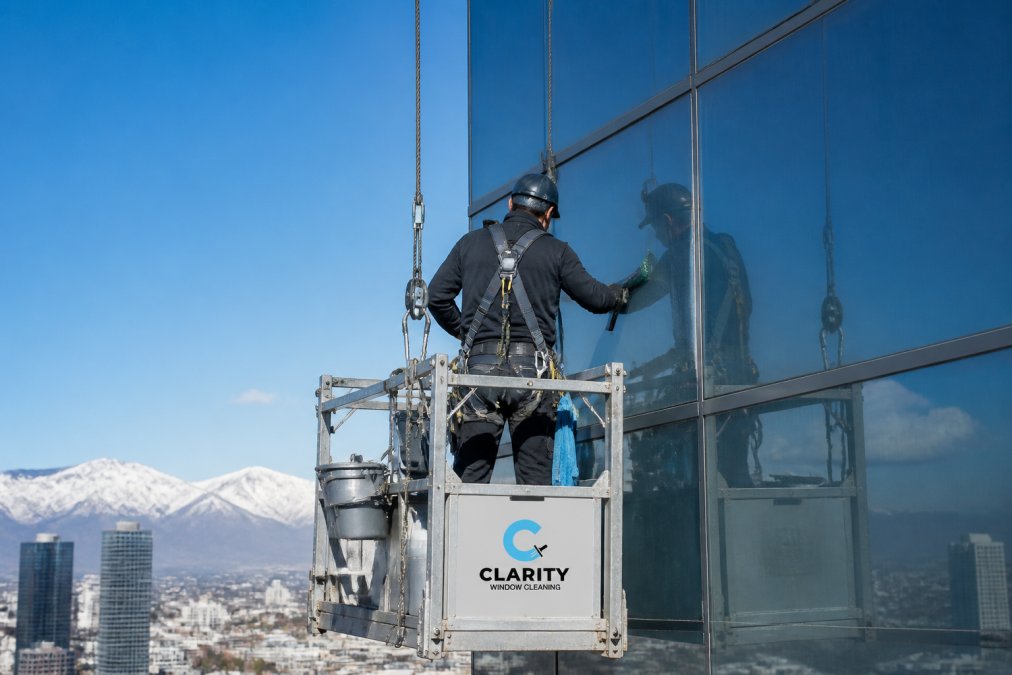
OSHA compliance is non-negotiable for any high-rise window cleaning operation. The Occupational Safety and Health Administration establishes mandatory standards for work at heights, fall protection, and suspended access equipment. Any contractor you hire must demonstrate that their operations align with these federal requirements as a legal baseline.
The primary OSHA standard governing high-rise window cleaning is 29 CFR 1926.500, which requires fall protection systems for workers exposed to falls of six feet or more. For window cleaning, this means proper use of safety harnesses, anchor points rated for the load, and redundant systems that prevent single-point failure. Window cleaners typically use one of three primary suspended access methods: bosun chairs (single-point suspended seats), stage scaffolds (platforms suspended by multiple ropes), or rope access systems (industrial rope access techniques).
Each method requires specific equipment certifications and worker training. A bosun chair operation demands that the chair be certified, suspension ropes meet minimum breaking strength standards, and anchor points be engineered to handle the load. Stage scaffolds must comply with ANSI standards for platform construction and suspension. Rope access systems require technicians to hold certifications from recognized training bodies that validate their understanding of anchor selection, rope management, and rescue procedures.
When you vet high-rise window cleaners, ask directly whether they follow OSHA 1926.500 and what their site-specific safety plan looks like for your building. A reputable contractor will provide a written safety plan tailored to your facility's architecture, including details on anchor point selection, equipment inspection schedules, and emergency response procedures.
High-Rise Window Cleaning Insurance Requirements
Insurance verification is where many facility managers stumble. You cannot assume a contractor carries adequate coverage just because they claim to be "fully insured." The type, amount, and scope of coverage varies dramatically, and gaps can expose your facility to direct liability if an incident occurs.
High-rise window cleaners must carry general liability insurance and workers' compensation insurance. General liability covers third-party injury or property damage caused by the contractor's work. Workers' compensation covers medical costs and lost wages if a contractor's employee is injured on the job.
For high-rise work, general liability policies must include coverage for work at heights and suspended access operations. Not all standard policies cover this work; many insurers exclude fall hazard work or limit coverage to ground-level operations. Request their certificate of insurance and review the policy limits. Standard minimums for commercial high-rise window cleaning typically run between $1 million and $2 million in general liability coverage.
Workers' compensation is mandatory in most states. However, verify that the contractor properly classifies their workers. Some contractors misclassify employees as independent contractors to avoid workers' compensation costs, shifting injury liability to the property owner. Ask directly how they classify their workforce and request proof of workers' compensation coverage for all employees.
A critical step is verifying that your facility is named as an additional insured on the contractor's general liability policy. This designation protects your organization from claims arising from the contractor's work. If a contractor refuses to add your facility as an additional insured, that's a disqualifying factor.
When you're ready to move forward, Clarity provides free estimates for all window cleaning needs and can walk you through insurance requirements specific to your facility.
Window Cleaning Contractor Vetting Checklist
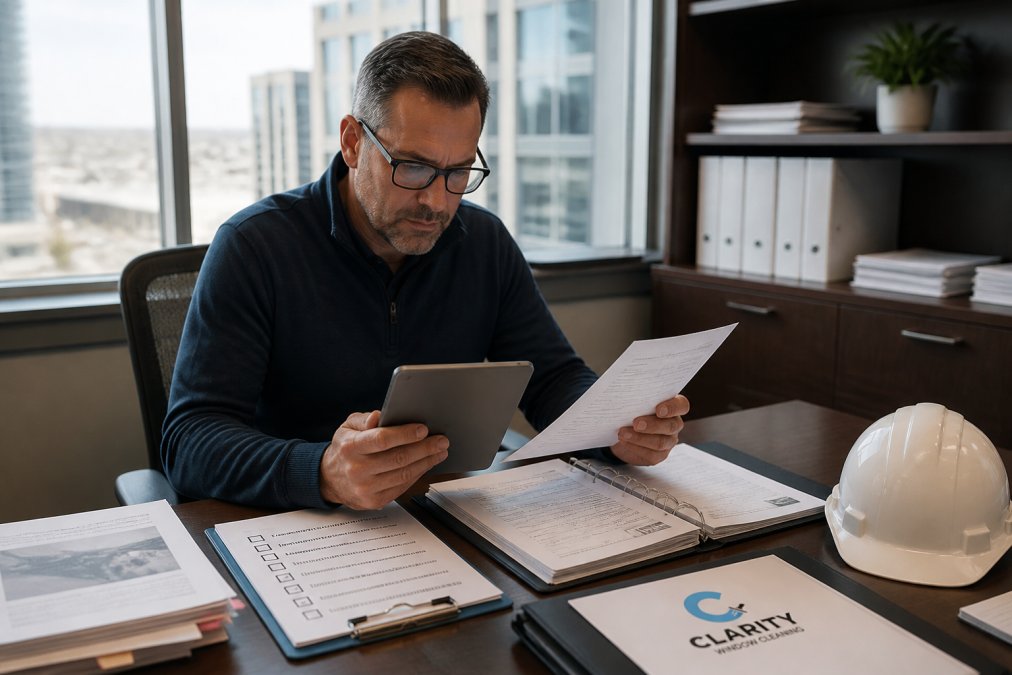
A structured vetting process removes guesswork and ensures consistent evaluation across multiple contractor candidates.
Certifications and Training Documentation
Request copies of certifications for all technicians who will work on your facility. For high-rise window cleaning, relevant certifications include:
- IRATA (International Rope Access Trade Association) Certification: The gold standard for rope access technicians. IRATA Level 1 is entry-level; Level 2 and 3 indicate advanced competency. Technicians must recertify every three years.
- SPRAT (Society of Professional Rope Access Technicians) Certification: An alternative to IRATA, equally respected in North America. SPRAT certifications require three-year renewal.
- ANSI/ASSE Z359.2 Competent Climber Certification: Validates understanding of fall protection systems and rescue procedures.
- First Aid and CPR Certification: Required for all workers, with current renewal dates.
Verify that certifications are current; expired certifications mean the technician has not completed mandatory recertification training. Also ask about the contractor's internal training program and mentorship process for new technicians.
Equipment and Safety Protocols
Request detailed information about equipment and inspection schedules. For stage scaffolds, ask about rated load capacity, suspension rope inspection frequency, anchor point protocols, and whether redundant suspension systems are used. For bosun chair operations, verify chair certification, suspension system load rating, and backup safety lines. For rope access operations, confirm rope specifications, anchor point selection procedures, and rescue plans.
A contractor who can answer these questions in detail and provide written documentation demonstrates professional competency.
References and Track Record
Request at least three references from facilities managers or property owners who have contracted with the company for high-rise window cleaning within the past two years. Contact these references directly and ask about schedule adherence, safety incidents, worksite organization, communication, and whether they would hire again.
Ask the contractor directly about their incident history. How many reportable incidents (OSHA-recordable injuries) has the company had in the past five years? What matters is how they responded and what changes they implemented to prevent recurrence.
Key Questions to Ask Before Hiring
On Safety Culture:
- Walk me through your site-specific safety plan process. How do you assess hazards at a new building?
- Tell me about a time a technician identified a safety concern that delayed the work. How did you handle it?
- How do you ensure workers feel empowered to stop work if conditions become unsafe?
On Service Quality:
- What is your quality assurance process? How do you catch streaks or missed areas?
- How do you handle complaints about work quality? What's your rework policy?
- Can you describe your approach to cleaning different window types?
On Scheduling and Disruption:
- Can you work during off-hours or weekends to minimize tenant disruption?
- How do you coordinate with building operations and security?
- What happens if weather delays the work?
On Reporting and Documentation:
- What post-service reporting do you provide? Can I get photos before and after?
- How do you document safety inspections and equipment maintenance?
- Can you provide monthly or quarterly service reports?
The way a contractor answers these questions reveals whether they view their work as a transactional service or as a partnership where they understand your facility's specific needs.
Verifying Insurance and Bonding
Insurance verification goes beyond requesting a certificate. Follow these steps to confirm coverage is genuine and adequate:
-
Request a Certificate of Insurance that lists your facility as an additional insured, including policy numbers, coverage limits, and expiration dates.
-
Contact the Insurer Directly to verify the policy is active and that coverage limits match the actual policy.
-
Confirm Additional Insured Status by asking the insurer whether your facility is listed as an additional insured on the general liability policy.
-
Check for Exclusions by reviewing actual policy language. Ask whether the policy excludes work at heights, suspended access, or high-rise operations.
-
Verify Workers' Compensation through your state's labor department database if available.
-
Ask About Bonding for substantial contract values. A performance bond guarantees work completion; a payment bond guarantees suppliers and subcontractors are paid.
Document all insurance verification in writing. If the contractor cannot provide proof of adequate coverage, they are not qualified for high-rise work at your facility.
Evaluating Service Agreements and Reporting
The service agreement is your primary protection against disputes, quality issues, and safety failures. Before signing, ensure the contract includes:
Scope Definition: Specific building areas to be cleaned, frequency of service, expected completion timeline, and weather conditions that would delay service.
Safety Requirements: Statement that all work will comply with OSHA standards and the site-specific safety plan, insurance and bonding requirements with your facility named as additional insured, incident reporting procedures, and right to inspect equipment and certifications.
Quality Standards: Definition of acceptable work quality, rework policy if standards are not met, and photo documentation before and after service.
Reporting and Documentation: Monthly or quarterly service reports with dates, times, and technician names, safety incident reports within 24 hours, and equipment inspection logs available upon request.
Liability and Indemnification: Contractor assumes all liability for injuries to their employees or third parties, contractor indemnifies your facility for claims arising from their negligence, and clear statement of what happens if an incident occurs.
Termination Clause: Either party can terminate with 30 days' notice if safety standards are not maintained, with immediate termination right if contractor loses required certifications or insurance.
A well-drafted service agreement protects both parties by establishing clear expectations upfront. Contractors who resist detailed agreements or insist on vague terms are signaling they're not accustomed to professional-level work.
Vetting high-rise window cleaners is one of the highest-impact decisions a facilities manager makes. The process requires time and attention to detail, but it directly prevents injuries, protects your facility from liability, and ensures consistent quality across years of service. By systematically evaluating certifications, insurance, equipment, and safety practices, you move beyond price-based selection to competency-based hiring. Clarity provides free estimates for all window cleaning needs and specializes in OSHA-compliant high-rise operations tailored to your facility's specific requirements. Get started with a consultation that covers your building's unique challenges and establishes a partnership built on safety, quality, and professional accountability.
Frequently Asked Questions
What safety certifications should high-rise window cleaners have?
High-rise window cleaners should hold certifications in industrial rope access (IRATA or equivalent), fall protection training, and OSHA 30-hour construction safety certification. They must also demonstrate current CPR and first-aid certification. Ask contractors to provide copies of all current credentials and verify expiration dates. Many facilities managers require contractors to complete site-specific safety training before work begins on their buildings.
How do I verify a window cleaning contractor's OSHA window cleaning safety standards compliance?
Request the contractor's OSHA compliance documentation, including their safety protocols, incident history, and any citations. Ask whether they maintain written site-specific safety plans for high-rise work. Verify they use proper fall protection equipment such as bosun chairs, safety harnesses, and anchor points. Reputable contractors welcome this scrutiny.
What insurance coverage should a high-rise window cleaning contractor carry?
Contractors should carry general liability insurance of at least $1 million per occurrence and $2 million aggregate, plus workers' compensation insurance meeting your state's requirements. Request a Certificate of Insurance naming your property as an additional insured. Verify the policy covers high-rise suspended access work and has no exclusions for rope access or stage scaffold operations. Never hire a contractor who cannot provide proof of current, adequate coverage.
What questions should I ask when interviewing a high-rise window cleaner?
Ask about their experience with buildings of similar height and complexity to yours. Inquire how they plan to minimize disruption during business hours and whether they can work around tenant schedules. Request details on their risk assessment process and how they handle weather delays or emergencies. Ask for references from similar commercial properties and whether they provide detailed post-service documentation. Finally, confirm they offer free estimates so you can compare proposals without obligation.
This article was written using GrandRanker
Frequently Asked Questions
What safety certifications should high-rise window cleaners have?
High-rise window cleaners should hold certifications in industrial rope access (IRATA or equivalent), fall protection training, and OSHA 30-hour construction safety certification. They must also demonstrate current CPR and first-aid certification. Ask contractors to provide copies of all current credentials and verify expiration dates. Many facilities managers require contractors to complete site-specific safety training before work begins on their buildings.
How do I verify a window cleaning contractor's OSHA window cleaning safety standards compliance?
Request the contractor's OSHA compliance documentation, including their safety protocols, incident history, and any citations. Ask whether they maintain written site-specific safety plans for high-rise work. Verify they use proper fall protection equipment such as bosun chairs, safety harnesses, and anchor points. Reputable contractors welcome this scrutiny.
What insurance coverage should a high-rise window cleaning contractor carry?
Contractors should carry general liability insurance of at least $1 million per occurrence and $2 million aggregate, plus workers' compensation insurance meeting your state's requirements. Request a Certificate of Insurance naming your property as an additional insured. Verify the policy covers high-rise suspended access work and has no exclusions for rope access or stage scaffold operations. Never hire a contractor who cannot provide proof of current, adequate coverage.
What questions should I ask when interviewing a high-rise window cleaner?
Ask about their experience with buildings of similar height and complexity to yours. Inquire how they plan to minimize disruption during business hours and whether they can work around tenant schedules. Request details on their risk assessment process and how they handle weather delays or emergencies. Ask for references from similar commercial properties and whether they provide detailed post-service documentation. Finally, confirm they offer free estimates so you can compare proposals without obligation.