 ultimate-guide
Book Commercial Window Cleaning in SLC
Table of Contents
- Why Commercial Window Cleaning Is a Facilities Priority
- Types of Commercial Buildings We Serve
- OSHA-Compliant Window Cleaning Services: What That Means for Your Building
- Building a Commercial Window Cleaning Maintenance Schedule
- What to Expect from a Professional Window Cleaning Service Contract
- Eco-Friendly Methods and Professional-Grade Equipment
- How to Book Commercial Window Cleaning and Get a Free Estimate
- Conclusion
Last Updated: August 17, 2026
Why Commercial Window Cleaning Is a Facilities Priority
Dirty windows are not a cosmetic problem. They are a maintenance liability, a tenant relations issue, and in some buildings, a safety compliance matter. Facilities managers who treat window cleaning as low-priority often discover the real cost of neglect when hard water stains etch into glass permanently, when tenants raise formal complaints, or when an insurance audit flags deferred exterior maintenance.
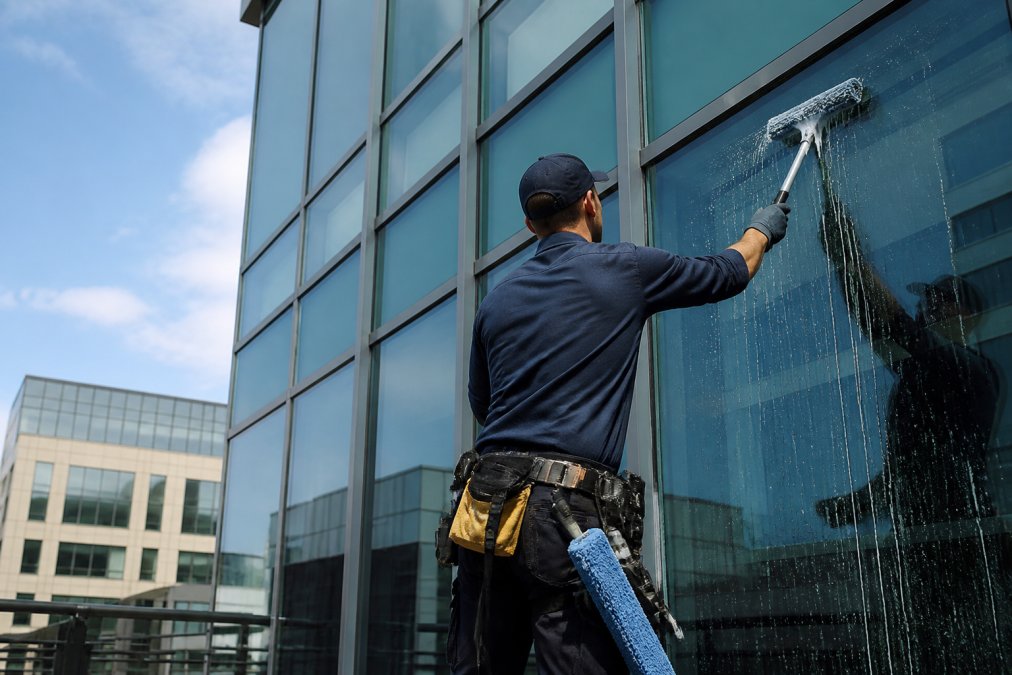
Commercial window cleaning is the systematic, professional cleaning of glass surfaces on commercial properties, including exterior facades, interior panes, entry glass, and specialty glazing, performed on a scheduled basis to preserve building integrity and appearance. It differs fundamentally from residential cleaning: commercial jobs require different equipment, different safety protocols, and often different regulatory compliance.
At Clarity Window Cleaning, we work directly with facilities managers and property managers across Salt Lake City and the Wasatch Front who need a reliable maintenance partner. Curb appeal drives first impressions for tenants, clients, and investors. A streak-free finish on a retail storefront signals attention to detail. A clean glass facade on an office tower communicates active property management. These directly affect occupancy rates and property value.
Below, we cover which building types we serve, how OSHA compliance works in practice, how to build a maintenance schedule, what a professional service contract looks like, and how to get a free estimate.
Types of Commercial Buildings We Serve
High-Rise Office Towers and Multi-Tenant Complexes
High-rise window cleaning is the most technically demanding segment of commercial exterior maintenance. Buildings above six stories require specialized access methods, including suspended scaffolding, bosun chairs, or water-fed pole systems extended from the roof. Above roughly ten stories, rope descent systems operated by trained technicians become the standard approach.
The challenge for facilities managers in multi-tenant towers is operational disruption. Tenants on active floors cannot have their views blocked during business hours for extended periods, and access to mechanical rooms or rooftop anchor points requires coordination with building engineers. A professional window cleaning team understands this. Scheduling flexibility, advance notice to tenants, and documented access protocols are baseline expectations.
Multi-tenant complexes present a coordination challenge: multiple stakeholders with different schedules and standards for cleanliness. Clear communication, consistent quality, and post-service reporting resolve most tensions before they escalate.
Retail Storefronts, Healthcare, and Education Facilities
Retail storefront cleaning operates on different logic than high-rise work. Frequency matters more than technical complexity. A cloudy or streaked window pane loses foot traffic. Many retail property managers schedule exterior glass cleaning weekly or bi-weekly during high-traffic seasons.
Healthcare facilities carry stricter hygiene standards. Interior glass in clinical environments, waiting rooms, and patient-facing spaces must be cleaned with non-toxic, residue-free solutions. Education facilities, from K-12 schools to university campuses, often have large glass atriums, gymnasium walls, and multi-story administrative buildings requiring a mix of ground-level and elevated cleaning methods.
Both sectors benefit from scheduled maintenance agreements rather than reactive service calls. Predictability matters when managing a facility with fixed operational calendars.
OSHA-Compliant Window Cleaning Services: What That Means for Your Building
OSHA compliance in commercial window cleaning is not a marketing phrase. It is a specific set of regulatory requirements under OSHA's standards for walking-working surfaces and fall protection that govern how technicians access elevated work areas, what personal protective equipment they must wear, and what documentation employers must maintain.
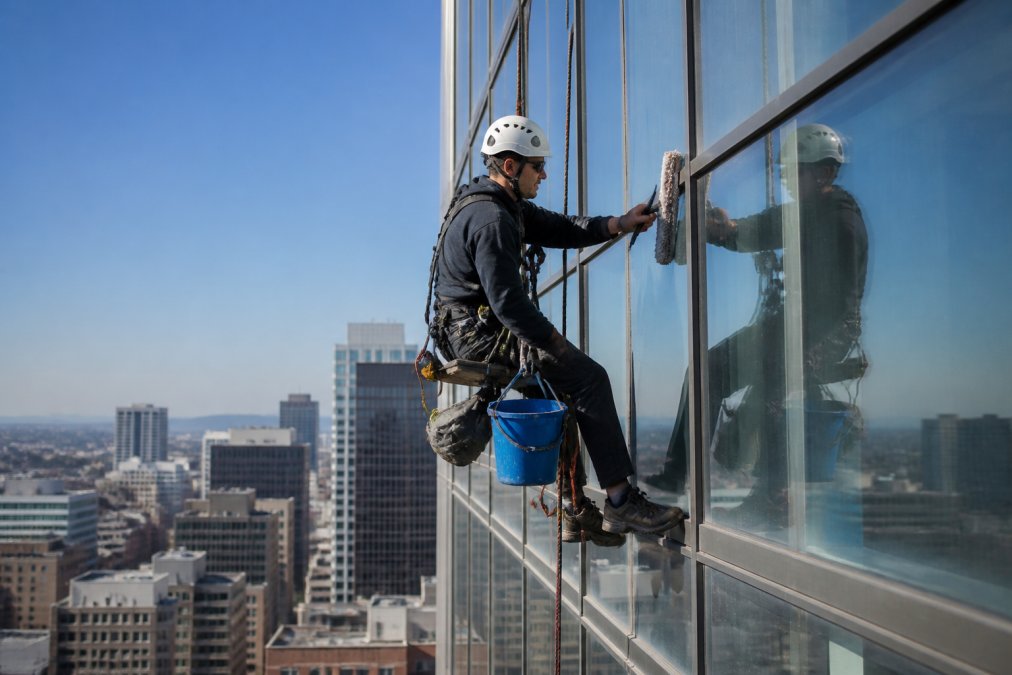
For facilities managers, OSHA compliance on your property is a shared responsibility. When you hire a window cleaning contractor, you are responsible for ensuring that contractor meets applicable safety standards while on your premises. If a technician is injured because proper fall protection was not in place, liability exposure can extend to the property owner or manager.
A genuinely OSHA-compliant window cleaning service provides site-specific safety plans before work begins. This means a written assessment of anchor points, access routes, equipment requirements, and emergency procedures specific to your building's configuration. It means technicians hold current training certifications and the company carries adequate liability insurance and workers' compensation coverage.
The practical question facilities managers should ask is direct: "Can you walk me through your safety plan for this building?" A contractor who cannot answer that question in specific terms is not OSHA-compliant in any meaningful sense.
Clarity Window Cleaning's certified technicians operate under site-specific safety plans developed for each property. Every job is documented, every access point is assessed, and every technician is fully insured and bonded.
Building a Commercial Window Cleaning Maintenance Schedule
Most commercial properties are under-scheduled for window cleaning. The default for many facilities managers is "when it looks dirty," which is reactive and often means the glass has already sustained hard water stain buildup or mineral deposit accumulation requiring more intensive restoration work.
A proactive commercial window cleaning maintenance schedule is built around three variables: building type, local environmental conditions, and operational constraints. Salt Lake City's geography adds a specific consideration: the valley's inversion seasons and construction activity along the Wasatch Front deposit particulate matter on glass at a higher rate than many comparable markets.
Recommended Cleaning Frequencies by Building Type
The right cleaning frequency depends on your building's exposure, use, and tenant expectations.
| Building Type | Recommended Exterior Frequency | Interior Frequency | Notes |
|---|---|---|---|
| High-rise office tower | Quarterly minimum | Semi-annually | Inversion season may require additional cycles |
| Retail storefront | Monthly to bi-weekly | Monthly | High foot-traffic locations benefit from more frequent service |
| Healthcare facility | Monthly | Monthly or as needed | Interior standards are stricter; discuss with provider |
| Education campus | Twice per year | Annually or as needed | Coordinate with academic calendar breaks |
| Multi-tenant complex | Quarterly | Semi-annually | Align with common area maintenance schedule |
| Industrial/warehouse | Semi-annually | Annually | Skylights and high bays may require specialized access |
This table reflects general industry guidance. Your actual schedule should be confirmed with your window cleaning provider after a site assessment, since proximity to construction, prevailing winds, and glass type all affect how quickly surfaces degrade between cleanings.
What to Expect from a Professional Window Cleaning Service Contract
A professional window cleaning service contract is not just a price agreement. It is a maintenance document that protects both the property manager and the service provider by defining scope, frequency, access requirements, quality standards, and escalation procedures.
The biggest mistake facilities managers make when reviewing a service contract is focusing exclusively on price per pane. Cost per pane tells you nothing about what happens when quality falls short, how schedule changes are handled, or whether the contractor carries adequate liability insurance.
A well-structured service contract should specify:
- Exact scope: which windows, which facades, interior versus exterior, ground floor versus upper floors
- Cleaning frequency and scheduling windows, including notice requirements
- Equipment and methods to be used, particularly for high-rise or specialty glass
- Quality standards and the process for addressing missed spots or unsatisfactory results
- Insurance certificates and their renewal schedule
- Reporting deliverables, including what documentation is provided after each service visit
According to BOMA International's guidance on vendor contract management, facilities managers should treat recurring service contracts as living documents reviewed at least annually, not set-and-forget agreements.
Documentation and Reporting for Facilities Managers
Detailed post-service reporting is a practical necessity for facilities managers who need to document maintenance for board reporting, insurance audits, and lease compliance.
A post-service report should include the date and time of service, areas cleaned, any access issues encountered, observations about glass condition, and technician sign-off. This creates an auditable maintenance record demonstrating proactive property management.
Clarity Window Cleaning provides detailed post-service reporting as a standard part of every commercial contract. Facilities managers receive documentation they can present to boards, insurers, and tenants without chasing the contractor for records after the fact.
Eco-Friendly Methods and Professional-Grade Equipment
The most significant shift in professional commercial window cleaning over the past decade has been the adoption of water-fed pole systems using deionized water. This method replaces traditional squeegee-and-solution work for many ground-level and mid-rise applications, eliminating the need for chemical cleaning agents on most standard glass surfaces.
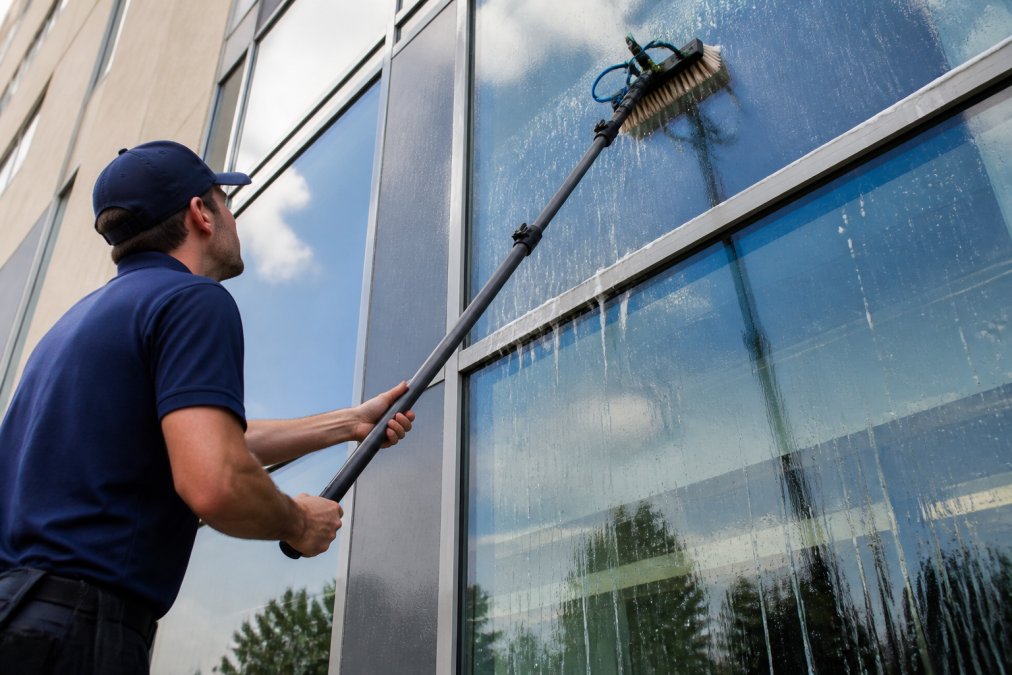
Deionized water has had its mineral content removed through filtration. When it contacts glass and evaporates, it leaves no mineral residue, which causes streaking and spotting with tap water. The result is a streak-free finish without chemical additives, which matters for healthcare facilities, LEED-certified buildings, and any property where chemical runoff is a concern.
For high-rise applications where water-fed poles cannot reach, professional-grade rope descent systems and suspended platforms are used. The equipment is only part of the equation; technicians operating it must be trained and certified, and anchor points must be rated for the loads involved. Industry safety standards specify equipment ratings, inspection intervals, and operator qualification requirements for elevated window cleaning work.
Eco-friendly cleaning methods also extend to products used for specialty applications like hard water stain removal and glass restoration. Professional providers select products that minimize environmental impact while achieving necessary results.
Ask your provider what methods and products they use, and why. A provider who cannot explain their equipment and chemical choices in plain terms is not giving you the transparency you need.
How to Book Commercial Window Cleaning and Get a Free Estimate
Booking commercial window cleaning starts with a site assessment, not a phone quote. Any provider who quotes a price without seeing your building is either guessing or standardizing in a way that may not reflect your property's actual requirements.
The assessment covers building height and access points, glass type and condition, current staining or restoration needs, scheduling constraints, and any site-specific safety considerations.
Clarity Window Cleaning provides free estimates for all commercial window cleaning needs, including high-rise properties, multi-tenant complexes, retail centers, healthcare facilities, and education campuses. The estimate process includes a site walkthrough, a review of access and safety requirements, and a written proposal with scope, frequency, and service terms clearly defined.
For facilities managers evaluating providers, the free estimate meeting is your best opportunity to assess whether the contractor understands commercial facility management. Ask about their OSHA compliance documentation, insurance certificates, reporting process, and experience with buildings of similar height and complexity to yours. According to IFMA's guidance on selecting qualified service contractors, the vetting process for recurring maintenance contractors should include verification of credentials, insurance, and references from comparable facilities.
A few practical steps to prepare for your estimate:
- Compile a list of all glass surfaces requiring service, including interior, exterior, and specialty glazing
- Note any access restrictions, including tenant hours, roof access protocols, and loading dock limitations
- Gather your current maintenance records to identify gaps or recurring problem areas
- Confirm your insurance and liability requirements for contractors working on your property
- Prepare questions about the provider's OSHA compliance documentation and reporting process
The goal of the estimate is to determine whether this provider can operate on your property safely, reliably, and without disrupting your tenants or operations.
Facilities managers dealing with inconsistent results, inadequate documentation, or contractors who cannot demonstrate genuine OSHA compliance face a real operational risk. Clarity Window Cleaning works directly with property and facilities managers to deliver certified commercial window cleaning with site-specific safety plans, detailed post-service reporting, and fully insured and bonded technicians. Get started with Clarity Window Cleaning and put a reliable, documented maintenance program behind your building's glass.
Frequently Asked Questions
How often should high-rise office windows be cleaned?
Most high-rise office buildings benefit from exterior cleaning two to four times per year, with interior glass cleaned monthly or quarterly depending on tenant activity. Buildings near construction zones, heavy traffic corridors, or industrial areas may need more frequent service to prevent hard water stain buildup and glass degradation. A facilities manager should work with their window cleaning provider to set a recurring service schedule based on the building's specific exposure and appearance standards.
What documentation should a facilities manager request from a window cleaning vendor?
Request proof of liability insurance and worker's compensation coverage, OSHA compliance documentation, and a site-specific safety plan before any work begins. A reputable provider will also supply post-service reports detailing which areas were cleaned, any glass damage noted, and technician sign-off records. This documentation supports board reporting, insurance audits, and ongoing commercial facility management records. Clarity provides detailed reporting as a standard part of every commercial window cleaning service contract.
What is the difference between standard and high-rise window cleaning requirements?
Standard commercial window cleaning typically covers buildings under four stories and uses ladders, water-fed pole systems, and traditional squeegee methods from the ground or stable platforms. High-rise window cleaning, generally any building above four stories, requires rope descent systems, suspended scaffolding, or aerial lifts, all governed by OSHA 29 CFR 1910 and 1926 standards. Technicians must hold specialized training, and buildings require engineered anchor points. The equipment, safety planning, and insurance requirements are significantly more involved than ground-level work.
What is the going rate for commercial window cleaning?
Commercial window washing costs vary based on building height, number of window panes, access difficulty, frequency of service, and whether interior cleaning is included. Rather than publish a figure that may not reflect your building's actual scope, Clarity Window Cleaning provides free estimates tailored to your property. Contact the team directly to get an accurate service quote based on a site assessment of your specific facility.
This article was written using GrandRanker
Frequently Asked Questions
How often should high-rise office windows be cleaned?
Most high-rise office buildings benefit from exterior cleaning two to four times per year, with interior glass cleaned monthly or quarterly depending on tenant activity. Buildings near construction zones, heavy traffic corridors, or industrial areas may need more frequent service to prevent hard water stain buildup and glass degradation. A facilities manager should work with their window cleaning provider to set a recurring service schedule based on the building's specific exposure and appearance standards.
What documentation should a facilities manager request from a window cleaning vendor?
Request proof of liability insurance and worker's compensation coverage, OSHA compliance documentation, and a site-specific safety plan before any work begins. A reputable provider will also supply post-service reports detailing which areas were cleaned, any glass damage noted, and technician sign-off records. This documentation supports board reporting, insurance audits, and ongoing commercial facility management records. Clarity provides detailed reporting as a standard part of every commercial window cleaning service contract.
What is the difference between standard and high-rise window cleaning requirements?
Standard commercial window cleaning typically covers buildings under four stories and uses ladders, water-fed pole systems, and traditional squeegee methods from the ground or stable platforms. High-rise window cleaning — generally any building above four stories — requires rope descent systems, suspended scaffolding, or aerial lifts, all governed by OSHA 29 CFR 1910 and 1926 standards. Technicians must hold specialized training, and buildings require engineered anchor points. The equipment, safety planning, and insurance requirements are significantly more involved than ground-level work.
What is the going rate for commercial window cleaning?
Commercial window washing costs vary based on building height, number of window panes, access difficulty, frequency of service, and whether interior cleaning is included. Rather than publish a figure that may not reflect your building's actual scope, Clarity Window Cleaning provides free estimates tailored to your property. Contact the team directly to get an accurate service quote based on a site assessment of your specific facility.